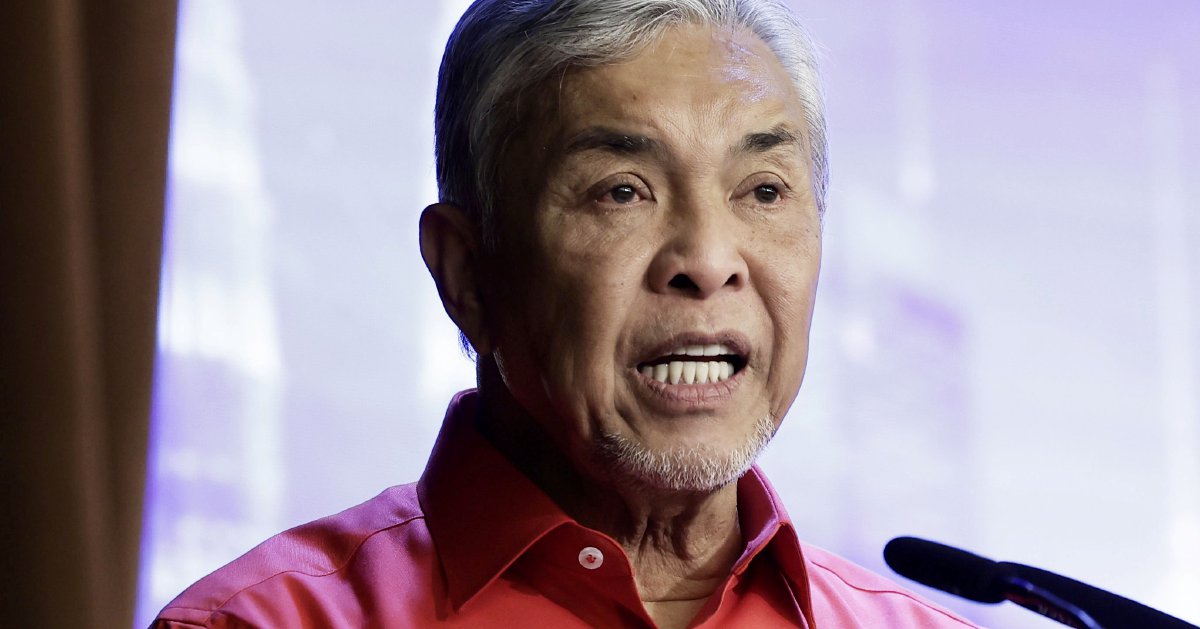
Deputy Prime Minister Datuk Seri Dr Ahmad Zahid Hamidi has publicly declared that the time has come to stop circulating unsubstantiated allegations and speculation concerning Lembaga Tabung Haji (TH), the Malaysian hajj savings body that manages billions of ringgit belonging to millions of Muslim pilgrims. His call represents a significant push-back against critics who have long questioned the management and governance of the institution, particularly following various controversies that have engulfed the organisation over the past several years.
The statement underscores growing frustration within the government over what officials regard as relentless and often misleading narratives about Tabung Haji's operations. Zahid's intervention signals that senior policymakers believe the institution has become unfairly maligned by assertions that lack substantiation, creating a damaging perception among the Malaysian public that extends beyond documented facts. This concern is not merely rhetorical; Tabung Haji's reputation directly affects the confidence of its 9.3 million members who depend on the body to safeguard their savings for one of Islam's most sacred obligations.
The deputy prime minister's remarks come at a critical juncture for Tabung Haji, which has faced considerable scrutiny regarding investment decisions and fund management practices. The institution manages approximately RM75 billion in assets, making it one of the largest investment vehicles in Malaysia's financial system. Any erosion of public trust can have cascading consequences for both the organisation's operational credibility and the hajj pilgrimage ecosystem that depends on stable funding mechanisms.
Zahid's call for factual accuracy in discussions about Tabung Haji reflects a broader administrative perspective that distinguishes between legitimate oversight and what officials characterise as baseless conjecture. The government appears to distinguish between criticism based on documented evidence and allegations that circulate without proper evidentiary foundation. This distinction matters considerably in Malaysia's media landscape, where institutional criticism carries significant weight in shaping public opinion.
The backdrop to this intervention includes multiple investigations and parliamentary inquiries that have examined Tabung Haji's governance structures and investment performance over the past decade. These official scrutiny mechanisms represent the legitimate channels through which concerns about institutional management should be aired and resolved. However, parallel to these formal processes, various claims and counter-claims have circulated through multiple channels, including social media platforms where verification becomes increasingly difficult and misinformation can propagate rapidly.
For Malaysian pilgrims and their families, Tabung Haji represents far more than a financial institution. The savings accumulated through the Amanah Saham Waqf Al-Quran investment scheme and other products serve as the foundation for fulfilling the hajj obligation. Members' confidence in the system directly influences their willingness to continue contributing and investing through the platform. Zahid's intervention suggests that policymakers recognise this psychological and spiritual dimension to the institutional trust equation.
The deputy prime minister's emphasis on grounding discussions in verifiable facts also reflects international best practices in institutional governance. Transparency and accuracy in reporting on financial institutions form essential components of stable financial systems. When allegations remain unsubstantiated, they can undermine market confidence not only in the specific institution but potentially in broader financial sector governance. In this context, Zahid's call transcends Tabung Haji itself and speaks to systemic financial stability concerns.
The organisation's ongoing restructuring initiatives and governance reforms should ideally occur within an environment characterised by accurate information flows. If external discourse becomes saturated with unverified claims, even genuine reform efforts may be greeted with skepticism. Conversely, if officials only acknowledge verified criticisms, this creates space for legitimate institutional improvements to be undertaken with clearer public understanding of their necessity and scope.
Moving forward, the challenge for all stakeholders involves establishing credible information-sharing mechanisms that ensure legitimate concerns about institutional management can be articulated and investigated while baseless speculation is adequately countered with factual information. This requires cooperation between the government, Tabung Haji management, media outlets, and civil society organisations in promoting accurate discourse. For Malaysian readers with a personal stake in Tabung Haji's success—whether as current members, prospective pilgrims, or citizens interested in financial system stability—the principle of evidence-based accountability remains paramount regardless of which specific allegations merit scrutiny and which do not.

