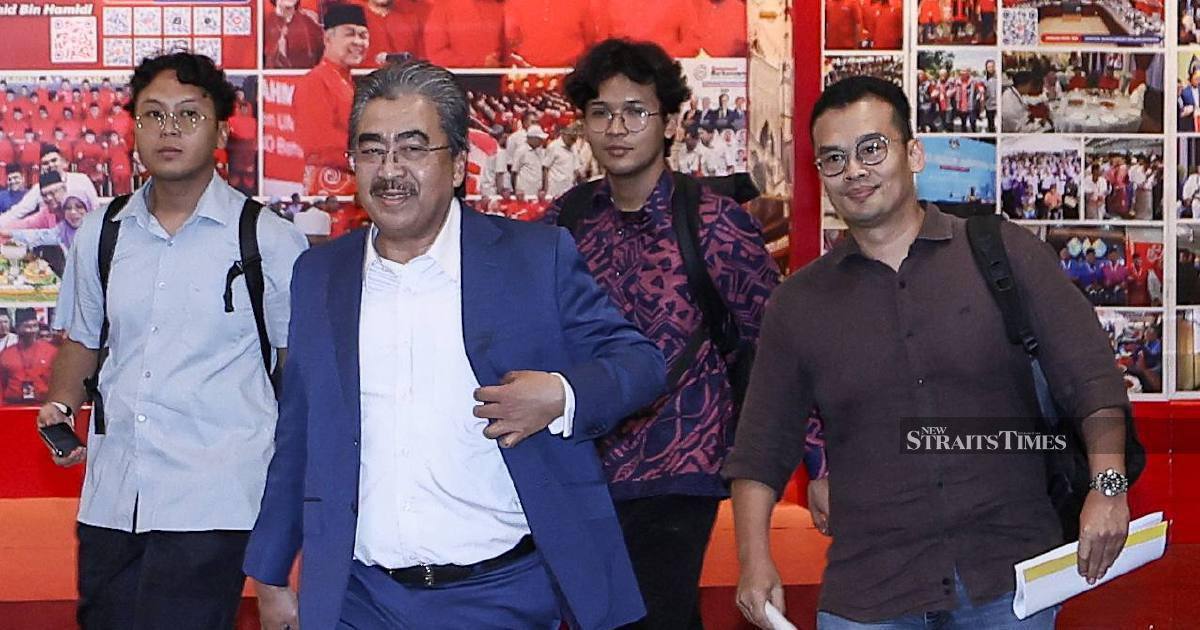
Deputy Prime Minister Ahmad Zahid Hamidi orchestrated a confidential briefing session at the Umno party headquarters in Kuala Lumpur, bringing together prominent figures from the ruling Barisan Nasional coalition to examine the newly declassified findings of the Royal Commission of Inquiry into Lembaga Tabung Haji. The closed-door nature of the gathering underscores the sensitivity surrounding the state-owned pilgrimage fund manager, which oversees the savings and investments of millions of Malaysian Muslims preparing for the Hajj pilgrimage to Mecca. The attendance of leaders from both Barisan Nasional and opposition-aligned Perikatan Nasional coalition members signals the cross-party concern regarding the institutional health of Tabung Haji, a body whose stewardship affects the religious aspirations and financial security of a significant portion of Malaysia's Muslim population.
The Tabung Haji institution represents one of Malaysia's most consequential financial vehicles, managing accumulated savings from hundreds of thousands of account holders across the nation. The Royal Commission of Inquiry was established to investigate matters of governance, financial management, and operational efficacy within the organization following mounting public concern about fund performance and administrative practices. The declassification of the RCI report marks a pivotal moment in the scrutiny of institutional accountability, as the findings become available for high-level governmental review and, eventually, potential legislative or administrative responses. For Malaysian Muslims who have entrusted their pilgrimage funds to Tabung Haji, the inquiry's conclusions carry profound personal and financial implications.
The presence of Perikatan Nasional representatives at a Barisan Nasional-led briefing reflects the broader political consensus that Tabung Haji governance warrants serious attention from across the parliamentary divide. Despite the fractious nature of Malaysian coalition politics, concerns about safeguarding the interests of pilgrims and ensuring sound stewardship of their resources transcend routine partisan divisions. This cross-coalition attendance demonstrates that questions surrounding institutional integrity and public fund management possess sufficient gravity to command unified scrutiny from senior political figures regardless of their government or opposition status. The briefing thus represents an unusual moment of political convergence around a matter of institutional accountability.
The timing of this declassification and subsequent briefing occurs within a broader context of heightened focus on governance standards across Malaysia's public institutions. The nation has witnessed intensifying scrutiny of state-linked entities and government-linked companies in recent years, driven by both domestic reform movements and international pressure for transparency and accountability. Tabung Haji, as a religiously significant and financially substantial organization, naturally falls within this expanding circle of institutional examination. The RCI report's release signals governmental willingness to open such proceedings to senior political leadership, though the restriction to closed-door briefings suggests ongoing sensitivity about the full public disclosure of findings.
For Malaysia's substantial Muslim population, the Tabung Haji system represents far more than a financial mechanism. It embodies a structured pathway to fulfilling one of Islam's Five Pillars, providing both practical financial management and spiritual facilitation for the Hajj journey. Account holders have long regarded their deposits as sacred trusts rather than conventional investments, which amplifies the gravity of any governance failings. The RCI inquiry would have examined whether the institution adequately protected these funds, optimized returns, and maintained administrative standards befitting such a responsibility. Any shortcomings identified in the report carry implications extending beyond mere financial metrics to touch on institutional trustworthiness and the state's commitment to supporting religious observance.
The declassification process itself merits attention, as it demonstrates governmental movement toward greater transparency regarding historically sensitive institutional reviews. Royal Commissions of Inquiry, while public in theory, frequently remain partially restricted or delayed in their public release, particularly when they implicate government bodies or senior officials. The decision to declassify the Tabung Haji RCI report and brief senior leaders suggests that officials have determined the public interest in disclosure outweighs any concerns about sensitive information. However, the continuation of closed-door briefings indicates authorities wish to manage the narrative and allow political leadership to absorb findings before broader public discussion transpires.
The administrative and financial health of Tabung Haji carries implications for Malaysia's reputation within the Islamic world and among Muslim-majority nations. As a state institution managing pilgrimage funding, Tabung Haji serves as a symbol of Malaysia's commitment to facilitating Islamic religious practice. Any governance deficiencies could potentially affect the nation's standing among international Islamic organizations and Muslim governments. Conversely, demonstrable improvements in institutional management and transparency could enhance Malaysia's reputation as a Muslim-majority nation serious about combining modern governance standards with respect for religious values. The RCI findings and subsequent corrective measures may therefore resonate beyond domestic financial circles into regional and global Islamic institutional networks.
The engagement of both Barisan Nasional and Perikatan Nasional leadership in absorbing these findings positions these coalitions to shape potential policy responses. Depending on the RCI report's conclusions, political actors may feel compelled to propose legislative amendments, regulatory reforms, or administrative restructuring of Tabung Haji's governance architecture. The breadth of political attendance at the briefing increases the likelihood that significant recommendations will achieve cross-party support, potentially enabling relatively swift implementation of improvements without the partisan gridlock that sometimes obstructs institutional reform. This convergence of political attention may ultimately prove beneficial for account holders seeking remedial action.
Looking forward, the briefing represents an initial phase in translating RCI findings into concrete action. Senior leaders acquiring detailed knowledge of the report's conclusions can now deliberate on appropriate governmental responses, whether through cabinet committees, parliamentary action, or administrative directives to Tabung Haji management. The closed-door format allows candid discussion of sensitive matters without premature public controversy, though the eventual public release of findings and any resulting reforms will determine whether the institution successfully addresses identified deficiencies. For millions of Malaysians who have invested their pilgrimage hopes in Tabung Haji, the rigorous examination of institutional practices and subsequent corrective measures represent essential safeguards of both their financial security and their ability to undertake the sacred Hajj journey.

