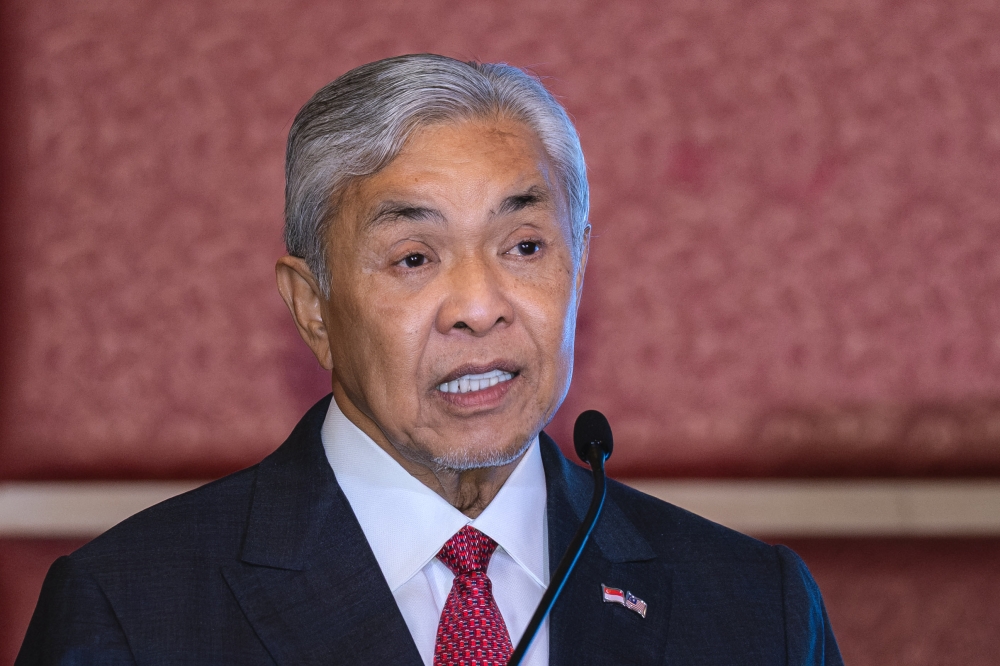
Umno president Datuk Seri Dr Ahmad Zahid Hamidi has firmly denied the existence of any formal electoral pact between his party and PAS ahead of potential state elections in Negeri Sembilan, while cautioning that Malaysia's volatile political landscape means such arrangements remain perpetually subject to change. Speaking in Kuala Lumpur on July 13, Zahid sought to clarify confusion surrounding Umno's strategic positioning in the state, where speculation about coalition arrangements has intensified following shifts in the broader national political configuration.
The Umno leader's statement appears designed to assert his party's independence and negotiating power at a critical juncture, when Malaysian politics remains characterized by fluid alliances and unexpected realignments. By rejecting a fixed arrangement with PAS, Zahid emphasizes Umno's capacity to pursue strategic interests without being bound by prior commitments, a position increasingly important as both parties navigate their respective roles within Barisan Nasional and the broader political ecosystem. The declaration also reflects deeper tensions within Malaysia's Islamist and Malay-nationalist political factions, each seeking to maximize their electoral advantage while maintaining credibility with their respective support bases.
Negeri Sembilan holds particular significance for Umno's political fortunes, representing a state where the party has traditionally maintained strong presence but where recent political currents have introduced unpredictability. The state's electoral dynamics have become increasingly complex, with multiple political forces contending for influence and local issues intersecting with national political movements. Understanding Umno's position requires recognizing the intricate web of state-level considerations, factional interests within each party, and the broader strategic calculations that shape Malaysian coalition politics at the state level.
Zahid's emphasis that "goalposts can change anytime" underscores a fundamental characteristic of contemporary Malaysian politics: the conditional and negotiable nature of political partnerships. This phrasing suggests that Umno leadership views political arrangements as inherently provisional, subject to recalculation based on evolving circumstances, shifting electoral projections, or changes in party leadership positions. Such rhetoric signals both flexibility and potential instability, warning political rivals and potential partners that today's agreements cannot be assumed to hold tomorrow.
The statement carries implications extending beyond Negeri Sembilan's borders. Umno's explicit rejection of formal pacts suggests the party seeks to preserve bilateral negotiating capacity rather than lock itself into bloc arrangements that might limit its options or constrain its leadership's decision-making authority. This approach reflects lessons from previous episodes where rigid coalitions proved constraining during unexpected political upheavals or leadership transitions. By maintaining ambiguity, Umno leadership projects an image of political acuity and adaptability.
For PAS, Zahid's clarification presents its own complications. The Islamist party has pursued strategies to expand its influence across multiple states while managing its relationships with larger coalition partners. Whether PAS welcomes or contests Umno's characterization of their relationship as informal rather than formal remains significant for understanding the two parties' actual working arrangement in Negeri Sembilan. The distinction between formal and informal agreements, while potentially semantic, carries real consequences for electoral coordination, candidate nomination decisions, and campaign resource allocation.
Negeri Sembilan's political composition has historically reflected the broader patterns evident in Malaysian state politics, with Umno maintaining dominance but facing periodic challenges from opposition coalitions. The state's demographic diversity, the influence of local political personalities, and the intersection of state-specific issues with national political trends all shape electoral outcomes in ways that transcend formal party agreements. Local leaders often exercise considerable discretion in how they implement—or reinterpret—directives from national party headquarters.
Zahid's remarks should be understood within the context of Umno's broader positioning following recent political realignments. The party continues recalibrating relationships with various political actors while managing internal factional dynamics. Statements like Zahid's serve multiple audiences simultaneously: they signal to Umno's base that party leadership maintains independence and strategic thinking; they communicate to potential partners that Umno remains available for negotiations; and they position Umno as a party unburdened by rigid commitments that might compromise its flexibility.
The Malaysian electoral system's provisions for state-level politics create spaces where national-level coalition agreements do not necessarily determine outcomes at the state level. This structural feature means that parties sometimes maintain different working arrangements in different states, creating a complex patchwork of alliances that can confuse observers and provide flexibility for party leaders. Understanding Negeri Sembilan requires attention to these local specificities rather than assuming perfect alignment with national-level arrangements.
For Malaysian political observers and Southeast Asian analysts tracking Malaysian developments, Zahid's insistence on flexibility and rejection of formal pacts illustrates the contingent and negotiated character of contemporary Malaysian coalition politics. Rather than viewing political parties as unified actors bound by fixed agreements, a more accurate understanding recognizes ongoing internal debates, factional interests, and constant reassessment of strategic positions based on changing political conditions. Zahid's statement thus represents not merely a clarification about Negeri Sembilan arrangements but a window into how Malaysian party leaders conceptualize political partnerships in an era of unprecedented fluidity and unpredictability.

