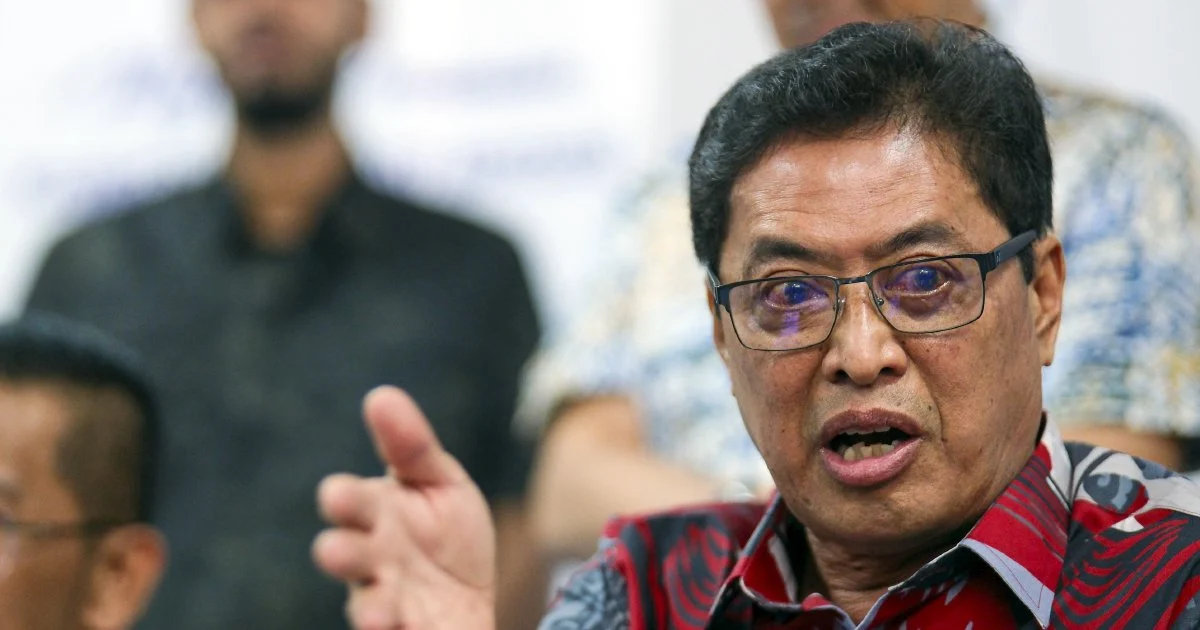
Former de facto law minister Zaid Ibrahim has mounted a direct challenge to Attorney General Datuk Seri Azalina Othman Said's position on withholding shareholding records belonging to former Malaysian Anti-Corruption Commission chief Tan Sri Azam Baki, bringing the contentious matter into the parliamentary spotlight. The dispute centres on whether the government should publicly disclose details of the retired anti-corruption watchdog's investments, a question that touches on fundamental principles of governmental accountability and transparency.
Zaid Ibrahim, who helmed the Law Ministry during a previous administration, has been a persistent voice on governance matters and was not content to let the Attorney General's stance pass without scrutiny. His intervention adds weight to growing public concern about the handling of what many view as a matter of legitimate public interest. The timing of his parliamentary questioning underscores how questions about institutional integrity continue to resonate across Malaysia's political landscape, regardless of which coalition holds power.
The dispute appears rooted in differing interpretations of public interest and the extent to which shareholding information about senior government figures should be accessible to lawmakers and citizens. Azalina's refusal to make Azam Baki's shareholding records public suggests a concern for privacy or perhaps reliance on existing rules that may not require such disclosure. However, Zaid's challenge implies that the former MACC chief's position—heading an institution tasked with combating corruption and misconduct—creates a compelling argument for greater transparency regarding his financial interests and investments.
Tan Sri Azam Baki served as MACC chief during a critical period in Malaysian politics, overseeing investigations that touched upon the country's highest offices and most powerful figures. His tenure was marked by both significant anti-corruption operations and occasional controversies that raised questions about the agency's independence and decision-making processes. Now in retirement, revelations or clarity about his shareholdings could carry implications for understanding potential conflicts of interest or financial dependencies during his time in office.
The Attorney General's office typically serves as keeper of official government positions and legal interpretations, making Azalina's stance significant in terms of how government transparency obligations are understood at the highest levels. Her refusal raises questions about what legal framework or precedent she relies upon, and whether such reasoning would be applied consistently across other senior officials. This inconsistency, if proven, could undermine broader government transparency initiatives.
For Malaysian readers, this dispute reflects an ongoing tension between institutional secrecy and democratic accountability. The country has witnessed numerous governance scandals in recent decades, many of which involved undisclosed financial interests or hidden shareholdings that only came to light through investigations or leaks. Public appetite for transparency has grown correspondingly, making officials' resistance to disclosure appear increasingly at odds with modern expectations of good governance.
The parliamentary questioning also highlights how scrutiny of government decisions continues to function as an important check, even when the government itself may prefer certain information to remain confidential. Zaid Ibrahim's willingness to challenge the Attorney General directly demonstrates that oversight mechanisms, while imperfect, remain available to members of parliament who choose to exercise them. Whether his questions prompt a policy reversal or explanation remains to be seen.
Southeast Asian neighbours have grappled with similar questions about how much financial information senior officials should disclose. Stronger transparency regimes in some jurisdictions have become selling points for governments seeking to demonstrate commitment to anti-corruption efforts and good governance. Malaysia's approach to such matters thus carries implications for its regional standing and reputation as an institution-building nation.
Zaid Ibrahim's background as a former law minister lends particular credibility to his intervention, suggesting this is not merely partisan point-scoring but rather a principled position grounded in understanding of legal and governance frameworks. His public challenge implies that reasonable people in positions of authority can disagree about transparency obligations, and that the Attorney General's position is not self-evident or beyond reasonable debate.
The broader context matters here: Malaysia has established various institutions and mechanisms designed to combat corruption and improve governance, yet questions persist about their effectiveness and independence. Decisions about disclosure of shareholdings, seemingly technical in nature, carry symbolic weight in terms of demonstrating whether government institutions genuinely prioritise transparency or merely give it lip service. The public's ability to scrutinise senior officials' financial interests arguably forms a foundational element of any credible anti-corruption framework.
As this matter develops, the Attorney General's office may face pressure to reconsider its position or provide more detailed justification for maintaining confidentiality. Parliamentary forums provide platforms for airing such disagreements, potentially leading to policy evolution or clarification of existing rules. Zaid Ibrahim's intervention thus serves a useful function in forcing the government to explain and defend its stance on a matter touching core principles of democratic governance and institutional integrity.

