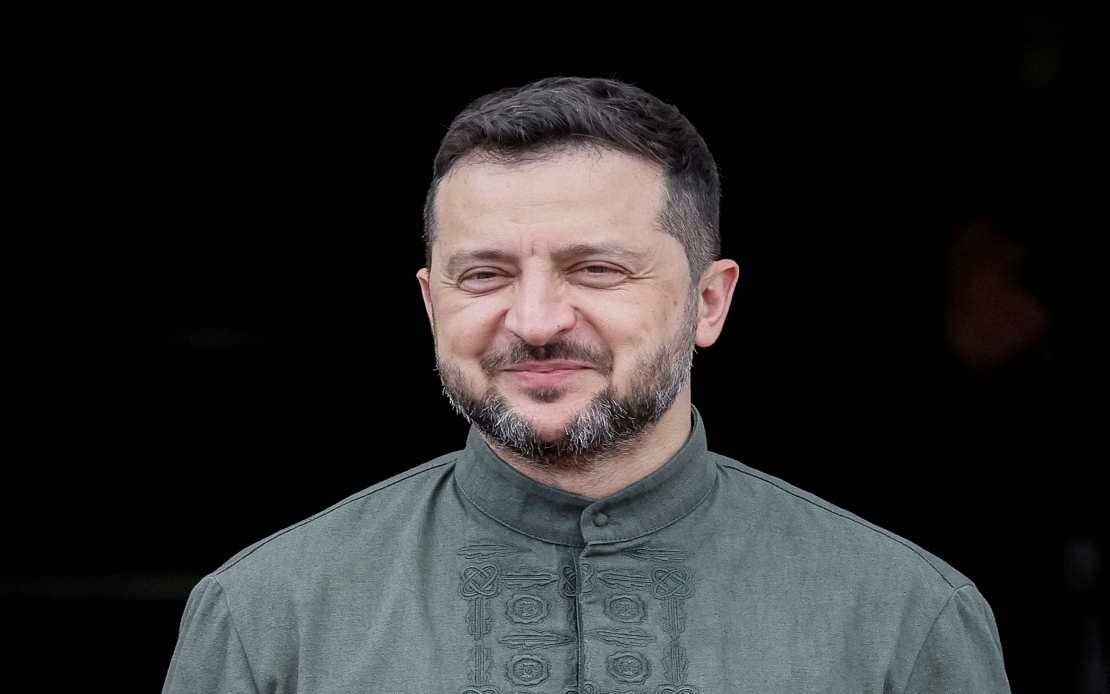
Ukrainian President Volodymyr Zelensky has formally signed a law mandating the construction of a national pantheon in Kyiv, a decision that represents a significant challenge to his country's relationship with Poland at a time when unity against Russian aggression should theoretically bind them. The legislation, which passed through parliament in July, establishes a state memorial dedicated to honouring Ukrainian historical figures spanning from the medieval Kyivan Rus period to modern times. Speaking before war veterans on Saturday, Zelensky insisted that Ukraine alone holds the authority to define its national heroes, a defiant stance that underscores how deeply this issue resonates within Ukrainian society and consciousness.
The pantheon's most contentious feature centres on its intended commemoration of the Ukrainian Insurgent Army, or UPA, a nationalist underground force that operated during World War II. While Ukrainian nationalists regard the UPA as freedom fighters who resisted foreign occupation during the German invasion, historical records and Polish accounts document that UPA members perpetrated systematic mass killings targeting both Polish civilians and Jews, concentrated particularly in the Volyn region of what is now western Ukraine. These wartime atrocities resulted in tens of thousands of deaths and represent some of the darkest chapters of European history. The museum and memorial will ultimately serve multiple functions, incorporating burial plots for Ukrainian presidents alongside displays honouring figures contested across the region's collective memory.
Warsaw's response to the law's passage has been notably restrained in immediate public statements, yet the underlying tension reveals a fundamental disagreement about how nations should reckon with historical figures whose legacies carry multiple, irreconcilable interpretations. Poland's presidential office responded to the parliament's July approval by characterizing the glorification of individuals responsible for genocide in Volyn as incompatible with the values and direction of Western institutions and democracies. This formulation carefully frames Poland's objection not merely as nostalgia or grievance, but as a question of democratic principles and what constitutes appropriate historical memory in European societies.
The memorial dispute represents the latest escalation in a broader deterioration of bilateral relations between Ukraine and Poland. Just months earlier, in June, tensions spiked when Zelensky's administration conferred the honorary title of "Heroes of the UPA" upon a Ukrainian military unit. Warsaw responded by withdrawing the Order of the White Eagle that Poland had previously bestowed upon Zelensky himself, a symbolic rebuke that punctured the veneer of allied solidarity. Following this exchange, numerous politicians from both nations returned decorations and honours they had received from their neighbouring country, effectively demoting bilateral diplomatic courtesy to demonstrate displeasure.
The timing of this decision carries particular significance for regional stability and Western strategy in Eastern Europe. Poland has emerged as Ukraine's most steadfast Western supporter, providing military aid, hosting millions of refugees, and maintaining a robust advocacy position within European Union and NATO discussions regarding Russian aggression. Yet this pantheon law threatens to undermine the foundation of that partnership precisely when Ukraine requires maximum unified backing from neighbouring allies. The contradiction between Kyiv's strategic dependence on Warsaw's support and its determination to honour controversial historical figures illustrates how nationalism and historical grievance can supersede pragmatic alliance-building.
For observers in Southeast Asia and the broader international community, this dispute illuminates how post-conflict societies navigate competing claims to historical truth and national identity. Many countries in the region have grappled with analogous tensions between commemorating anti-colonial struggle and acknowledging atrocities committed by independence movements. The Ukrainian situation demonstrates how unresolved historical disputes can fester and resurface, particularly during periods of national crisis, complicating diplomatic and military coordination. Moreover, the episode illustrates how Russia might exploit such rifts within the Western alliance structure, potentially amplifying historical grievances to create space for diplomatic manoeuvre.
Zelensky's assertion that only Ukrainians possess the authority to determine their national pantheon residents reflects a broader philosophical position about state sovereignty and historical memory. Yet this argument encounters resistance from Poland and potentially from Western European nations that have established international standards regarding how societies should treat commemoration of individuals implicated in mass violence and genocide. The memorial construction will inevitably become a focal point for ongoing negotiation about whether Ukraine can fully integrate into Western institutional structures while maintaining pantheon policies that major allies consider incompatible with those institutions' foundational principles.
The strategic implications extend beyond bilateral Polish-Ukrainian relations. The European Union and NATO have invested considerable diplomatic and military resources in supporting Ukraine's resistance and territorial integrity, yet both organizations have also developed frameworks discouraging the glorification of wartime figures credibly accused of perpetrating atrocities, regardless of their simultaneous resistance to occupation. This creates a genuine tension within the Western alliance about how to balance support for Ukraine with maintenance of principles regarding historical accountability and reconciliation. The pantheon law forces this tension into the open and demands resolution through dialogue rather than allowing it to remain an unspoken complication.
For Poland specifically, the memorial represents more than a historical dispute. The country has positioned itself as Ukraine's closest European partner and has made significant sacrifices in hosting Ukrainian refugees and channelling military aid. The pantheon's honouring of figures responsible for atrocities against Polish civilians threatens to transform Poland's role in supporting Ukraine into an undertaking that compromises Polish national memory and dignity. This asymmetry creates profound frustration within Polish political circles, where supporting Ukraine has represented a fundamental strategic and moral commitment.
Looking forward, whether Zelensky's decision will prompt Poland to reassess its support policies remains uncertain. The law's signing does not immediately require the memorial's construction, potentially allowing time for negotiations or compromise. However, the president's emphatic reaffirmation of Ukraine's right to make independent decisions about national commemoration suggests limited flexibility on this issue. This stance, while understandable from a Ukrainian perspective concerned with assertions of sovereignty, risks alienating the very nation that has demonstrated the greatest commitment to Ukrainian independence and territorial restoration. The pantheon therefore becomes not merely a monument to the past but a symbolic test of whether Ukraine's Western integration can accommodate historical memory practices that its closest allies find fundamentally problematic.

