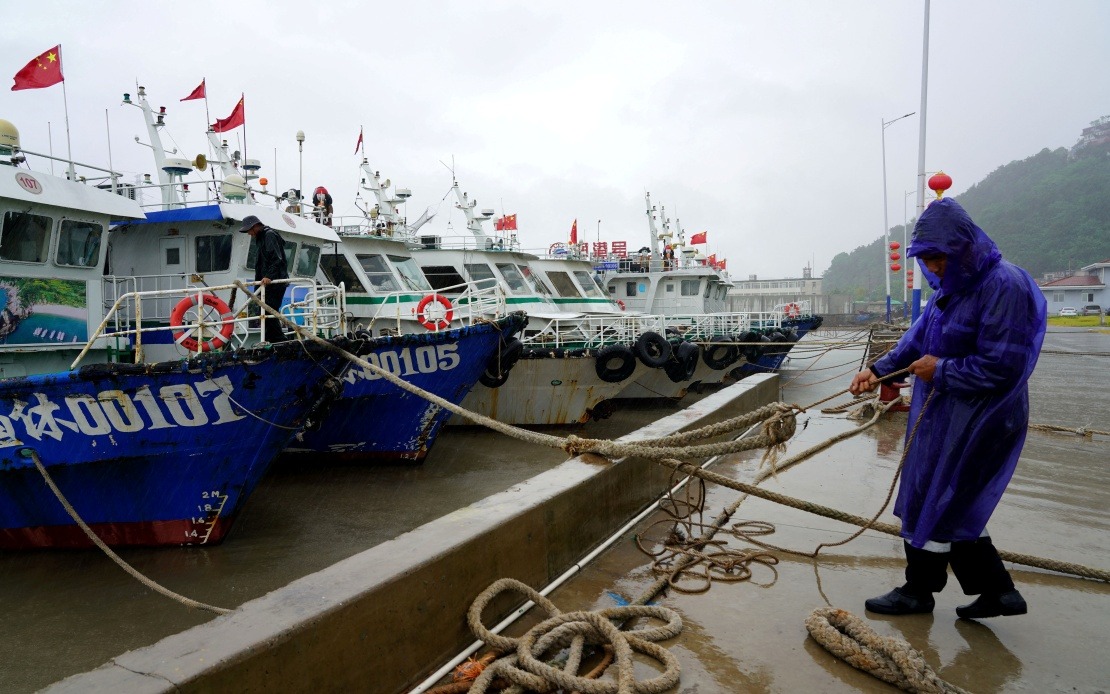
Authorities in Zhejiang Province have intensified emergency preparedness measures by elevating their response status for Typhoon Dolphin from the lowest to the third-highest alert level on Friday, signalling mounting concern as the thirteenth major typhoon to form this year bears down on China's densely populated eastern coastline. The decision to move from Level IV to Level III at midday reflects mounting confidence in forecasting models predicting a dangerous and imminent impact on one of the world's most economically vibrant regions.
At the time the alert was upgraded, the storm system remained positioned approximately 763 kilometres east of Wenling, a coastal city in Zhejiang, according to readings from the provincial meteorological authority. Despite this distance, meteorologists calculated the typhoon would maintain forward momentum westward at speeds between 15 and 20 kilometres per hour, placing it on a collision course with the Chinese mainland within days. Analysts expect the system's current intensity to remain stable or potentially strengthen slightly as it traverses warmer ocean waters before landfall.
The China National Meteorological Centre had already issued a yellow-level alert the previous evening, establishing a window of vulnerability spanning Sunday through Monday for the anticipated arrival point. Official forecasts identified the coastal region stretching between Shanghai and Fuqing in Fujian Province as the most probable impact zone, though meteorological uncertainty remains inherent in such predictions. The projected intensity at landfall ranges between typhoon and severe typhoon classifications, terminology indicating destructive wind speeds and substantial precipitation.
Lou Xiaofen, the chief meteorologist at Zhejiang's observatory, stressed that local geographic positioning creates particular vulnerability. Situated directly between Shanghai to the north and Fujian to the south, Zhejiang occupies the most probable trajectory for the storm's core to traverse overland, elevating disaster risk substantially above what would occur from a glancing blow. This geographic reality has long troubled regional planners and emergency management officials, making the province a recurring focus of seasonal typhoon contingency strategies.
The practical implications of escalating alert status have already rippled across the region's transportation and maritime sectors. Zhejiang authorities announced the complete cessation of ferry operations across all 162 passenger routes serving the province, effectively freezing this mode of transportation until weather conditions permit safe passage. This operational pause affects commuters, tourists, and commercial transport networks simultaneously, underscoring the widespread precautionary approach adopted across the region.
Offshore industrial operations have similarly faced disruption. All 193 projects positioned on Zhejiang's maritime platforms have halted activities, whilst authorities have issued mandatory orders directing 474 construction vessels to seek shelter in designated ports. These figures demonstrate the scale of human economic activity positioned directly in the typhoon's potential path, highlighting why such advance preparation proves critical for minimising casualties and infrastructure damage.
Maritime authorities have executed a comprehensive warning campaign, dispatching 86,000 alert messages to stakeholders across shipping, fishing, and transport sectors. Simultaneous with this notification push, inspectors have conducted safety reviews of 24,000 individual vessels to verify compliance with storm preparation protocols and document any deficiencies requiring urgent remediation. These administrative measures represent the technological and bureaucratic capacity modern governments deploy to manage natural disaster risk.
Emergency response infrastructure has moved into standby mode, with high-powered tugboat fleets positioned throughout coastal zones. These vessels remain ready for rapid deployment to conduct rescue operations should storms strand maritime traffic or create emergency situations where vessel-to-vessel or vessel-to-shore assistance becomes necessary. The positioning reflects experience gained through previous typhoon seasons, when such assets proved invaluable for preventing maritime disasters.
Level III alert protocols obligate local authorities to maintain heightened vigilance regarding storm development whilst simultaneously issuing continuous public warnings and meteorological updates. Evacuation operations for populations in high-risk zones must proceed according to predetermined plans, ensuring vulnerable populations—including elderly residents, those with mobility challenges, and inhabitants of storm-surge-prone areas—relocate to designated shelters. Public communication strategies emphasise clear guidance on protective actions, resource availability, and expected timeline for the threat to materialise and eventually dissipate.
For Malaysian and Southeast Asian observers, Zhejiang's organised response provides instructive comparison with regional typhoon preparation protocols. The scale of advance warning distribution, comprehensive sectoral coordination involving maritime, transportation, and construction industries, and explicit evacuation frameworks reflect sophisticated disaster governance. As climate change patterns potentially intensify tropical cyclone characteristics in Southeast Asian waters, the methodologies Zhejiang deploys merit careful study by regional governments seeking to enhance their own preparedness systems and reduce typhoon-related casualties and economic losses.

