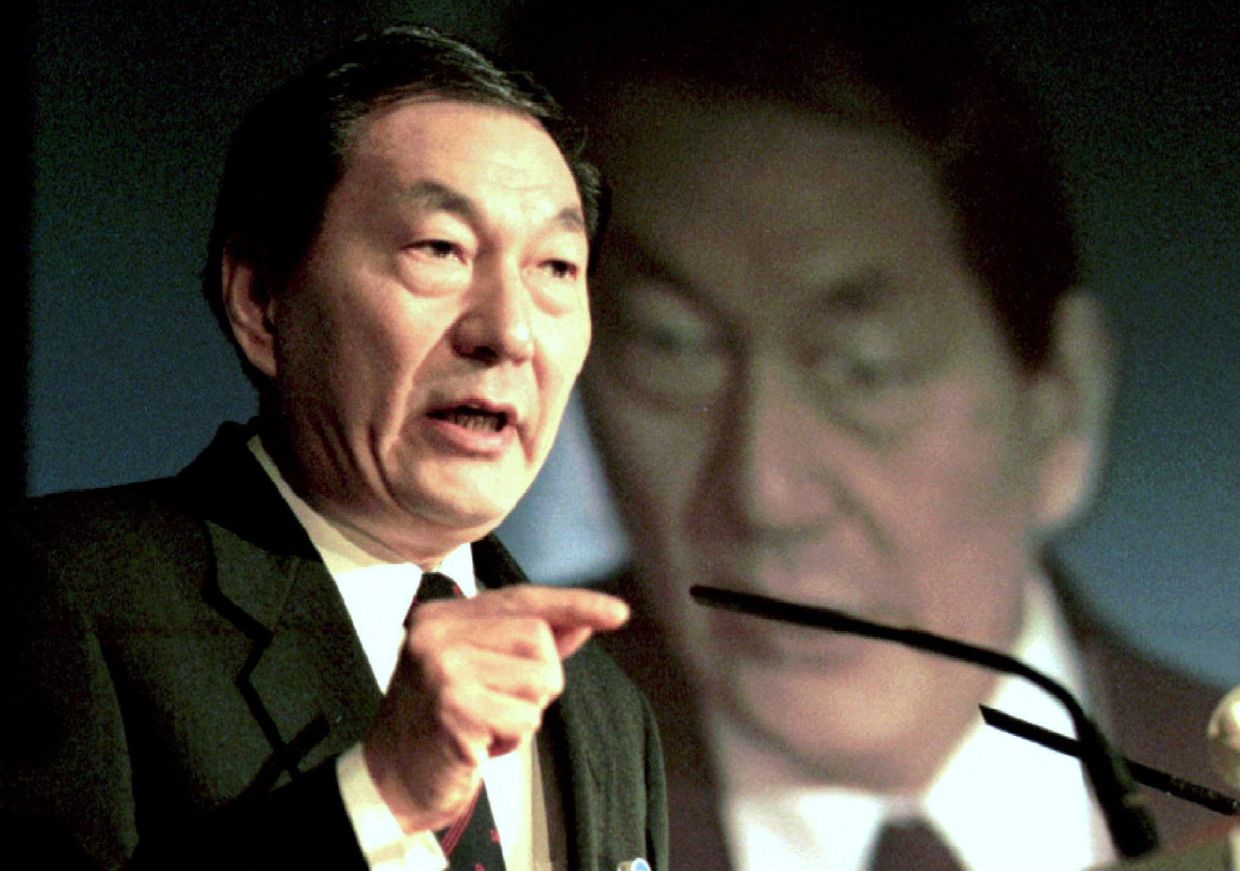
Zhu Rongji, the architect of China's dramatic economic restructuring in the late 1990s who led the country into the World Trade Organization, has passed away in Beijing at the age of 98. The former premier, who served from 1998 to 2003, succumbed to illness on Wednesday, August 12, according to state media Xinhua News Agency. His death marks the end of an era defined by bold, often painful market-oriented reforms that fundamentally altered China's economic trajectory and positioned the nation for decades of rapid growth.
Zhu's tenure as premier coincided with one of the most turbulent periods in modern Chinese economic history. He navigated China through the catastrophic 1997 Asian financial crisis and confronted rampant double-digit inflation while holding the position of chief economic architect. Rather than retreating into protectionism or state intervention, Zhu pressed forward with liberalisation measures that many contemporary observers considered revolutionary for a communist-led nation. His willingness to embrace market mechanisms and foreign participation in China's economy set him apart from his predecessors and established a template for engagement with the global economic system that would persist for decades.
The centrepiece of Zhu's economic programme was the wholesale restructuring of China's bloated state-owned enterprise sector. Tens of thousands of inefficient companies, particularly in telecommunications, banking, oil production, and related industries, were closed or radically consolidated. This process resulted in displacement for tens of millions of workers who lost their positions as uncompetitive operations were shuttered or merged. The scale of this restructuring was unprecedented in the contemporary world, yet Zhu pressed ahead despite the social costs, viewing the modernisation of China's industrial base as essential to long-term competitiveness and growth. His willingness to absorb such significant short-term pain for perceived long-term gains became his defining characteristic as a statesman.
Zhu's approach to financial system reform proved equally transformative. As governor of the People's Bank of China between 1993 and 1995, he systematised the opening of China's financial markets to foreign participation through pilot programmes and international bond sales. More importantly, in 1999 he established asset-management companies tasked with acquiring approximately 1.4 trillion yuan, equivalent to US$220 billion, in non-performing loans accumulated by China's four largest banks. This mechanism allowed these systemically critical institutions to cleanse their balance sheets of debt accumulated from years of mandatory lending to unprofitable state enterprises. The move proved instrumental in permitting these banks to transition toward market-oriented operations and eventually list on international exchanges beginning in 2005, fundamentally modernising China's financial infrastructure.
Zhu's role in engineering China's accession to the World Trade Organization in 2001 cannot be overstated in assessing his historical importance. In 2000, he personally met with then-European Union Trade Commissioner Pascal Lamy in Beijing to resolve negotiating impasses that threatened to derail accession talks. This diplomatic intervention proved decisive, and China's formal entry into the WTO the following year opened unprecedented opportunities for foreign commerce and investment while committing China to rules-based trade practices. Since that watershed moment, China's gross domestic product has expanded more than elevenfold, establishing the nation as the world's second-largest economy. However, Zhu's successors have not always adhered to the commitments he made; contemporary trade partners regularly accuse Beijing of circumventing WTO obligations through subsidisation schemes, non-tariff barriers to imports, and intellectual property infringement.
Beyond his economic mandate, Zhu cultivated a distinctive public persona that contrasted sharply with the typical inscrutable bureaucrat stereotype. His fluency in English and evident sense of humour made him unusually accessible to foreign media and political leaders. During a 1999 joint press conference with United States President Bill Clinton, when confronted with allegations that China had improperly funded American Democratic Party campaigns, Zhu deployed wit to deflect the question. He remarked that if political contributions were genuinely efficacious, China's US$146 billion in foreign-exchange reserves would easily permit a substantially larger donation than the alleged US$300,000. His response drew laughter and demonstrated a mastery of the public stage rarely exhibited by senior Chinese officials of that era. John Thornton, the former co-president of Goldman Sachs Group Inc., recalled meeting Zhu during negotiations surrounding China Mobile's 1997 Hong Kong share offering, noting his exceptional command of financial and operational detail and his willingness to pose searching questions that belied his status as a national leader rather than a corporate executive.
Zhu's administration also prioritised anti-corruption measures and bureaucratic streamlining, earning him the colloquial nickname "one-chop Zhu" in recognition of his efforts to eliminate unnecessary governmental approvals and reduce the number of official seals, or chops, required to authorise transactions. This initiative aimed to curtail both the opportunities for official malfeasance and the chronic inefficiency that characterised Chinese administrative procedures. Late in his tenure as premier, in 2000, Zhu articulated his personal aspirations for historical assessment, stating his foremost wish was that the Chinese people would remember him as an honest administrator rather than a corrupt one. He added that should citizens judge him to have accomplished genuine accomplishments for the nation, he would consider himself abundantly blessed. These remarks revealed a leader conscious of his legacy and sensitive to the tension between economic efficiency and social equity that his reforms had created.
Zhu's trajectory to the premiership reflected the turbulent nature of twentieth-century Chinese politics. Born in Hunan province in October 1928, he attended Tsinghua University from 1947 to 1951, where he studied electrical engineering and joined the Communist Party in October 1949, the very month Chairman Mao Zedong proclaimed the establishment of the People's Republic. During the Hundred Flowers Campaign of the mid-1950s, when the Communist Party briefly permitted public criticism of its policies, Zhu voiced opposition to Mao's economic approach, arguing that it pursued irrational growth targets. This candour cost him dearly; he was branded a "rightist" and demoted, subsequently spending five years labouring on a farm during the Cultural Revolution, tending livestock and cultivating rice. Following his rehabilitation in 1978 after Mao's death, Zhu advanced steadily through government positions, becoming Shanghai's mayor in 1987 and vice premier in 1991, before achieving membership in the Communist Party's elite Politburo Standing Committee in 1992.
The trajectory of economic policy under Zhu's successors diverged sharply from his market-oriented paradigm. Current President Xi Jinping has championed a contrasting vision centred on a "stronger, better, and bigger" state-controlled economy designed to serve defined national strategic interests. This represents a deliberate retreat from Zhu's emphasis on market mechanisms and private-sector expansion, reflecting a broader ideological shift within China's leadership toward state direction and control. The implications of this divergence extend throughout Southeast Asia and beyond, as foreign investors and trading partners adjust their strategies in response to an increasingly state-directed Chinese economy that prioritises national champions and domestic innovation over cross-border commercial integration. Zhu's death thus occurs at a moment when the fundamental premises of his economic vision face sustained political challenge within China itself.
Zhu maintained his engagement with public life following his departure from the premiership in 2003, when he handed the position to Wen Jiabao. He devoted considerable effort to elevating the international standing of Tsinghua University, his alma mater in Beijing, and redirected his book royalties toward supporting educational initiatives in rural regions. His son, Levin Zhu, directed China International Capital Corp, a Beijing-based investment bank, from the early 2000s through 2014, while his daughter, Zhu Yanlai, held senior management positions at Bank of China (Hong Kong). Zhu was married to Lao An and maintained a relatively low profile during his post-premiership years, consistent with conventions governing retired senior Chinese officials. His legacy remains contested; admirers credit him with positioning China for sustained economic development and integration into global systems, while critics note the immense social dislocation his reforms generated. As Southeast Asian nations continue navigating their relationship with an increasingly powerful China, the competing interpretations of Zhu's economic model will likely remain central to regional strategic calculations.

