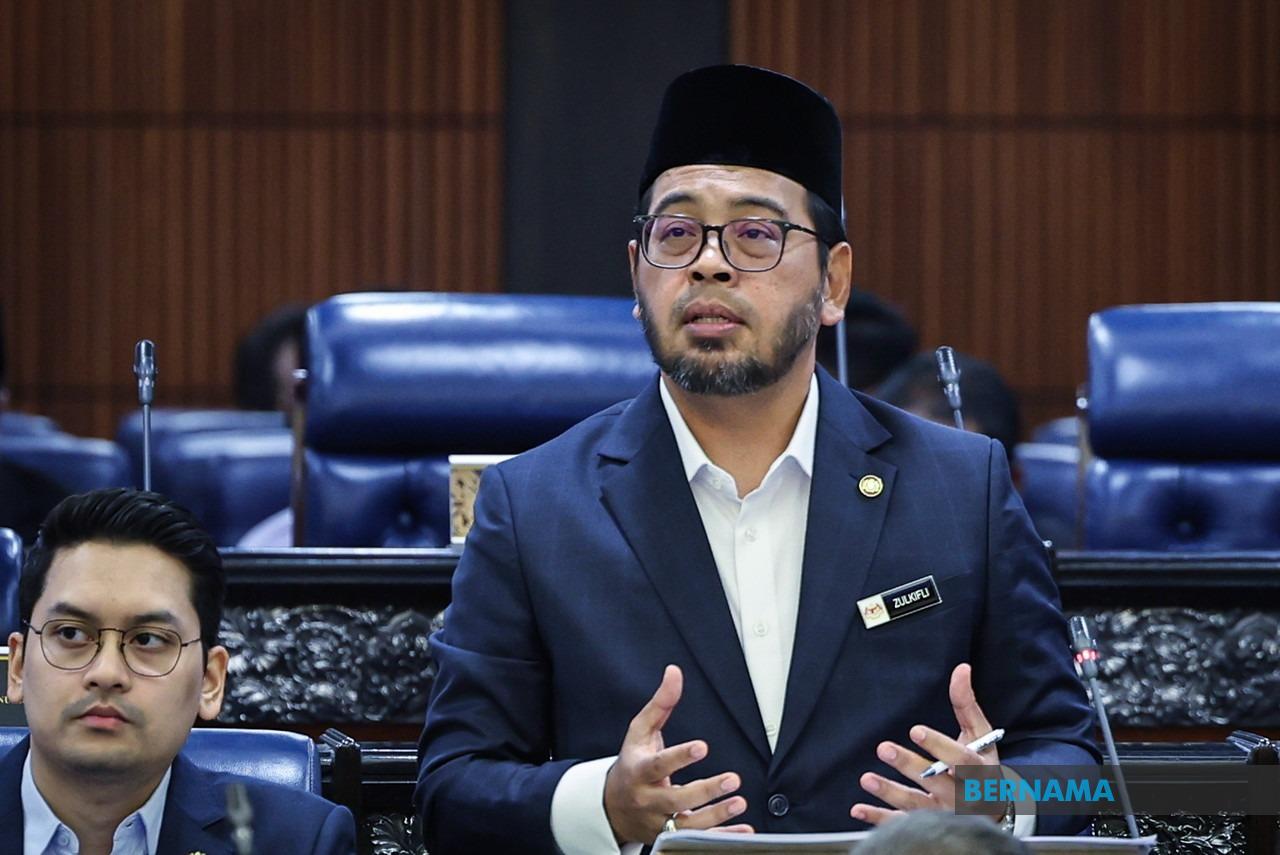
The extent of financial manipulation at Tabung Haji has been laid bare in parliamentary debate, with Religious Affairs Minister Dr Zulkifli Hasan drawing a strikingly relatable comparison to illustrate how the Islamic pilgrimage fund deceived depositors about its health. Using the story of a single mother receiving apparent returns on her savings, Zulkifli explained the mechanics of how TH created an illusion of profitability while concealing deepening insolvency.
At the heart of the deception was a fundamental violation of how dividend payments work. Zulkifli stressed that under financial law, dividends can only be distributed when the value of a fund's assets genuinely exceeds its liabilities and obligations. In TH's case, this precondition was never met during the years when the fund was announcing substantial profit distributions. Instead, the fund's managers employed what can only be characterised as paper-based asset inflation, artificially boosting the recorded value of holdings to create the false impression of financial strength.
The Royal Commission of Inquiry into TH's affairs found that statements prior to 2018 systematically misrepresented the fund's performance. The manipulation centred on a technique called Realisable Asset Value, or RAV, which valued assets outside the formal audited financial statements. This allowed managers to claim asset holdings were significantly higher than they actually were, thereby creating sufficient "paper profits" to justify dividend announcements that depositors believed reflected genuine investment returns.
This approach represented a wholesale violation of Malaysian Financial Reporting Standards and contradicted basic accounting principles. Zulkifli revealed that audit firm PricewaterhouseCoopers later investigated the practice and discovered a telling detail: of the RM4.6 billion in assets TH claimed to hold, only RM556 million had been assessed by independent professional valuers. The remaining RM4 billion in asset values rested on unverified assumptions and creative revaluations, constructed solely to permit the fund to maintain its dividend narrative.
The government's later intervention underscored just how dire the true position had become. When authorities finally acted to stabilise the institution, they were forced to inject over RM10 billion in rescue funds to prevent total collapse. This bailout represented not merely a financial rescue operation but an acknowledgment that TH's accumulated losses had rendered it insolvent without government intervention. The depositors' money—their genuine savings—was being protected only through taxpayer funds.
Zulkifli drew a parallel to Ponzi schemes and other investment frauds, where operators maintain the appearance of returns by using new investor money to pay earlier investors rather than genuine investment profits. In TH's case, the mechanics differed somewhat but the underlying principle remained the same: the fund was creating fictitious wealth on paper to justify payments it could not afford from actual returns. The difference between profit and loss was being bridged through creative accounting rather than real asset performance.
The implications for Malaysia's Muslim community, who had placed deep trust in TH as a pilgrimage fund, extended beyond mere financial loss. TH occupies a special place in Islamic life and governance, managing savings for millions of Malaysians planning their hajj journey. When an institution entrusted with such responsibility engages in accounting manipulation, it strikes at the heart of fiduciary trust. The fact that managers prioritised the appearance of dividend payments over the institution's actual sustainability demonstrates a troubling disconnect between reported performance and real stewardship.
The accounting fraud also raises uncomfortable questions about institutional oversight. Zulkifli noted that Ernst & Young was not TH's primary auditor but only reviewed pro forma statements prepared by the fund itself—a distinction suggesting the audit function was not sufficiently independent or rigorous. The reliance on RAV valuations outside formal financial statements represented a significant gap in accountability frameworks that should have prevented such divergence between reported and actual financial positions.
Looking forward, the RM10 billion rescue package represents an enormous opportunity cost for the Malaysian state. Zulkifli pointedly observed that this sum could have funded the construction of dozens of hospitals, schools, mosques, and essential public facilities across the country. Instead, it was required to clean up the consequences of institutional failure and restore depositor confidence. For a country managing competing development priorities across healthcare, education, and religious infrastructure, the diversion of such resources highlights the real-world consequences when governance failures materialise.
The RCI's investigation has also prompted necessary reflection on how government-linked institutions manage public assets. While the specific circumstances at TH involved creative accounting rather than outright theft, the outcome—depleting resources entrusted to the institution—proved equally damaging. The findings support stronger regulatory frameworks and more robust external audit requirements for funds managing citizens' savings, particularly those with religious or social significance.
For depositors and their families, the revelation that their apparent dividend returns had no genuine basis in asset performance represents a bitter acknowledgment of breach of trust. Many who received these distributions may have made financial decisions based on the reported returns, unaware that the money they were receiving represented a drawing down of their own capital under a different guise. The psychological and financial impact of learning one's savings were fictionally valued extends beyond statistics into individual household disruption.
Moving forward, TH faces the challenge of rebuilding institutional credibility while operating under significantly tighter regulatory scrutiny. The government's substantial investment in rescuing the fund must now be matched by comprehensive internal reform, stronger governance, and transparent accounting that aligns reported performance with actual asset values. For Malaysia's Muslim community and the broader public, restoring confidence in TH requires not just financial stabilisation but a genuine recommitment to fiduciary principles and honest reporting that depositors deserve.

