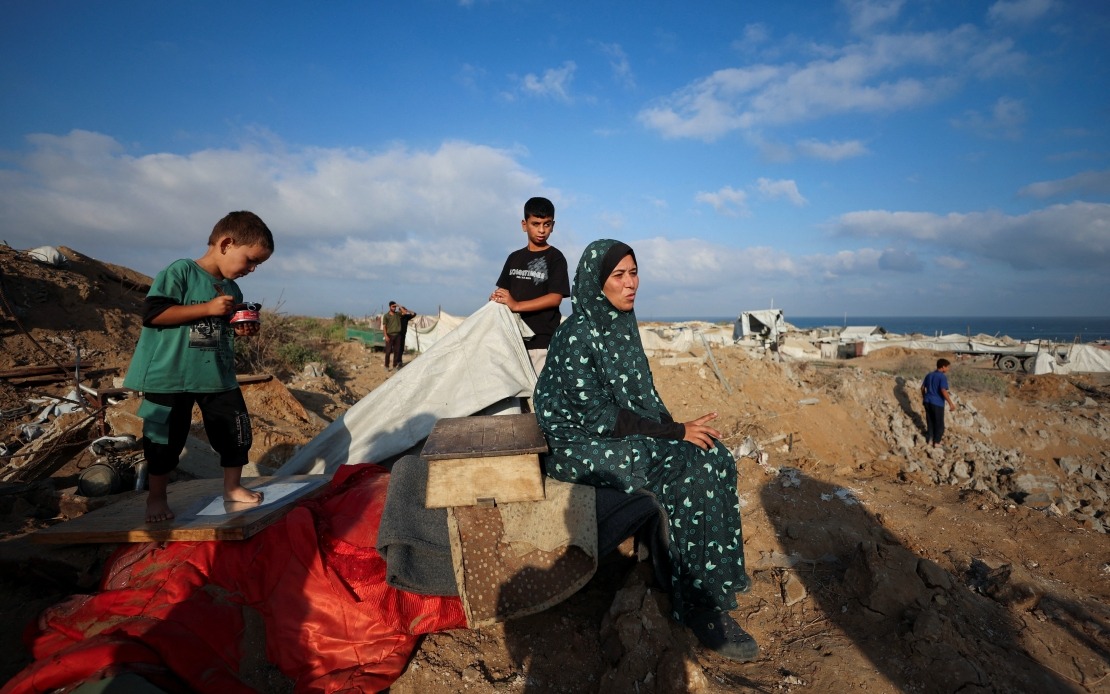
The humanitarian situation in Gaza has reached a critical juncture as international organizations project a substantial deterioration in food security over the next 18 months. According to the latest Integrated Food Security Phase Classification analysis released this week, approximately 1.4 million residents of the besieged territory will face acute food insecurity through December 2026, representing a significant increase from the 1.2 million documented during the April-to-June period. This upward trajectory signals deepening vulnerability despite temporary relief operations that briefly stabilized conditions following the ceasefire agreement reached in October 2025.
The classification framework employed by international food security experts divides populations into severity phases, with Phase 3 denoting crisis conditions and Phase 4 representing emergency situations. The new projections indicate that approximately 67 percent of Gaza's entire population—roughly two-thirds of all residents—will experience crisis-level conditions or worse, while 212,000 individuals remain trapped in emergency circumstances with virtually no access to adequate nutrition. Compounding this grim picture, all five governorates within Gaza have been classified as crisis zones, indicating that no region within the territory has escaped the spiralling food emergency.
The analysis reveals a paradoxical situation where recent humanitarian interventions have produced only marginal and temporary improvements in what remains fundamentally unsustainable conditions. Following the October 2025 ceasefire agreement, expanded aid operations succeeded in delivering food assistance to approximately 1.49 million people during May alone. This surge in humanitarian access represented one of the most significant relief efforts mounted during the extended conflict, yet even this expanded assistance proved insufficient to alter the underlying trajectory of food insecurity across the population.
Despite these relief efforts, the foundational causes of acute food insecurity remain entirely unresolved. The majority of Palestinian households in Gaza—83 percent according to the latest household surveys—report having no reliable income sources whatsoever. This employment collapse reflects the near-total destruction of the territory's economic infrastructure, the displacement of populations from their communities, and the absence of productive opportunities. These structural economic failures mean that even when humanitarian assistance reaches communities, it functions merely as a temporary palliative rather than a sustainable solution to poverty-driven hunger.
A particularly troubling development involves the recent decline in humanitarian assistance levels since February, driven by both funding constraints among donor nations and growing operational uncertainty surrounding international aid organizations. These logistical and financial pressures have created a downward spiral in which access corridors narrow even as needs intensify. The fragility of recent improvements becomes evident when examining what would occur without continued humanitarian intervention: the analysis projects that without sustained food aid, approximately 1.9 million people—representing roughly 90 percent of Gaza's entire population—would face acute food insecurity. This hypothetical scenario underscores how thoroughly dependent the civilian population has become on external assistance for basic survival.
The nutritional consequences of this crisis are particularly acute for the most vulnerable populations. The analysis projects that by April 2027, approximately 74,200 children under the age of five will require medical treatment for acute malnutrition, including 11,432 cases classified as severe. These figures represent not merely statistics but individual tragedies reflecting stunted physical development, compromised cognitive function, and increased susceptibility to infectious diseases. Additionally, 24,600 pregnant and breastfeeding women require urgent nutritional support, creating intergenerational consequences as maternal malnutrition directly threatens child development both before and after birth.
For Malaysian policymakers and regional observers, this escalating crisis in Gaza carries significant implications. As a nation with substantial Muslim populations and long-standing advocacy for Palestinian rights, Malaysia has consistently championed humanitarian causes in international forums. The deteriorating conditions detailed in this analysis underscore the urgency of sustained diplomatic engagement and humanitarian contributions from Southeast Asian nations. The scale of need—with 90 percent of Gaza's population dependent on aid—exceeds the capacity of any single international organization or regional actor, demanding coordinated responses from the global community.
The International Committee of the Red Cross and United Nations agencies have articulated three essential conditions for preventing further deterioration: sustained humanitarian access to the territory, expansion of nutrition-specific programs targeting vulnerable groups, and permanent cessation of hostilities. Without addressing all three simultaneously, temporary relief measures will continue to produce only marginal improvements in conditions destined to worsen. This represents a critical moment where the international community's commitment to humanitarian principles faces concrete testing through sustained resource allocation and diplomatic pressure.
Regional implications extend beyond immediate humanitarian concerns. Prolonged conflict and deteriorating civilian conditions in Gaza contribute to regional instability, radicalization, and the perpetuation of cycles of violence affecting neighboring countries including Egypt, Israel, and Jordan. Southeast Asian nations with significant trade and diplomatic relationships throughout the Middle East have vested interests in stabilizing this situation through diplomatic channels and humanitarian contributions. The projection of worsening conditions through December 2026 suggests that current trajectories remain unsustainable, making urgent intervention essential not merely from humanitarian perspectives but from strategic regional stability considerations.
The analysis released by the IPC represents the most comprehensive assessment of Gaza's food security situation since the October 2025 ceasefire. Its projections, while grounded in rigorous data collection and analysis, inherently contain uncertainty regarding future developments including shifts in conflict dynamics, donor funding patterns, and operational capacity of aid organizations. Nevertheless, the consistent directional trends across multiple assessment periods suggest that without substantial intervention, conditions will continue deteriorating. For international observers monitoring humanitarian developments, this analysis serves as both a warning of impending crisis and a call to action for sustained engagement with Gaza's desperate situation.

