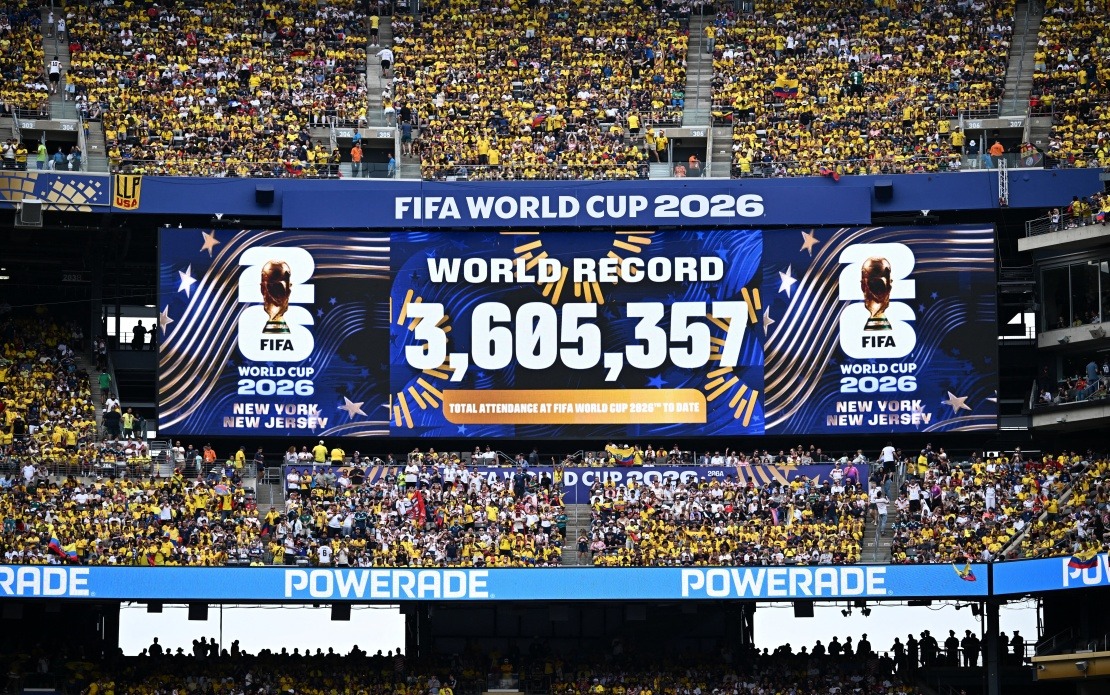
The 2026 FIFA World Cup has etched itself into sporting history by becoming the most attended tournament ever staged, eclipsing the long-standing record set three decades ago. As Germany battled Ecuador in East Rutherford, New Jersey on Thursday, giant stadium screens confirmed that attendance had crossed the 3,605,357 mark—surpassing the 1.994 tournament's nearly 3.6 million spectators and drawing roaring approval from the crowd. The milestone announcement delivered a powerful statement about the tournament's resonance with football fans across the globe and the logistical capacity of the host nations to accommodate unprecedented numbers of supporters.
The scale of this achievement becomes even more remarkable when considering the tournament's progression. With 48 matches still scheduled for the remainder of the competition, the cumulative attendance figures could potentially approach double the 1994 benchmark before the final whistle sounds in the last fixture. This trajectory underscores how the expansion of the World Cup format—from 32 to 48 teams—has fundamentally altered the event's reach and appeal. The 1994 edition featured 52 matches across its duration, while the current tournament's expanded format ensures significantly more matches spread across diverse venues, allowing more fans across more regions to experience World Cup football firsthand.
The consistently high turnout reflects operational excellence across the 16 host cities and their respective stadiums, with capacity utilization averaging just over 99 percent throughout the tournament. This figure represents extraordinary demand for tickets and demonstrates that football's drawing power transcends geographical boundaries and economic considerations. Such packed venues create an electrifying atmosphere that elevates the quality of competition and enriches the experience for players and spectators alike, transforming stadiums into epicentres of collective passion and sporting excellence.
From a regional perspective, Asia-Pacific nations observe how such continental and intercontinental tournaments reshape the landscape of global football infrastructure. The success of the 2026 World Cup—hosted across North America—provides valuable lessons for potential future host nations, including those in Southeast Asia and the broader Asian region. The ability to fill stadiums consistently suggests that investment in modern facilities and tournament organization yields substantial returns in terms of sporting legacy and economic impact, considerations that remain central to the strategic planning of football federations across Asia.
FIFA President Gianni Infantino characterized the attendance surge as vindication of football's unparalleled capacity to unite diverse populations in celebration. The tournament's reach across 16 distinct host cities speaks to the decentralized approach taken in its organization, ensuring that supporters from different regions could access matches without undertaking prohibitive journeys. This geographical distribution of matches across multiple venues and time zones has broadened the tournament's accessibility and allowed previously underserved markets to participate directly in World Cup experiences.
The achievement carries implications for how global sporting bodies conceptualize and plan future tournaments. The data generated from the 2026 World Cup—regarding attendance patterns, fan demographics, ticket demand, and stadium operations—will inform strategic decisions for subsequent FIFA competitions and other major sporting events. Malaysian football administrators and stakeholders keen on understanding international tournament organization will find valuable precedents and benchmarks in these figures.
Beyond the statistical records, the packed stadiums reflect deeper currents within global football culture. The sport's democratization through digital platforms, increased media coverage, and grassroots development programs has created a worldwide fan base with unprecedented appetite for international competition. The 2026 World Cup has capitalized on these trends, translating enthusiasm into gate receipts and in-stadium atmospheres that define major sporting occasions.
Looking forward, these attendance records establish new baselines for future tournaments and raise expectations regarding stadium capacities and fan engagement strategies. Tournament organizers will likely seek to replicate elements of the 2026 World Cup's success while adapting approaches to suit different geographical contexts and cultural preferences. For Southeast Asian nations aspiring to host major football competitions, the 2026 World Cup provides contemporary evidence that investment in infrastructure and tournament management yields tangible returns in terms of fan participation and global sporting prestige.

