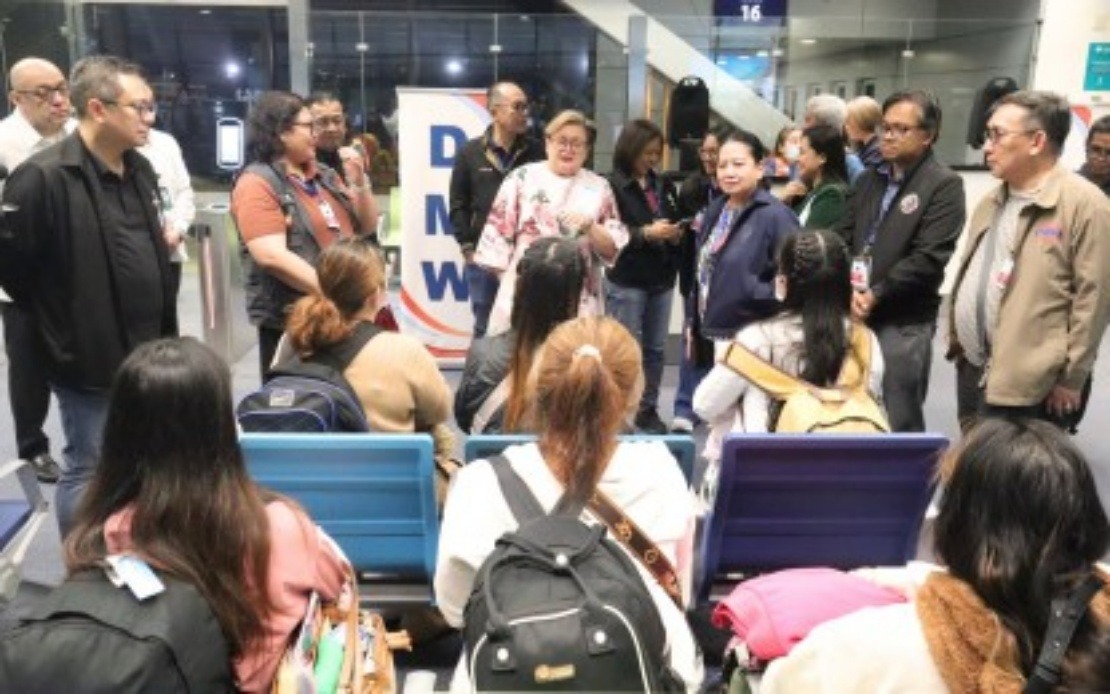
A group of 24 Filipino nationals arrived back home in the early hours of Sunday morning at Ninoy Aquino International Airport, ending an ordeal that had kept them imprisoned in Russia for approximately nine months without formal charges. Their return marked the successful conclusion of high-level diplomatic negotiations, culminating in President Ferdinand R. Marcos Jr personally intervening with Russian President Vladimir Putin to secure their release during a bilateral meeting held in Kazan on the margins of the ASEAN-Russia Commemorative Summit.
The returnees touched down at NAIA Terminal 1 in two separate groups, transported via Philippine Airlines flights from Bangkok, Thailand. The first contingent of six individuals disembarked shortly after midnight on PAL Flight PR737, with the remaining eighteen passengers arriving early Sunday morning aboard PAL Flight PR733. The carefully coordinated arrival demonstrated the logistical preparation undertaken by Philippine government agencies to receive and process the detainees upon their return.
The repatriation effort involved substantial interagency coordination between the Philippine government and Russian authorities. The Department of Foreign Affairs oversaw the diplomatic arrangements, while the Department of Migrant Workers and the Overseas Workers Welfare Administration provided essential support throughout the process. Foreign Affairs Secretary Maria Theresa Lazaro and Migrant Workers Secretary Hans Cacdac were personally present at the airport to welcome the returnees, signalling the gravity with which the government viewed their case and its resolution.
The 24 detainees had been held in Irkutsk, a major city in southeastern Siberia, facing immigration-related violations without ever being formally charged with any crime. This extended detention without clear legal proceedings had raised significant concerns within diplomatic circles and among migrant rights advocates, who questioned the circumstances that had led to their initial apprehension and subsequent prolonged imprisonment.
Investigations by Philippine officials uncovered troubling details regarding the manner in which these individuals had been recruited and transported to Russia. Multiple reports suggested that the Filipinos had fallen victim to illegal recruitment schemes—criminal enterprises that promise lucrative overseas employment opportunities while concealing their true intentions. These sophisticated trafficking networks often prey on economically vulnerable populations seeking better income prospects abroad, only to place them in dangerous or illegal situations.
President Marcos credited the Russian government and President Putin personally for their cooperation in facilitating the release. During their meeting in Kazan, the Philippine president directly broached the subject of the detained Filipinos, leveraging the bilateral dialogue as an opportunity to resolve what had become an increasingly sensitive issue between the two nations. The willingness of the Russian leadership to engage constructively on the matter demonstrated the diplomatic channels available to Manila when pursuing interests on behalf of its citizens abroad.
The return of these individuals carries particular significance for the broader context of Filipino migrant workers across the globe. The Philippines has tens of millions of citizens working overseas in both legal and exploitative conditions, remitting billions of dollars annually to support families back home. Cases involving trafficking, illegal recruitment, and detention in foreign countries serve as sobering reminders of the vulnerabilities faced by overseas Filipino workers, particularly those with limited education or resources to verify employment opportunities.
Government agencies have committed to providing comprehensive assistance and reintegration support to the returning Filipinos as they readjust to life in the Philippines. Beyond immediate humanitarian aid, authorities intend to conduct thorough investigations into the recruitment networks and criminal organisations responsible for facilitating their illegal journey to Russia. Understanding the operational methods and supply chains of these trafficking networks remains crucial for preventing future victims and disrupting the criminal enterprise at its roots.
The successful diplomatic resolution also underscores the importance of high-level political engagement when Filipino nationals face serious difficulties abroad. By bringing the matter directly to the presidential level during a multilateral summit, Marcos ensured that the case received appropriate diplomatic weight and attention from Russian counterparts. This approach contrasts with lower-level administrative channels, which might have been unable to expedite a resolution within comparable timeframes.
For Malaysian readers, this development holds particular relevance given Malaysia's own substantial population of overseas workers and migrant communities. The case illustrates the ongoing challenges that Southeast Asian nations face in protecting their nationals working abroad, particularly in distant and less familiar jurisdictions. It also highlights the effectiveness of direct presidential intervention as a tool in migrant diplomacy—a lesson relevant to other nations in the region managing similar cases.
The incident further emphasises the critical need for prospective overseas workers to exercise extreme caution when evaluating employment opportunities, particularly those originating from unlicensed recruiters or promises offering unusually generous terms. The Philippine government, like its regional counterparts, continues to strengthen its vetting mechanisms and public awareness campaigns to educate workers about the warning signs of trafficking and illegal recruitment schemes.
As investigations proceed into the recruitment networks behind this particular case, the repatriation of these 24 individuals represents both a diplomatic success and a call to action for enhanced protections. The resolution demonstrates that persistent high-level engagement can yield results, yet it simultaneously underscores the persistent vulnerability of migrant workers who venture abroad in search of economic opportunity, often lacking the resources or knowledge to distinguish legitimate employment from exploitative schemes designed to trap them.
%22%2F%3E%3C%2Fpattern%3E%3C%2Fdefs%3E%3Crect%20width%3D%22100%25%22%20height%3D%22100%25%22%20fill%3D%22url(%23ph3tt8dg)%22%2F%3E%3Crect%20width%3D%22100%25%22%20height%3D%22100%25%22%20fill%3D%22url(%23ph3tt8dp)%22%2F%3E%3Ctext%20x%3D%2250%25%22%20y%3D%2250%25%22%20text-anchor%3D%22middle%22%20dominant-baseline%3D%22central%22%20fill%3D%22rgba(255%2C255%2C255%2C0.95)%22%20font-family%3D%22Georgia%2C%20'Times%20New%20Roman'%2C%20serif%22%20font-weight%3D%22700%22%20font-size%3D%22226%22%20letter-spacing%3D%22-0.02em%22%3EDiesel%3C%2Ftext%3E%3C%2Fsvg%3E)
%22%2F%3E%3C%2Fpattern%3E%3C%2Fdefs%3E%3Crect%20width%3D%22100%25%22%20height%3D%22100%25%22%20fill%3D%22url(%23ph3oiarg)%22%2F%3E%3Crect%20width%3D%22100%25%22%20height%3D%22100%25%22%20fill%3D%22url(%23ph3oiarp)%22%2F%3E%3Ctext%20x%3D%2250%25%22%20y%3D%2250%25%22%20text-anchor%3D%22middle%22%20dominant-baseline%3D%22central%22%20fill%3D%22rgba(255%2C255%2C255%2C0.95)%22%20font-family%3D%22Georgia%2C%20'Times%20New%20Roman'%2C%20serif%22%20font-weight%3D%22700%22%20font-size%3D%22320%22%20letter-spacing%3D%22-0.02em%22%3EPM%3C%2Ftext%3E%3C%2Fsvg%3E)