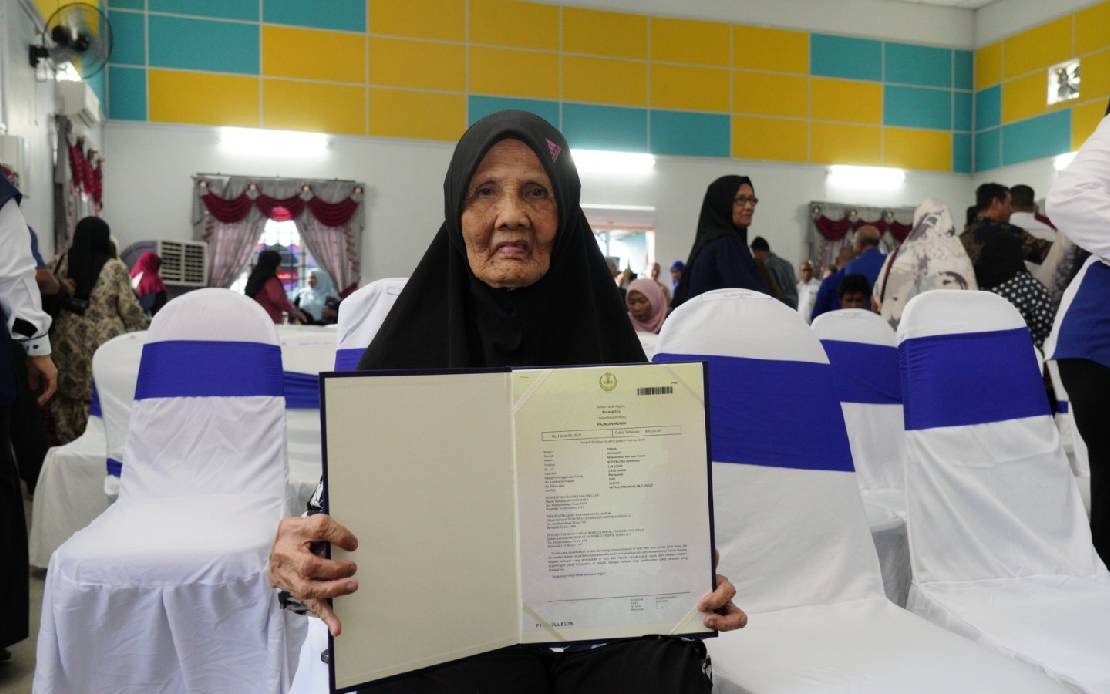
Forty-seven rural residents in Perak have received formal land ownership grants following the completion of the FELCRA Berhad Seri Gala Area Village Rearrangement Programme, a milestone that state officials say demonstrates the viability of systematic land development as a pathway out of rural poverty. The grants were distributed at a ceremony held in Ipoh on July 14, highlighting a model that extends beyond conventional rural infrastructure projects to place tangible assets directly in the hands of farming communities.
The FELCRA Consolidation and Rehabilitation Programme represents a shift in how Malaysia approaches rural development. According to Perak Menteri Besar Datuk Seri Saarani Mohamad, the scheme succeeds because it transforms dormant agricultural land into economically productive holdings while simultaneously revitalising local employment and entrepreneurship. Rather than viewing land distribution as a bureaucratic exercise, state leaders frame the handover as a mechanism for restoring economic dignity to rural populations by giving them ownership stakes in tangible, income-generating assets. This approach addresses a longstanding challenge in Malaysian rural policy: how to arrest population flight to cities while improving living standards in farming regions.
The Seri Gala operation sits within a broader FELCRA footprint that now spans nearly 32,000 hectares across almost 20,000 participants nationwide. Perak has emerged as the second-largest operational region for the scheme after Pahang, positioning the state as a significant test case for whether land consolidation and participant-centred development can work at scale. The geographical concentration of FELCRA activity in Peninsular Malaysia's interior states reflects the distribution of suitable land and farming populations, but also underscores the uneven nature of rural development across the country. As Malaysian policymakers grapple with regional disparities, the Perak experience offers insight into whether this model can be replicated in other states, particularly in Sabah and Sarawak where landholding patterns and customary tenure systems present different challenges.
During the grant ceremony, officials emphasised that the FELCRA model delivers continuous benefits beyond the initial asset transfer. By replacing ad-hoc, small-scale farming with systematic development frameworks, the scheme reportedly increases participant returns, bolsters community confidence in rural investment, and creates conditions where rural economies can sustain themselves rather than perpetually depending on government support. This framing aligns with broader Southeast Asian development philosophy, where initiatives like Thailand's land-to-tiller programmes and Indonesia's agrarian reform projects similarly attempt to knit ownership, productivity, and social stability together. However, Malaysia's experience suggests that success requires not just land distribution but ongoing extension services, market linkages, and credit access—elements that FELCRA positions as integral rather than supplementary.
The significance of the Seri Gala handover extends to Malaysia's regional development priorities. State Rural Development, Plantation, Agriculture and Food Industry Committee chairman Datuk Mohd Zolkafly Harun and FELCRA officials framed the initiative as part of efforts to reduce the gap between urban and rural prosperity. This balancing act has become politically and economically urgent as urbanisation accelerates, rural labour shortages mount, and agricultural incomes stagnate. By securing land ownership and demonstrating viable farm-based livelihoods, the scheme attempts to make rural residence a choice rather than a symptom of economic exclusion. For Malaysian voters in rural constituencies—a politically significant bloc—such tangible asset transfers carry weight beyond their economic rationale.
FELCRA Berhad director of participant affairs Zainal Abidin Alias anchored the programme's philosophy to recent statements by Deputy Prime Minister and Minister of Rural and Regional Development Datuk Seri Dr Ahmad Zahid Hamidi. Hamidi's remarks during World Rural Development Day 2026 celebrations in Jengka, Pahang, stressed that modern rural development cannot remain confined to infrastructure or commodity production. Instead, it must encompass human capital development, community economic strengthening, entrepreneurship facilitation, and the capacity of rural people to shape their own futures. This rhetorical shift—from rural development as government provision to rural development as community empowerment—reflects evolving thinking about sustainable development in Southeast Asia, where top-down schemes have sometimes faltered when disconnected from local agency and entrepreneurial initiative.
The timing of the Seri Gala grants carries implications for Malaysia's broader agricultural policy debate. As global commodity prices fluctuate and younger generations drift from farming, state and federal authorities face pressure to make agriculture economically viable for smallholders. FELCRA's consolidation approach—pooling dispersed plots and implementing economies of scale—addresses fragmentation that has long plagued Malaysian smallholder agriculture. Yet the scheme's success depends on whether participants can access modern inputs, adopt improved techniques, and reach premium markets. Without such complementary supports, land ownership alone may not arrest rural decline, a lesson evident from agricultural reforms across Asia where asset transfer has preceded but not guaranteed economic transformation.
The Perak event also underscores the distinction between programme visibility and programme sustainability. Handover ceremonies generate political goodwill and media coverage, yet the true test lies in whether the 47 Seri Gala participants maintain viable livelihoods three, five, or ten years hence. Monitoring mechanisms and ongoing support structures remain critical, though such unglamorous administrative work rarely commands the attention devoted to grant ceremonies. For policymakers throughout Southeast Asia seeking to benchmark rural development initiatives, the FELCRA experience offers a case study in how asset distribution and community engagement can converge—but also a reminder that inaugural success does not guarantee long-term impact without sustained institutional commitment.
The involvement of FELCRA Berhad chairman Datuk Seri Ahmad Jazlan Yaakub and state officials reflects the vertical integration between federal rural development policy and state-level implementation. This coordination, when functioning smoothly, can accelerate programme roll-out; when fractured, it can dissipate resources and enthusiasm. Perak's status as a second-largest FELCRA region suggests effective collaboration, yet questions remain about replication potential in states with weaker administrative capacity or competing land-use priorities. For Malaysian policymakers and development practitioners, the Seri Gala grants represent both an achievement worth celebrating and a foundation upon which more complex questions about rural sustainability, generational farming, and market integration must be continuously tested and refined.

