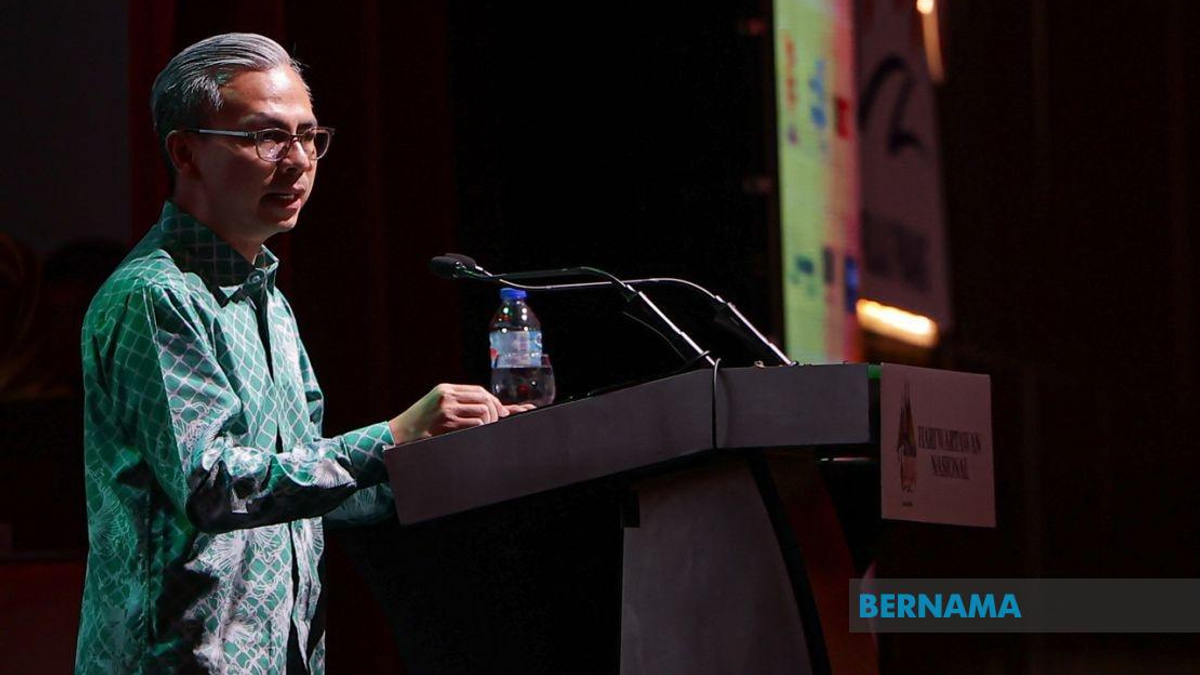
The Malaysian government has expanded its grassroots communication network in the northern states by appointing 95 MADANI Community leaders, marking an effort to strengthen the relationship between officials and constituents at the community level. The appointment ceremony in Alor Setar saw 68 leaders selected from Kedah and 27 from Perlis, each receiving formal letters of appointment as part of the broader MADANI initiative. This expansion represents a structured approach to ensuring that government messaging reaches the public through trusted local figures rather than through traditional top-down channels alone.
Abdullah Izhar Mohamed Yusof, Political Secretary to the Communications Minister, articulated the government's underlying philosophy when he stressed that effective communication transcends the mere transmission of information. Instead, the administration seeks to foster genuine understanding, build public trust, and translate policy intentions into tangible benefits for citizens. The appointment of community-based ambassadors reflects this philosophy by positioning local representatives as intermediaries capable of interpreting and contextualizing government initiatives within their specific neighbourhoods.
These 95 leaders will assume multifaceted responsibilities extending well beyond simple message delivery. They are expected to function as information conduits flowing in both directions—channelling community concerns, grievances, and feedback upward to government bodies while simultaneously explaining new policies and programmes downward to residents. This bidirectional flow addresses a persistent challenge in Malaysian governance: the gap between policy intentions articulated in the capital and public comprehension at the grassroots, where citizens struggle to navigate complex eligibility criteria and application procedures for various assistance schemes.
A significant dimension of the MADANI Community leaders' mandate involves ensuring equitable access to targeted financial assistance. Three specific programmes have been identified: Sumbangan Tunai Rahmah (STR), Sumbangan Asas Rahmah (SARA), and Budi MADANI support. By positioning community leaders as knowledgeable facilitators, the government aims to reduce exclusion errors wherein eligible households miss out on support because they lack information or struggle with bureaucratic processes. This approach recognizes that poverty and vulnerability often correlate with lower digital literacy and reduced access to official government channels, making local community leaders essential bridges.
The appointment also reflects Prime Minister Datuk Seri Anwar Ibrahim's administration's stated commitment to communication-centred governance. The MADANI framework itself—an acronym representing Memperkasa, Akhlak, Demokratik, Adil, and Negara—emphasizes the importance of inclusive dialogue and transparency. By institutionalizing community leadership positions across regions, the government signals that dialogue with citizens is not incidental but central to policy implementation and refinement.
In contemporary Malaysia, the MADANI Community leaders face an increasingly complex information environment. Abdullah Izhar emphasized that these appointees must also function as digital literacy educators, countering the proliferation of online scams, deliberately manufactured misinformation, and emerging technological threats. The reference to deepfake technology and artificial intelligence reflects growing governmental concern about citizens' vulnerability to sophisticated digital deception. Community leaders, positioned within trusted social networks, are expected to encourage neighbours to verify information before sharing and to recognize manipulated content that can appear deceptively authentic.
The challenge of combating misinformation has become particularly acute in Malaysia, where social media penetration is high and literacy regarding digital manipulation remains uneven across demographics. Older populations and less-educated communities are especially vulnerable to sharing fabricated videos or false claims without verification. By training community leaders as digital literacy advocates, the government hopes to leverage existing social trust to improve collective information hygiene and reduce the viral spread of damaging falsehoods.
The northern states of Kedah and Perlis were selected as initial pilot regions for this expanded community leader programme, suggesting a phased rollout approach. These states encompass both urban and rural areas, providing diverse contexts for testing the model before potential nationwide expansion. The success of this initiative will likely be measured not only by appointment numbers but by tangible outcomes: improved awareness of assistance programmes, reduced exclusion of eligible beneficiaries, and measurable changes in public perceptions of government responsiveness.
For Malaysian readers and policymakers, this initiative highlights a broader shift in governance strategy across Southeast Asia. Rather than relying solely on traditional media, digital platforms, or bureaucratic processes, governments increasingly recognize that community-embedded leaders offer unparalleled advantages in terms of credibility and access. The MADANI Community leader model essentially codifies what grassroots activists have long known: that change and information adoption accelerate dramatically when trusted local figures champion initiatives rather than distant authorities.
The appointment of these 95 leaders also signals recognition that Malaysian governance cannot function optimally in the absence of robust community participation and feedback. Citizens in Kedah and Perlis will now have identifiable, accountable local representatives tasked with representing their interests and concerns to higher authorities. This institutionalization of community voice may gradually shift power dynamics, making government bodies more responsive to documented local needs rather than proceeding based on assumptions or centralized planning divorced from grassroots realities.
Looking forward, the sustainability of this programme will depend on adequate support for community leaders, including training, compensation, and clear performance metrics. Without such infrastructure, appointments alone risk becoming symbolic gestures rather than functional improvements. Nonetheless, the initiative represents a commendable acknowledgment that effective governance in modern Malaysia requires systematic mechanisms for two-way communication and community empowerment at the hyperlocal level.