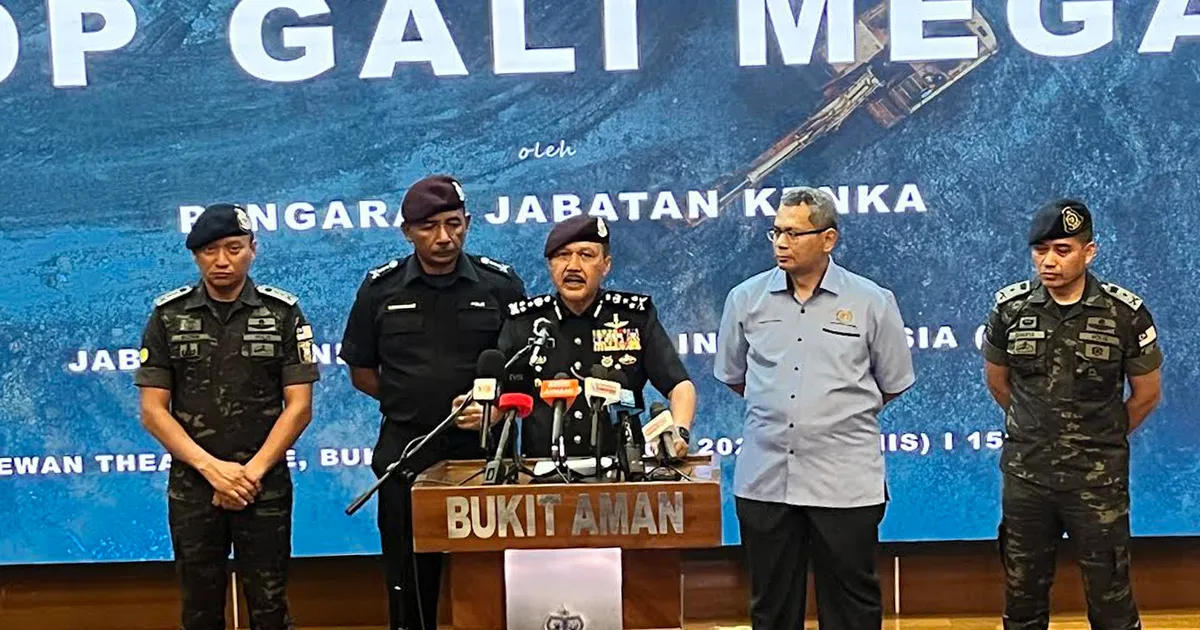
A coordinated crackdown on unlicensed mining operations has resulted in the arrest of 99 suspects and the seizure of assets valued at RM119 million, signalling intensified government action against a persistent environmental and regulatory problem in Malaysia. The operation, conducted between August 19 and 23, represents one of the more substantial enforcement sweeps against the sector in recent times, reflecting heightened concern over the uncontrolled extraction of natural resources that threatens both environmental stability and fair competition in regulated industries.
During the five-day enforcement period, authorities recovered approximately 33,000 tonnes of extracted materials comprising coal, quarry stone, earth and sand, with the raw materials alone estimated to be worth RM21 million. The volume of seized resources underscores the scale at which illegal mining syndicates operate across Malaysia, moving significant quantities of materials through supply chains without proper permits or environmental compliance measures. This extraction capacity, if left unchecked, would represent a substantial underground economy operating parallel to legitimate, regulated quarrying and mining businesses that operate within licensing frameworks.
The broader RM119 million in seized assets extends well beyond the raw materials themselves, encompassing heavy machinery, vehicles, equipment and potentially financial holdings connected to the illegal operations. Such comprehensive asset seizures are designed to dismantle the infrastructure supporting these enterprises, making it economically unviable for syndicates to immediately resume operations following disruption. The seizure of operating equipment represents a significant deterrent, as replacing excavators, loaders and transport vehicles demands considerable capital investment that many organised illegal mining groups may struggle to mobilise quickly.
Illegal mining remains deeply entrenched in Malaysian society, particularly in states with abundant natural resources and complex terrain that facilitates clandestine extraction. The persistence of this activity reflects a complex interplay of factors including corruption, porous enforcement capacity in remote areas, insufficient penalties relative to potential profits, and demand from construction sectors and manufacturers willing to purchase materials at below-market prices without scrutinising their origin. For Malaysian consumers and legitimate businesses, illegal mining creates unfair competitive pressure on lawful operators who incur compliance costs, environmental bonds and licensing fees that unlicensed competitors avoid entirely.
The environmental consequences of unregulated extraction extend beyond immediate site degradation. Illegal mining operations typically operate without rehabilitation plans, leaving behind scarred landscapes, contaminated water sources and habitat destruction that persist long after the operators have relocated. In areas with high rainfall and complex hydrology, uncontrolled mining can trigger landslides, water pollution and ecosystem collapse that affect downstream communities. These environmental costs are not borne by the illegal operators themselves but are instead socialised across affected regions, representing a hidden subsidy to criminal enterprise.
The August operation demonstrates that Malaysian enforcement agencies possess the capacity and coordination mechanisms to mobilise rapid, multi-agency responses when political will aligns. Success in such operations requires cooperation between mining regulatory bodies, environmental authorities, police forces and task-designated units that must work across jurisdictional boundaries. However, the recurring nature of illegal mining prosecutions suggests that episodic enforcement sweeps, however dramatic in scale, have not fundamentally eliminated the underlying incentive structures that make illegal extraction attractive to organised groups and their investors.
From a regional perspective, Malaysia's illegal mining challenges mirror patterns across Southeast Asia, where countries including Myanmar, Laos and Cambodia face similarly acute resource extraction problems. The existence of cross-border supply chains means that Malaysian illegal materials sometimes transit through or originate from neighbouring countries, requiring diplomatic coordination and mutual enforcement efforts that remain underdeveloped. Additionally, regional demand for cheap construction materials creates pull factors that sustain extraction pressure on Malaysian resources regardless of domestic enforcement intensity.
Legislative and enforcement frameworks governing illegal mining in Malaysia have been strengthened periodically, yet gaps remain in penalty structures and prosecution timelines. Sentences for large-scale illegal mining operations often appear modest relative to potential profits and asset valuations, potentially rendering incarceration an acceptable business cost for syndicates rather than a genuine deterrent. Enhanced penalties, faster prosecutorial processes and permanent asset forfeiture provisions could strengthen deterrence mechanisms alongside direct enforcement operations.
The August crackdown's effectiveness will ultimately be measured not by immediate headline figures but by whether the arrests, convictions and asset forfeitures generate sustained behavioural change among potential violators. Economic analysis of illegal mining suggests that substantial certainty of apprehension, rather than merely severity of punishment, influences offender decision-making. Consistency in enforcement messaging and follow-through on prosecution cases thus becomes as strategically important as the dramatic seizure operations themselves, creating a perception among would-be participants that illegal mining carries unacceptable risk.
Moving forward, Malaysian policymakers must balance intensive enforcement with structural reforms addressing root causes of mining illegality. These could encompass streamlining legitimate licensing processes to reduce barriers for small-scale legal operators, improving compensation structures for communities affected by legal mining to build social license, and enhancing supply chain transparency that makes purchased materials traceable to licensed sources. Without such complementary approaches, authorities may find themselves pursuing an endless enforcement cycle against a problem that regenerates as long as underlying economic incentives persist.

