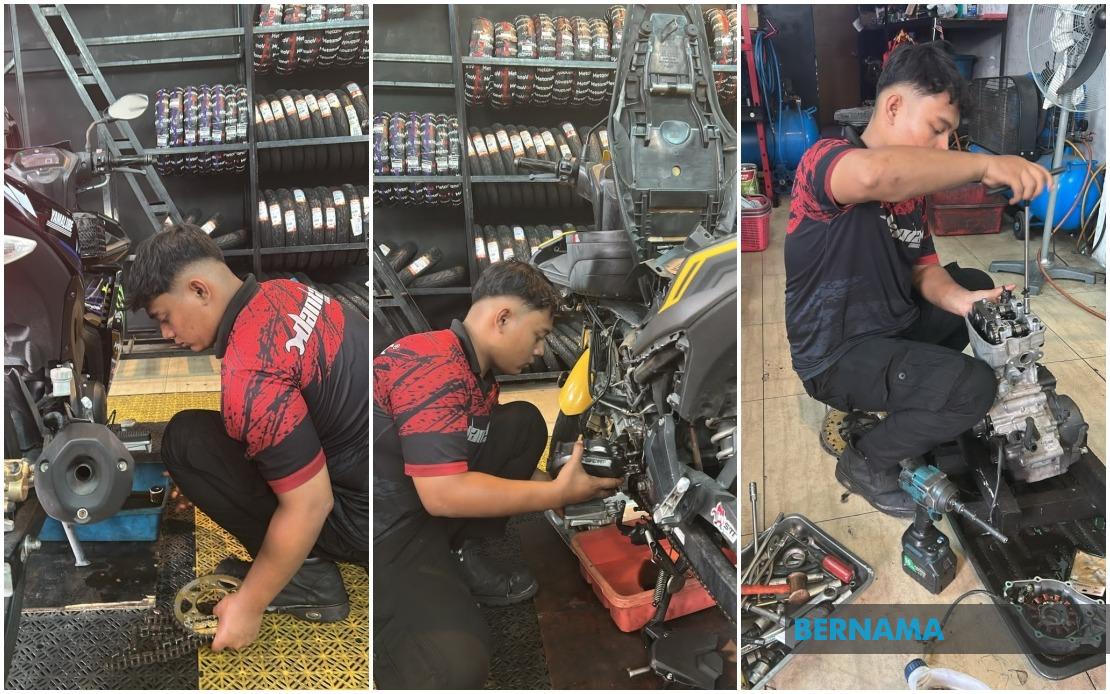
The Academy in Industry (ADI) programme represents a strategic intervention in Malaysia's approach to vocational development, functioning as far more than a conventional training scheme. Launched as a government-backed initiative to align educational outcomes with immediate industry requirements, the ADI has evolved into a comprehensive platform addressing simultaneous challenges: youth unemployment, skills deficits in critical sectors, and the reintegration of individuals who have encountered educational or socioeconomic barriers.
The programme's fundamental premise rests on a pragmatic observation that Malaysia's economy requires skilled workers equipped not merely with theoretical knowledge but with hands-on competence validated through industry standards. Rather than isolating vocational training within classroom environments, the ADI framework embeds learning directly into workplace contexts, allowing participants to develop expertise while simultaneously contributing to productive enterprise. This hybrid model simultaneously generates human capital and addresses persistent labour shortages that have constrained growth in sectors ranging from automotive manufacturing to food processing.
Muhammad Arif Nurul Azmi exemplifies the transformative potential embedded within the programme's structure. A twenty-year-old participant now based in Kajang, Selangor, Azmi entered the ADI initiative with foundational mechanical aptitude—accumulated informally through childhood experimentation with bicycles and teenage motorcycle repairs—but lacking the formalised knowledge necessary for entrepreneurial advancement. His participation catalysed a decisive shift in capability and confidence. Through structured engagement with the ADI curriculum, Azmi acquired comprehensive understanding of workshop management, operational protocols, and business administration—competencies that transcended mechanical skill alone. His Professional Diploma in Motorcycle Maintenance and Service now positions him to realise an entrepreneurial ambition that remains inaccessible to many Malaysian youth lacking comparable institutional support.
The deliberate curriculum architecture distinguishes ADI from conventional apprenticeship models prevalent in regional economies. Nurul Azura Md Adnan, Academy Director at Syarikat Nawireton Legacy Sdn Bhd (trading as Dania Garage), emphasises that instructional content derives directly from documented industry practices rather than generalised theoretical frameworks. This alignment ensures that graduates possess immediately deployable competencies rather than credentials requiring extensive on-the-job translation. The pedagogical approach integrates foundational technical instruction with progressive skill advancement, ensuring participants master elemental concepts before encountering complex application scenarios. Critically, the programme permits simultaneous diploma pursuit and employment—a configuration that converts economic necessity (the need for income) into an asset within the learning process itself.
The employment outcomes documented at participating enterprises validate this pedagogical philosophy. Mohd Mustakim Mohd Munawir, Chief Executive Officer of Syarikat Nawireton Legacy Sdn Bhd, has observed demonstrable behavioural and professional changes among the eight employees who participated in the ADI programme since 2024. Participants evidence heightened focus, enhanced forward-thinking orientation, and increased decisiveness in professional contexts. These attitudinal shifts, equally significant as technical skill acquisition, indicate that the programme cultivates workplace maturity alongside technical competence. For employers contending with persistent shortages of qualified personnel—a chronic constraint across Malaysia's manufacturing and service sectors—access to workers simultaneously developing formal qualifications while demonstrating enhanced professional demeanour represents substantial value proposition.
The skills gap that plagues Malaysian industry reflects not merely insufficient training capacity but misalignment between educational outputs and labour market requirements. Traditional vocational pathways often operate in organisational isolation from employers, resulting in graduates equipped with certifications that inadequately reflect actual workplace demands. The ADI framework inverts this problematic sequencing by positioning industry requirements as the pedagogical foundation, with educational institutions subsequently structuring curricula to satisfy documented needs. Collaborations extending across automotive, food processing, and metals sectors formalise this alignment, ensuring that participating institutions and employers engage in continuous dialogue regarding skill specifications and competency standards.
The programme's accessibility to individuals who have experienced educational discontinuity or socioeconomic disadvantage addresses a critical demographic challenge within Malaysia's youth landscape. Conventional credentialing systems frequently exclude those whose life circumstances interrupted formal schooling, consigning them to truncated economic trajectories. By creating alternative pathways to recognised qualifications while simultaneously generating immediate employment income, the ADI mitigates this exclusionary dynamic. Participants acquire not merely technical credentials but tangible professional experience—the dual certification that increasingly determines labour market access in competitive economies. For Malaysia's policymaking framework, this approach offers evidence that inclusive economic participation need not compromise skill standards or employer satisfaction.
The psychological dimension of ADI participation—the cultivation of self-confidence and aspiration among participants—warrants particular emphasis within the Malaysian context. Azmi's articulation of his learning journey reflects not technical mastery alone but recovery of agency and future-orientation following periods of uncertainty. His explicit encouragement that peers embrace the programme similarly reflects the peer demonstration effects that educational interventions generate. When young people observe peers from comparable backgrounds achieving credentialled advancement and professional stability, aspirations recalibrate accordingly. This motivational multiplier effect extends the programme's impact beyond individual participants to influence broader community perceptions regarding skill development and economic possibility.
From a macroeconomic perspective, the ADI initiative addresses structural constraints that persist despite Malaysia's advanced manufacturing capability and service sector sophistication. Regional competitors—notably Thailand, Vietnam, and Indonesia—have simultaneously pursued vocational system reforms, intensifying competition for skilled workers within Southeast Asian supply chains. Malaysia's capacity to generate workers meeting international quality standards while maintaining cost competitiveness depends partly on vocational system effectiveness. The ADI model, by integrating formal credentials with workplace validation and employer input, positions participating graduates to function effectively within globally integrated production networks where technical competence and professional reliability constitute essential competitive factors.
The programme's expansion trajectory warrants monitoring within the context of Malaysia's longer-term economic strategy. If current participants demonstrate sustained career advancement and employer satisfaction, expansion across additional sectors and geographic regions could substantially amplify impact on youth employment and economic inclusion. However, scaling requires careful attention to curriculum quality maintenance, adequate funding for participating institutions and enterprises, and systematic performance measurement. The documented outcomes at Dania Garage and participant trajectories like Azmi's provide initial evidence supporting expansion, yet broader implementation demands institutional capacity that extends beyond existing arrangements.
The ADI programme ultimately exemplifies pragmatic policy design addressing simultaneous labour market and social inclusion objectives through institutional innovation rather than expanded public spending alone. By positioning employers and educational institutions as collaborative partners within a unified system, the initiative harnesses market demand to shape skill development while creating employment pathways for economically marginalised populations. For Malaysia's continued economic competitiveness and inclusive growth, this model offers valuable lessons regarding how vocational development systems might function as dual engines—simultaneously generating skilled workers and expanding economic opportunity for disadvantaged youth.

