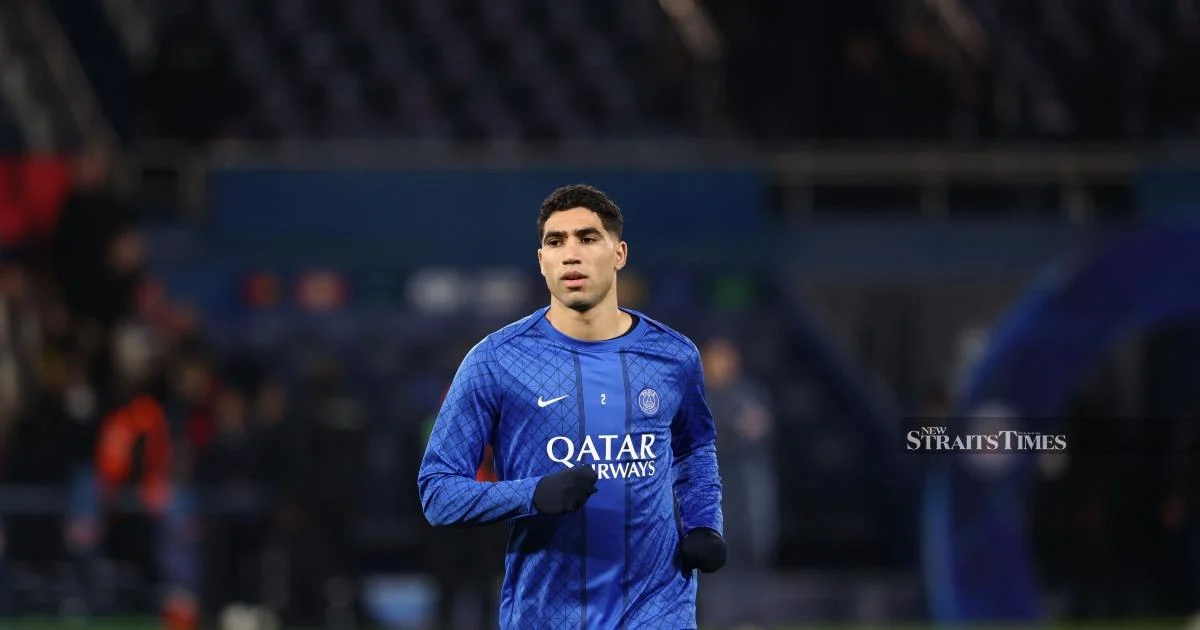
Moroccan football star Achraf Hakimi will face trial following a French appeals court decision, marking a significant development in a case that has attracted international attention. The ruling, handed down on Friday by the Versailles court, confirms that the Paris Saint-Germain defender must answer charges related to allegations made by a young woman. This determination moves the matter from investigative proceedings toward formal trial proceedings, where evidence will be presented before a judge or jury.
Hakimi, who represents Morocco's national team and plays as a right-back for the Ligue 1 champions, has maintained his innocence regarding the allegations. The defender's position at one of Europe's most prestigious clubs places this case under considerable scrutiny, both from sports media and the broader public. The French legal system requires courts to assess whether sufficient evidence exists to proceed to trial, and the appeals court's confirmation indicates judicial authorities have determined that threshold has been met.
The timing of this decision carries weight for Hakimi's immediate future in professional football. As a key player in PSG's squad, the case could influence his availability for matches, team selection decisions, and the club's management of a delicate situation. French sports publications have extensively covered the proceedings, reflecting the high-profile nature of the case within European football circles.
For Malaysian and Southeast Asian sports audiences, this case illustrates how modern football transcends purely sporting concerns. Elite players operating at the highest international level face legal scrutiny in multiple jurisdictions, and such proceedings can extend beyond the football calendar. The case also demonstrates the seriousness with which French authorities treat sexual assault allegations, regardless of a defendant's professional prominence or international status.
The appeals court's confirmation represents the culmination of investigative work conducted by French authorities. Prior to this stage, prosecutors and investigating judges would have examined evidence, conducted interviews, and determined whether grounds existed to pursue charges. The confirmation by the higher court suggests this preliminary assessment withstood judicial scrutiny at the appellate level, strengthening the prosecution's position as the matter advances.
Hakimi's legal team will now prepare a defence strategy for trial proceedings. The defender has categorically denied the accusations, and his legal representatives will have opportunities to contest evidence, cross-examine witnesses, and present alternative interpretations of events. French legal procedure allows defendants to participate actively in their defence, and high-profile cases often attract experienced legal counsel capable of mounting comprehensive challenges to prosecution evidence.
The broader implications for professional football in Europe merit consideration. When international players face serious criminal allegations, clubs must balance player rights, institutional reputation, and public expectations. PSG has not made public statements regarding internal disciplinary measures or squad management decisions, maintaining a cautious approach typical of clubs in sensitive legal situations.
For Moroccan football, this case affects the national team's options for team selection and represents a delicate diplomatic matter. The Moroccan Football Federation has not issued extensive public commentary, presumably allowing legal processes to proceed without additional complications. International football relationships occasionally involve considerations beyond purely sporting metrics when players face serious allegations in foreign jurisdictions.
The trial itself will likely occur in France, governed by French criminal procedure. The court will determine applicable evidence standards, witness credibility assessments, and burden-of-proof requirements. The specifics of trial dates and procedures remain subject to the French judicial system's scheduling and administrative processes. These proceedings typically extend over months or longer, depending on case complexity and court calendars.
International media coverage will probably intensify when trial proceedings commence. Football's global reach means developments affecting prominent players generate substantial attention across multiple continents and language communities. The case underscores how professional athletes, despite their elevated status and income, remain subject to the same legal frameworks as ordinary citizens. French law applies equally regardless of sporting achievement or celebrity status.
The judicial confirmation does not determine guilt or innocence. Rather, it establishes that sufficient evidence exists to warrant formal trial proceedings where questions of criminal responsibility will be thoroughly examined. Both the prosecution and defence will present cases to an impartial fact-finder, who will ultimately determine whether charges have been proven according to French legal standards.
Sports analysts and football commentators have largely avoided premature judgments, recognising the importance of allowing legal processes to conclude independently of sports media narratives. The case illustrates tensions between athletes' legal rights and public interest in football's most prominent figures. For Southeast Asian observers, the situation demonstrates how global football's elite operate within complex legal and institutional environments that extend well beyond the football pitch.