Sudan's internal crisis has drawn renewed scrutiny from continental leaders, with the African Union's Peace and Security Council issuing a forceful statement against outside meddling during high-level talks in Khartoum this week. The delegation, led by Algerian diplomat Mohamed Khaled in his capacity as rotating chair, met with Sudan's Sovereignty Council Chairman Abdel Fattah al-Burhan at the presidential palace to discuss the war-torn nation's path forward. The AU's intervention underscores growing continental concern that external powers may be exploiting Sudan's instability for strategic advantage, a worry that resonates across Africa as geopolitical competition intensifies in the region.
The council's explicit warning against attempts to create parallel government structures points to real anxieties about state fragmentation. In contexts like Sudan, where institutions have already been severely damaged by conflict, the emergence of competing power centres could render the central government entirely irrelevant, transforming civil war into permanent state collapse. The AU's emphasis on preserving Sudan's sovereignty and territorial unity reflects a broader continental principle—that African problems require African solutions, not external management by distant powers. This stance also indirectly critiques the involvement of various international actors who have stakes in Sudan's outcome, whether through military partnerships, resource interests, or strategic positioning.
Khaled characterised the engagement as productive, highlighting discussions on peace, security and stability that dominated the agenda. His language suggests the AU is attempting to position itself as a serious broker rather than a peripheral observer, though Sudan's complexity makes such mediation efforts extraordinarily challenging. The delegation's presence in Khartoum itself demonstrates the AU's commitment to direct engagement with governmental authorities, a shift that contrasts with earlier periods when external bodies dominated peace-making discussions. For Southeast Asian observers, Sudan's trajectory offers cautionary lessons about how regional organisations must develop sufficient institutional capacity and political legitimacy to manage major crises, lest powerful external actors fill the vacuum.
The AU's rejection of foreign interference directly challenges the involvement of multiple external powers in Sudan's conflict. Since the war erupted in April 2023 between the Sudanese armed forces and the paramilitary Rapid Support Forces, various nations have pursued their own agendas, whether supporting one faction or another or seeking to shape the post-conflict order. The council's statement effectively calls foul on such behaviour, asserting that Sudanese actors themselves must determine their nation's future. Yet achieving this in practice remains extraordinarily difficult when outside powers possess the military capability, financial resources and diplomatic leverage to influence outcomes on the ground. The AU's rhetorical stance thus contains an implicit plea for restraint that may carry limited practical weight.
Dialogue and national reconciliation have been identified as the essential prerequisites for Sudan's recovery, a prescription that sounds reasonable but confronts immense structural obstacles. The Rapid Support Forces emerged as a paramilitary force precisely because formal integration into the regular military became a contentious political issue, one that both the army and the RSF viewed as existential. Asking these parties to sit across from each other and negotiate requires not only political willingness but also confidence-building measures, international guarantees and institutional mechanisms that simply do not exist. Prime Minister Kamil Idris's announcement that Sudanese-Sudanese dialogue would commence soon offers hope, yet years of conflict have hardened positions and generated deep grievances that complicate the path toward compromise.
The government's return to performing state functions from Khartoum represents a symbolic and practical turning point that the AU characterised as pivotal to institutional restoration. For much of the conflict, governmental capacity has been severely diminished, with officials unable to deliver basic services such as healthcare, education or security to ordinary citizens. The resumption of state activity in the capital, even in limited form, suggests that some degree of normalcy and institutional continuity may be emerging. This carries particular importance for citizens who have endured years of displacement, insecurity and deprivation. However, the restoration of governmental presence in one city does not automatically translate into effective state control across Sudan's vast territory or the ability to address the humanitarian catastrophe that continues unabated.
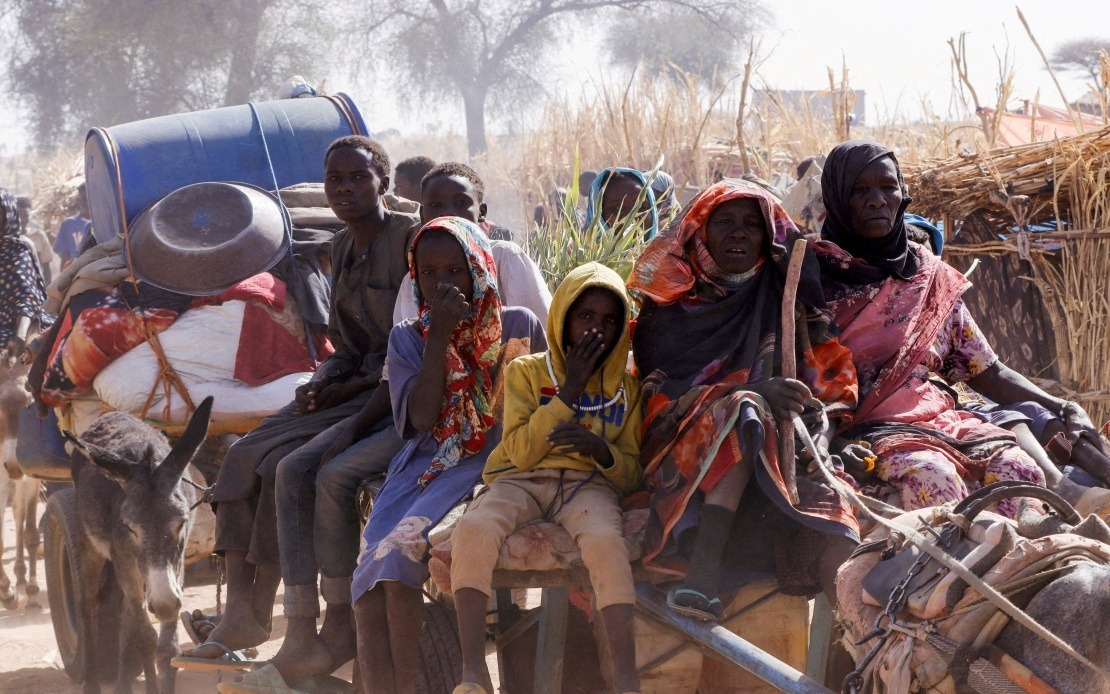
The conflict has exacted a staggering human toll that demands urgent attention from the international community, regardless of great-power competition. United Nations estimates indicate that tens of thousands have been killed and approximately 13 million people have been displaced—a figure representing roughly one-quarter of Sudan's entire population. This humanitarian dimension cannot be separated from political considerations; any sustainable settlement must address not only the cessation of violence but also the provision of relief, reconstruction of infrastructure and accountability for atrocities. The AU's emphasis on inclusive dialogue implicitly recognises that peace without addressing these human dimensions will prove temporary and fragile.
The AU's call for a more inclusive transitional process reflects awareness that sustainable political settlements require broad participation rather than narrow power-sharing arrangements among military and paramilitary elites. The suggestion that political forces should work toward a constitutional system through free and fair elections indicates the AU's preference for democratic legitimacy as the ultimate foundation for post-conflict governance. Yet elections cannot be held amid ongoing violence, humanitarian crisis and institutional dysfunction. The sequencing of transitions—from ceasefire to elections, the preparation of constituencies, the development of legal frameworks—remains extraordinarily complex and contentious. Different parties hold divergent visions of what post-conflict Sudan should look like, and bridging these differences requires compromises that neither side has yet demonstrated willingness to make.
For Southeast Asian policymakers and observers, Sudan's experience offers important lessons about conflict management and regional organisation effectiveness. The African Union's assertion of continental primacy in managing the crisis, its calls for dialogue and national reconciliation, and its emphasis on African solutions reflect principles that ASEAN has long championed in its own context. However, ASEAN's relative success in maintaining regional stability contrasts sharply with the AU's struggles in Sudan, pointing to the critical importance of institutional design, member commitment to consensual decision-making, and economic interdependence that creates mutual interests in stability. Sudan's fragmentation and external interference suggest what happens when these conditions are absent.

