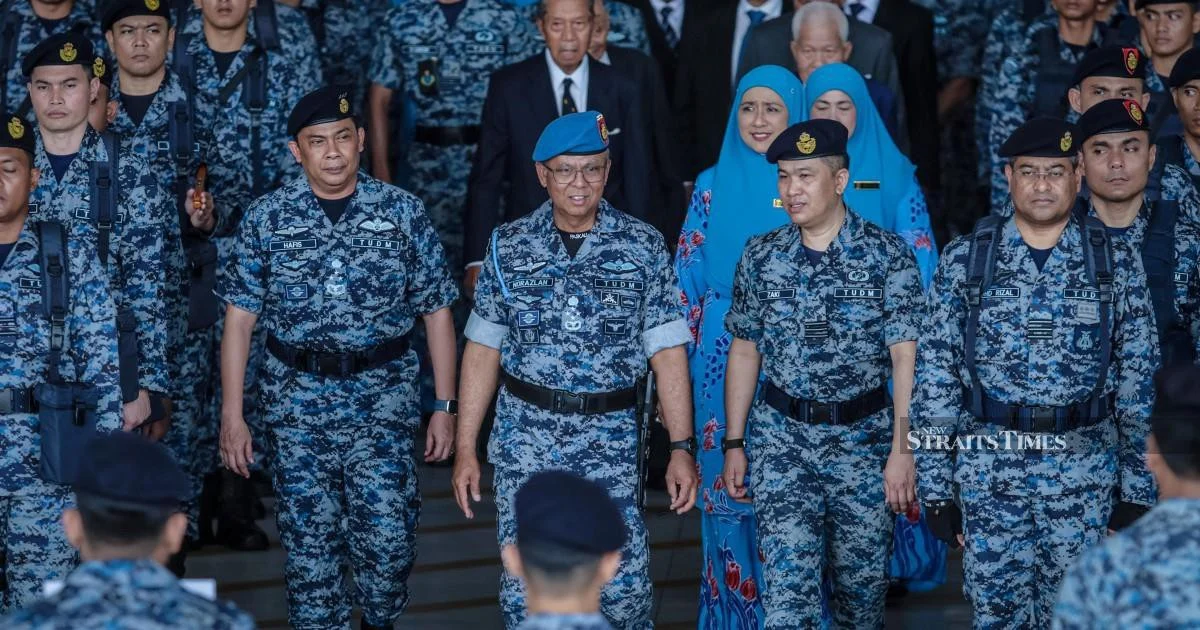
Malaysia's ability to defend its crucial maritime passages depends fundamentally on maintaining credible air capabilities, according to General Tan Sri Muhamad Norazlan Aris, who leads the Royal Malaysian Air Force. Speaking at a defence forum in Subang, the RMAF chief underscored how regional instability has created an increasingly complex security environment that demands robust aerial resources to protect shipping lanes and national waters.
The emphasis on air defence reflects Malaysia's strategic position as a major maritime economy with some of the world's busiest sea corridors passing through its territorial waters. The Strait of Malacca alone handles roughly a quarter of global maritime trade, making the security of these passages fundamental to Malaysian prosperity and regional stability. Without adequate air surveillance and intervention capacity, Malaysia faces significant vulnerabilities in monitoring and responding to threats along these critical routes.
General Muhamad Norazlan's remarks come amid a period of heightened activity in Southeast Asian waters. From Chinese coast guard operations in disputed territories to increased piracy concerns and trafficking activities, the maritime environment has become substantially more contested than in previous decades. Air assets provide the reach and speed necessary to respond to incidents across Malaysia's vast maritime zones, offering capabilities that surface vessels alone cannot match.
The geopolitical landscape surrounding Malaysia has grown more intricate, with multiple regional powers strengthening their military presence and asserting competing claims over vital waterways. This complexity underscores why the RMAF chief believes aerial reconnaissance and rapid response mechanisms are no longer optional but essential components of national defence strategy. The ability to maintain persistent surveillance across Malaysian waters and project power when necessary has become a core requirement for sovereignty protection.
Malaysia's maritime vulnerabilities extend beyond traditional military threats. Illegal fishing, smuggling operations, and piracy represent ongoing challenges that demand consistent air and sea coordination. The RMAF provides critical support through surveillance flights, reconnaissance missions, and interception capabilities that complement naval operations. Without adequate air resources, Malaysia's maritime law enforcement agencies would struggle to maintain effective coverage across the country's extensive territorial waters and exclusive economic zone.
The defence establishment has increasingly recognised that modern maritime security cannot be addressed through surface assets alone. Contemporary threats are varied, rapid-moving, and often distributed across vast oceanic areas where traditional patrol vessels face inherent limitations in coverage and response time. Aerial platforms overcome these constraints, enabling Malaysia to maintain awareness and readiness across distances that surface fleets cannot effectively monitor simultaneously.
Investment in air capabilities carries significant budgetary implications for Malaysia, a middle-income economy balancing military requirements with development priorities. The RMAF chief's statement reflects an assessment that despite fiscal pressures, maintaining air defence capabilities remains a justified strategic priority. This position aligns with regional trends, as neighbouring countries similarly upgrade their air forces to address evolving maritime security challenges.
The integration of air power into maritime defence strategy represents a broader shift in how Southeast Asian nations approach regional security. Traditional naval dominance has given way to more comprehensive approaches incorporating air surveillance, rapid response, and coordinated operations across multiple domains. For Malaysia, this integration is particularly important given the country's archipelagic nature and dependence on sea trade.
Regional cooperation on maritime security has become increasingly important as individual nations recognise that shared challenges require coordinated responses. Air capabilities developed for national defence also enhance Malaysia's ability to participate in regional security arrangements and joint operations with partner nations. This capability-building therefore carries strategic benefits beyond purely national considerations, contributing to broader Southeast Asian stability.
Looking forward, the adequacy of Malaysia's air assets will likely remain a central concern for defence planners. Technological advancement means that maintaining credible capabilities requires ongoing investment in equipment modernisation, pilot training, and operational infrastructure. The RMAF chief's comments suggest that maintaining this commitment across budget cycles will be essential for Malaysia to preserve its capacity to protect maritime interests effectively.
For Malaysia's shipping industry and trading partners, the security of maritime routes directly affects commerce and economic confidence. Airlines, shipping companies, and traders depend on reliable passage through Malaysian waters and associated airspace. When air defence capabilities are questioned or degraded, this creates uncertainty that can affect business decisions and increase insurance costs. The RMAF chief's emphasis on air power, therefore, has implications extending beyond military considerations into the economic sphere.


%22%2F%3E%3C%2Fpattern%3E%3C%2Fdefs%3E%3Crect%20width%3D%22100%25%22%20height%3D%22100%25%22%20fill%3D%22url(%23ph6fyvg)%22%2F%3E%3Crect%20width%3D%22100%25%22%20height%3D%22100%25%22%20fill%3D%22url(%23ph6fyvp)%22%2F%3E%3Ctext%20x%3D%2250%25%22%20y%3D%2250%25%22%20text-anchor%3D%22middle%22%20dominant-baseline%3D%22central%22%20fill%3D%22rgba(255%2C255%2C255%2C0.95)%22%20font-family%3D%22Georgia%2C%20'Times%20New%20Roman'%2C%20serif%22%20font-weight%3D%22700%22%20font-size%3D%22320%22%20letter-spacing%3D%22-0.02em%22%3EOnn%3C%2Ftext%3E%3C%2Fsvg%3E)