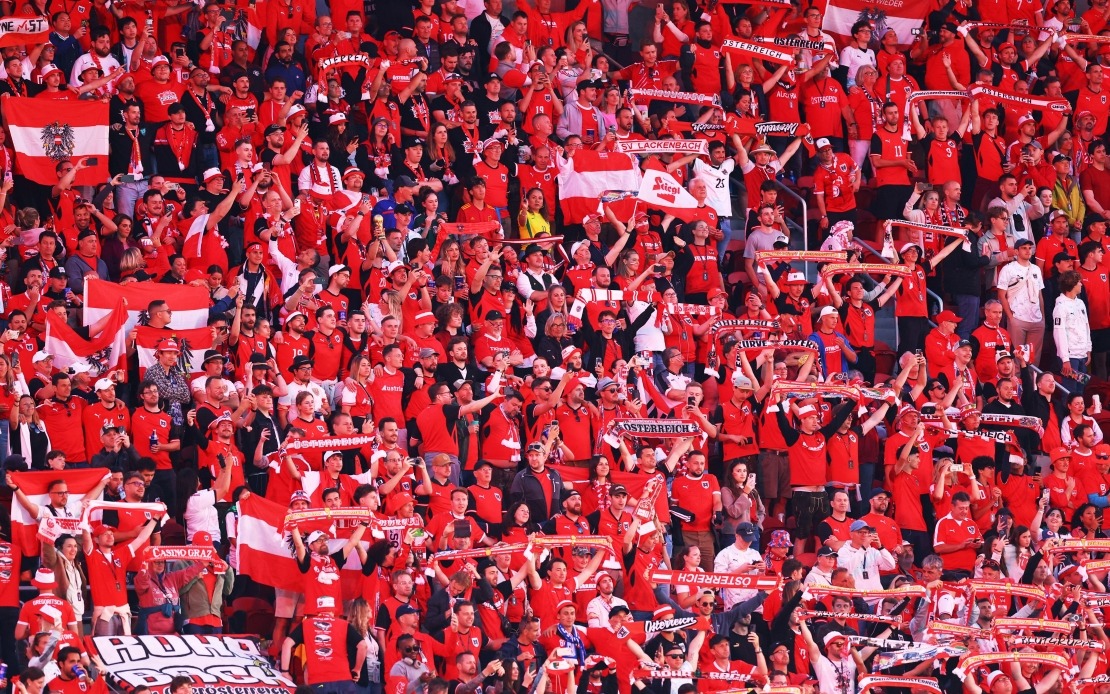
The FIFA World Cup in North America has drawn strong crowds in its opening phase, with official figures showing attendance exceeding one million fans across the first 16 matches. According to data released by football's governing body, the figure of 1,028,429 spectators represents a show of grassroots enthusiasm that organizers had hoped to achieve when planning the tournament's structure and ticketing strategy.
FIFA President Gianni Infantino celebrated the attendance milestone by sharing a photograph on Instagram with Aaron Bren, identified as the tournament's one millionth supporter. In a statement, Infantino praised the turnout, stating: "A huge thank you to all our passionate supporters who continue to fill the stadiums – you have brought the most inclusive FIFA World Cup to life." The remarks underscored the organization's messaging around the tournament as an event designed to reach broad audiences across the North American continent.
The reported occupancy rate of 99.34 per cent across these initial matches suggests that venues have been effectively filled, contradicting earlier anxieties about whether fan interest would materialize given the pricing structure implemented for the competition. Before the tournament began, observers raised questions about whether ticket costs might deter casual supporters and result in visible gaps in the stands, a concern that had precedent in previous World Cup editions held in Europe and the Middle East.
Yet visual evidence from certain fixtures appeared to validate those initial worries. The match between South Korea and Czech Republic held in Guadalajara showed noticeable empty sections, as did Qatar versus Switzerland at a venue in California's Bay Area on the Saturday of opening weekend. These instances created a contradiction between FIFA's aggregate statistics and what television cameras captured during live broadcasts, suggesting that attendance patterns varied considerably depending on the specific match, teams involved, and local demographic interest.
The pricing debate carries particular relevance for developing football markets in Southeast Asia, where World Cup tickets traditionally command premium prices in international resale markets. Malaysian fans seeking to attend matches often face exponentially higher costs when purchasing through secondary platforms rather than official channels, a dynamic that FIFA's approach to ticket distribution appears to have amplified rather than mitigated in this tournament iteration.
Beyond attendance figures, a separate controversy has emerged regarding fan safety and crowd management protocols. Football Supporters Europe, an umbrella organization representing supporter groups across the continent, has raised alarms about the absence of traditional segregation measures between rival supporters at World Cup venues. The group's executive director, Ronan Evain, expressed concern to BBC Sport that FIFA's emphasis on secondary ticketing and resale mechanisms has created uncertainty about spectator composition at individual matches.
Evain highlighted a fundamental operational gap: "The absence of segregation is not normal for a tournament like this. What is worrying is that FIFA doesn't really know who has tickets here and there… by pushing so much for people to buy tickets and resell them." This criticism points to a tension between FIFA's commercial interests in maximizing ticket market liquidity and traditional tournament security practices designed to prevent confrontations between opposing fan bases.
The lack of comprehensive knowledge about ticket holder identities stems directly from FIFA's decision to prioritize resale flexibility. By encouraging purchasers to trade tickets through secondary markets rather than restricting them to primary holders, the organization has sacrificed the ability to track which supporters actually occupy which sections of stadiums. This represents a meaningful departure from established protocols at major tournaments, where segregation typically ensures that supporters of opposing teams occupy distinct stadium zones separated by stewarding and sometimes physical barriers.
FIFA has sought to address these concerns by pointing to structured allocations provided to participant nations through their official "participant member association" allocations, which create ring-fenced ticket blocks for each country's most devoted supporters. However, this mechanism only accounts for a portion of total ticket distribution, leaving substantial numbers of seats available through general public sales and resale channels where supporter affiliation cannot be readily determined by organizers.
The tension between maximizing revenue through flexible ticket distribution and maintaining crowd safety demonstrates one of the central challenges facing modern tournament organization. For Malaysian football enthusiasts and regional supporters, these dynamics carry practical implications. Fans attempting to purchase World Cup tickets from Southeast Asia navigate not only the official FIFA distribution system but increasingly complex secondary markets, often at prices substantially exceeding face value, while organizers struggle to maintain basic security protocols that have been standard at international sporting events for decades.
The opening phase of the tournament thus reveals contrasting narratives: strong headline attendance figures that validate FIFA's overall tournament viability and popularity in North America, alongside practical governance questions about how such large events can balance commercial imperatives with the operational and safety systems that international sports standards expect. As the competition progresses, these patterns of attendance, pricing, and fan integration will likely continue shaping discussions about how future World Cup tournaments should balance financial optimization with supporter experience and security.