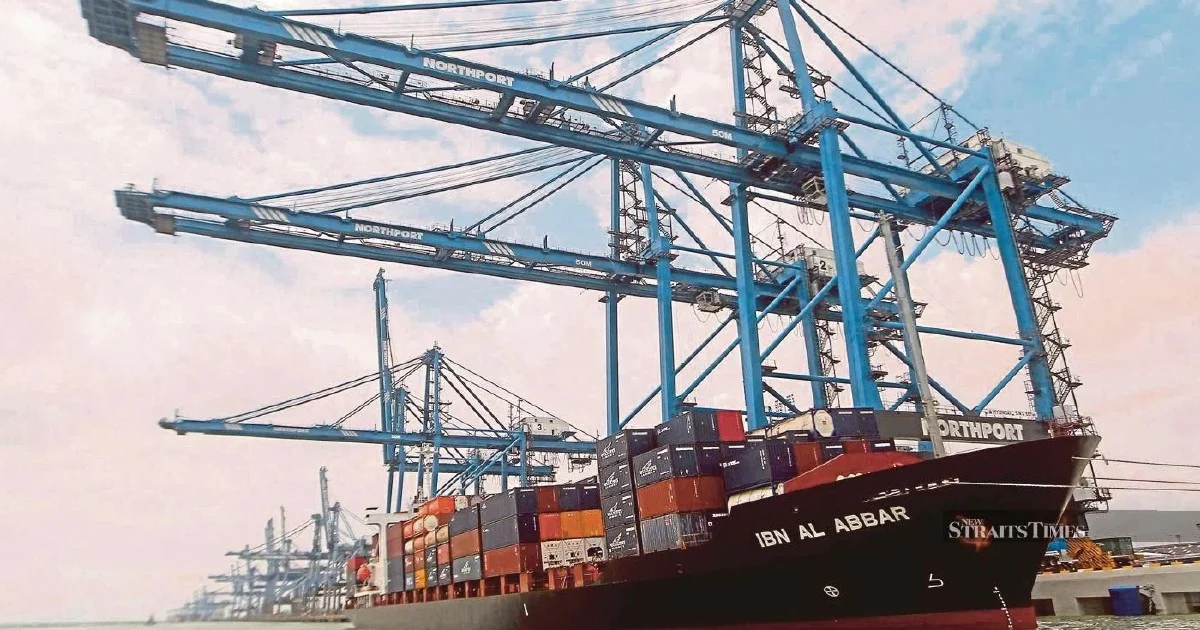
Malaysia's ambitious Port Klang 3 expansion project retains momentum despite logistical hurdles, with Transport Minister Anthony Loke confirming that groundbreaking could occur before the year concludes once lingering land complications with the Selangor government are satisfactorily addressed. The declaration signals that Malaysia remains committed to substantially enlarging the nation's premier container port despite protracted negotiations over property rights and acquisition procedures that have delayed preliminary works.
The Port Klang 3 initiative represents a cornerstone initiative within Malaysia's broader maritime infrastructure modernization agenda. The expansion seeks to augment the existing Port Klang complex's container handling throughput substantially, addressing capacity constraints that have become increasingly apparent as regional trade volumes have surged following the post-pandemic economic recovery. By introducing additional berths and enhanced terminal infrastructure, the development would position Klang among Southeast Asia's most competitive cargo hubs, capable of accommodating the largest contemporary container vessels that circumnavigate global trade routes.
Land acquisition complications have historically represented the most significant impediment to port expansion ventures in Malaysia. The Port Klang 3 proposal necessitates securing considerable tracts of coastal and adjacent land currently under Selangor state jurisdiction, requiring intricate coordination between federal maritime authorities and state government apparatus. These territorial negotiations have extended negotiations beyond initial timelines, reflecting the multifaceted regulatory frameworks governing development in Malaysia's densest economic regions. The transport minister's latest statement suggests that protracted discussions are approaching satisfactory outcomes, though specific resolution mechanisms remain undisclosed.
The timing of potential construction commencement carries substantial significance for Malaysia's international maritime standing and economic competitiveness. Port Klang currently operates as the sole major container terminal throughout the nation, rendering the facility susceptible to congestion pressures that potentially compromise Malaysia's attractiveness as a regional logistics nexus. Neighbouring Singapore and Thailand have progressively expanded their port infrastructures, capturing incremental market shares from Malaysian operators. The Port Klang 3 initiative would reinforce Malaysia's capacity to retain and enlarge its portion of containerized cargo transiting Southeast Asia's critical maritime corridors.
Economic ramifications of the expansion project extend substantially beyond port operations themselves. Infrastructure development of this magnitude generates considerable employment across multiple sectors during construction phases, encompassing engineering, manufacturing, and services industries. Upon operational commencement, the facility would establish permanent positions for dock workers, logistics specialists, and administrative personnel. The Port Klang 3 project would consequently contribute meaningfully to employment figures and economic activity within Selangor, Malaysia's most industrialized state, potentially catalyzing further investment in surrounding regions.
The broader Southeast Asian context renders Port Klang 3's advancement strategically consequential for Malaysia's regional influence. The government has positioned Malaysia as a critical node within global supply chains, particularly for semiconductor manufacturing and electronics assembly. Efficient port infrastructure proves indispensable for sustaining this positioning, as manufacturing enterprises require reliable maritime access for component imports and finished goods exports. Port congestion or capacity constraints risk diverting investments toward jurisdictions with superior infrastructure. The Port Klang 3 development thus represents not merely a port modernization initiative but a foundational component of Malaysia's competitiveness strategy across critical industries.
Financial considerations underpin the project's advancement trajectory. Public-private partnership arrangements have traditionally financed major Malaysian port developments, distributing capital requirements across government entities and private operators. The Port Klang 3 proposal likely follows comparable structural arrangements, requiring substantial capital injections from both sectors. Loke's confirmation that land complications are approaching resolution suggests that financing mechanisms and implementation frameworks have been substantially developed, and that primary obstacles relate to administrative and regulatory procedures rather than fundamental project viability.
Environmental and developmental implications merit consideration within the expansion framework. Port facility expansion necessarily involves substantial earthworks and marine environment modifications. Malaysian environmental regulations require comprehensive impact assessments and mitigation strategies addressing potential consequences for coastal ecosystems, marine biodiversity, and neighbouring communities. The Selangor government's involvement in land negotiations likely encompasses environmental review processes, potentially explaining protracted discussions. Balancing port infrastructure development against environmental sustainability represents an increasingly critical policy tension throughout Southeast Asia.
The Port Klang 3 project's advancement reflects Malaysia's endeavour to position itself advantageously within evolving global maritime commerce patterns. The initiative demonstrates governmental recognition that competitive port infrastructure constitutes essential economic infrastructure alongside road and rail networks. Smaller Southeast Asian economies have demonstrated that modern port facilities serve as powerful economic catalysts, enabling smaller nations to capture disproportionate shares of regional trade flows. Malaysia's Port Klang 3 development strategy aligns with this recognition, suggesting policymakers comprehend that infrastructure investment today determines economic relevance tomorrow across the global maritime economy.