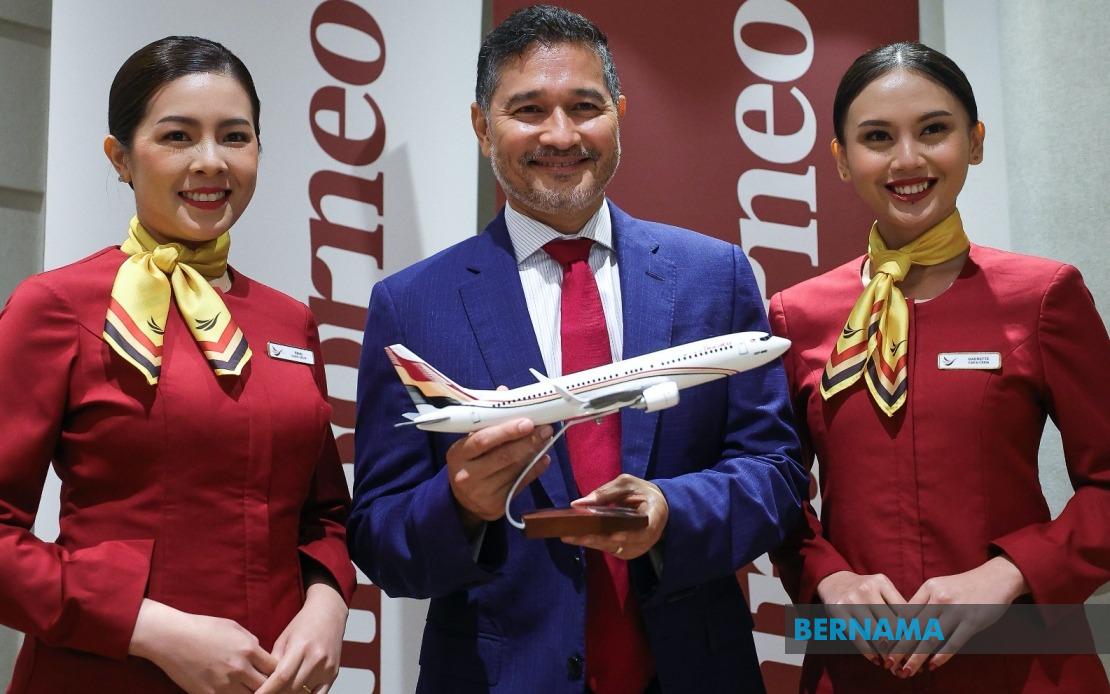
Sarawak's state-owned carrier AirBorneo has moved to address longstanding concerns about high airfares between Peninsular Malaysia and East Malaysia by committing to a fixed RM375 all-in one-way Economy Class fare on the Kuala Lumpur-Kuching route that will remain constant regardless of season. The airline announced this pricing guarantee as it formally launched scheduled services on the route, which will operate twice daily between Kuching International Airport and Kuala Lumpur International Airport Terminal 1, marking a significant step in expanding air connectivity across the country.
The decision to lock in the RM375 price point represents a deliberate strategy to inject predictability into a market historically plagued by seasonal volatility. Chief executive officer Megat Ardian Wira Mohd Aminuddin explained that the carrier conducted extensive analysis spanning the first half of the year, examining fare movements, fuel price fluctuations, and competitive benchmarking against rival operators serving the same corridor. Rather than applying dynamic pricing models that shift with demand cycles, AirBorneo has opted for a transparent, fixed-price approach designed to give passengers—particularly Sarawakians—confidence in budgeting their travel costs.
The methodology behind the RM375 figure underscores the pragmatic approach AirBorneo adopted. The airline examined historical pricing data, accounting for the fuel price volatility that typically destabilises route economics, and cross-referenced its proposed rate against the lower-end fares advertised by competing carriers on the Kuala Lumpur-Kuching sector. The resulting price sits within the existing competitive range, suggesting the airline calibrated its offer to be competitive without sacrificing operational sustainability. For Malaysian consumers accustomed to seeing base fares advertised without mandatory surcharges, the airline's emphasis on providing an all-inclusive price—encompassing airport taxes and fuel surcharges in the quoted RM375—addresses a common complaint about hidden costs inflating apparent bargains.
Beyond Economy Class, AirBorneo is offering Business Class seats at a fixed RM736 all-in one-way fare under the same annual stability commitment. The symmetrical approach to both cabin classes reflects the airline's broader mission to make premium air travel more accessible while maintaining route viability. This dual-pricing structure acknowledges that the Kuala Lumpur-Kuching corridor serves diverse passenger segments, from leisure travellers to business professionals, and that fares must accommodate multiple market tiers without resort to promotional volatility.
The persistent problem of elevated airfares between Peninsular Malaysia and Sarawak has long frustrated Malaysian travellers and constrained regional integration. High ticket prices create friction for personal visits, business expansion, and leisure tourism—dynamics that matter considerably for a federal state like Malaysia where geographic separation makes air travel the primary intercity transport option for most passengers. By anchoring fares to a fixed annual rate, AirBorneo signals intent to challenge the structural factors driving Peninsular-East Malaysia price differentials, whether stemming from lower load factors, longer distances, or limited competitive supply on underserved routes.
The airline's aspirations extend well beyond stabilising the Kuala Lumpur-Kuching route. Megat Ardian Wira indicated that AirBorneo is pursuing designation as the official carrier for the 2027 SEA Games, which Sarawak will co-host alongside Sabah. This ambition necessitates a deliberate expansion of the airline's regional footprint, with management signalling plans to establish scheduled services to two or three ASEAN destinations by early next year. Such expansion would position AirBorneo to operate charter flights transporting athletes, officials, and supporters to the games, while simultaneously building the route network and aircraft utilisation essential for long-term sustainability.
The timing of this announcement carries strategic significance for Malaysian aviation development. Budget carriers have long dominated the Peninsular Malaysia-East Malaysia sector, often prioritising high-frequency operations on ultra-competitive trunk routes over developing sufficient capacity on secondary corridors. AirBorneo's entry as a domestically-owned, state-backed operator potentially disrupts this equilibrium by introducing a carrier with distinct incentives aligned toward regional balance and Sarawak's economic interests. The carrier's willingness to commit to fixed pricing suggests confidence that operational efficiency gains and potential government support mechanisms can sustain profitable operations without reliance on surge pricing.
The competitive landscape on the Kuala Lumpur-Kuching route has historically been dominated by budget carriers who compete aggressively on advertised base fares while recouping margin through ancillary charges and seat selection fees. AirBorNeo's transparent all-in pricing model represents a departure from this convention, betting that consumers value simplicity and predictability alongside low headline rates. Whether this pricing philosophy attracts sufficient market share to support the airline's expansion ambitions remains an open question, particularly as it establishes its operational reputation.
From a regional connectivity perspective, AirBorneo's emergence as a third-country carrier with substantive presence on this route could catalyse broader improvements in service standards, punctuality, and customer experience. State-owned carriers often operate under performance mandates extending beyond pure profit maximisation, enabling investments in service quality and reliability that purely commercial operators might defer. For Malaysian passengers, particularly those in Sarawak, this potential shift toward carrier diversity and service competition represents tangible progress on a chronic accessibility challenge.
The airline's medium-term strategy linking stable domestic pricing to regional network development and potential SEA Games logistics reveals a calculated approach to building sustainable competitive advantage. Rather than pursuing rapid growth through predatory pricing or unsustainable capacity additions, AirBorneo is positioning itself as a stability-oriented alternative operator. This positioning carries implications for how Malaysian aviation markets may evolve post-pandemic, with potential implications for route pricing discipline, capacity management, and the balance between profitability and regional service mandates across the broader sector.

