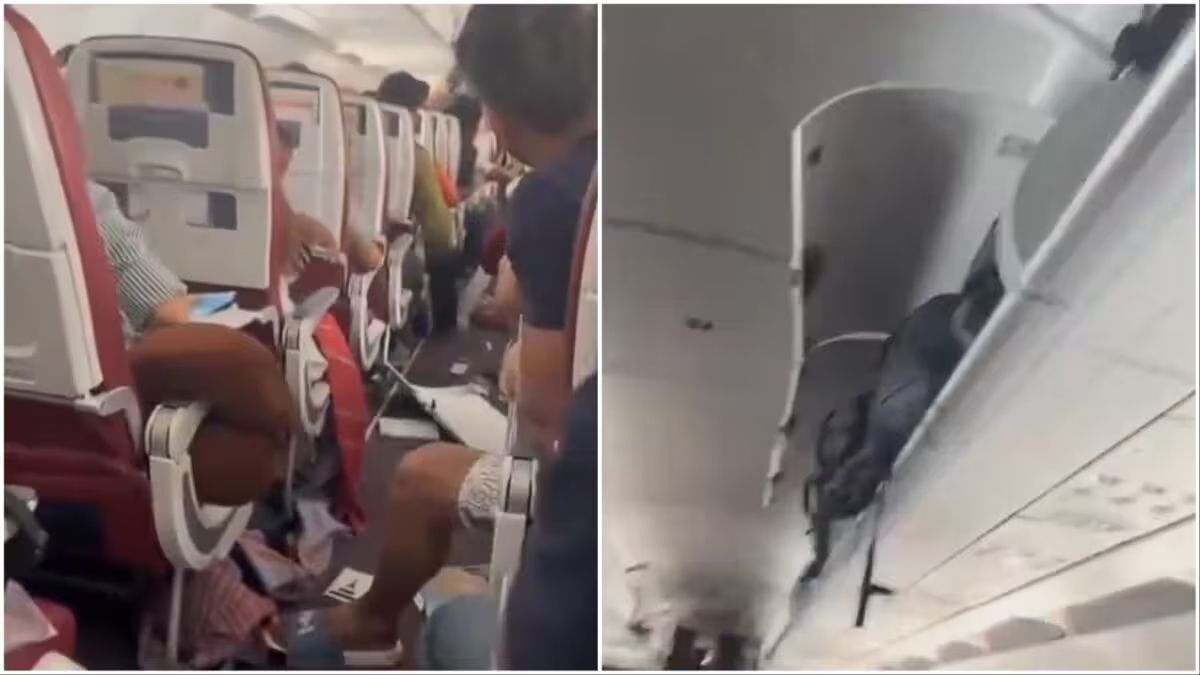
Airbus confirmed on Monday that it would deploy a team of technical experts to New Delhi this week to collaborate with Indian authorities investigating a startling mid-air incident involving an Air India A320 that plummeted without warning last month. The aircraft, carrying 137 passengers and eight crew members on a flight from Phuket to New Delhi on August 4, suddenly lost approximately 300 feet of altitude during cruise before the pilots regained control and completed a safe landing. The unexpected descent caused injuries to 17 people aboard, prompting India's civil aviation authorities to classify the event as a Serious Incident and launch a formal probe through the Aircraft Accident Investigation Bureau (AAIB).
The involvement of Airbus in the investigation underscores the technical complexity of the incident and the manufacturer's obligation to support national authorities examining potential design or systems issues. In a statement, the aerospace company said it would provide "technical assistance" to Indian investigators while "actively supporting the airline." The presence of Airbus specialists may prove crucial in analysing flight data and aircraft systems records, particularly given initial reports circulating in Indian media outlets suggesting the plane experienced multiple technical irregularities moments before the sudden altitude loss. However, neither Air India, government agencies, nor Airbus have officially confirmed details of these alleged malfunctions, leaving significant questions about the incident's precise cause still unanswered.
Complicating the investigation is an unexpected dimension involving the flight crew. India's civil aviation ministry revealed that both pilots underwent standard psychoactive substance screening tests immediately after the aircraft landed in New Delhi. The screening of the pilot-in-command reportedly returned a result "requiring confirmatory testing," with samples subsequently dispatched for laboratory analysis. This development has cast an unusual spotlight on the investigation, as authorities await final test results before determining whether impairment played any role in the incident. Pending these confirmatory findings, both pilots have been grounded and removed from the active flying roster, a precautionary measure standard in such circumstances.
Air India has maintained a measured public stance throughout the investigation, declining to provide specifics about preliminary findings or observations. The carrier stated it was "fully cooperating" with authorities and had notified the aircraft manufacturer of the incident. The airline's cautious approach reflects both regulatory requirements—which typically restrict public commentary during active investigations—and the heightened sensitivity of the situation given the airline's troubled recent history. The decision to withhold details also prevents speculation that might further damage passenger confidence during what the carrier requires as a recovery period.
The August 4 incident arrives at a particularly challenging moment for India's largest airline, which has endured a succession of operational difficulties and reputational setbacks. The carrier was already navigating disruptions stemming from regional instability in the Middle East, which has affected flight planning and passenger demand across the global aviation network. These challenges pale, however, beside the catastrophic blow to Air India's reputation delivered by a Boeing 787 Dreamliner crash in June 2025. Flight 171, departing from Ahmedabad bound for London, went down shortly after take-off, killing all but one of the 242 passengers and crew members aboard, in addition to 19 people on the ground. That disaster remains among aviation's deadliest accidents in recent years and severely damaged the airline's safety standing in the eyes of both Indian travellers and international passengers.
In response to mounting operational challenges, Air India last week appointed Tewolde Gebremariam, the former chief executive of Ethiopian Airlines, to lead the carrier as its new chief executive. Gebremariam brings extensive international aviation experience and will assume responsibility for stabilising the airline's operations, restoring safety confidence, and executing a comprehensive turnaround strategy. His appointment signals a conscious effort by Air India's leadership and stakeholders to inject fresh expertise into the organisation at a time when both safety assurance and operational reliability require demonstrable improvement.
The unfolding investigation into the Phuket-New Delhi flight will likely reveal important technical and operational lessons for Indian aviation authorities and potentially for carriers and manufacturers across Southeast Asia. The incident's simultaneous involvement of potential technical factors, crew performance questions, and passenger safety considerations creates a complex analytical challenge. Data from the aircraft's flight recorders, maintenance logs, and cockpit voice communications will provide crucial insight into the sequence of events that led to the abrupt descent. For Malaysian aviation professionals and authorities, the investigation's findings could have implications for regional flight safety standards and monitoring protocols, particularly given the prevalence of A320 aircraft among carriers operating throughout Southeast Asia.
The broader context of this incident reveals stress points within India's aviation sector that extend beyond any single operator. While Air India occupies particular prominence as the nation's legacy carrier, the investigation touches on systemic questions about aircraft maintenance standards, crew training protocols, and the effectiveness of psychoactive substance screening in commercial aviation. Malaysian readers, whose country operates multiple international airlines and hosts busy regional hubs, may recognise parallel pressures within the Southeast Asian aviation landscape. The incident serves as a reminder of the rigorous safety vigilance required to maintain public confidence in air travel and the complex interplay between human factors, mechanical systems, and investigative procedures that characterise modern aviation safety management.

