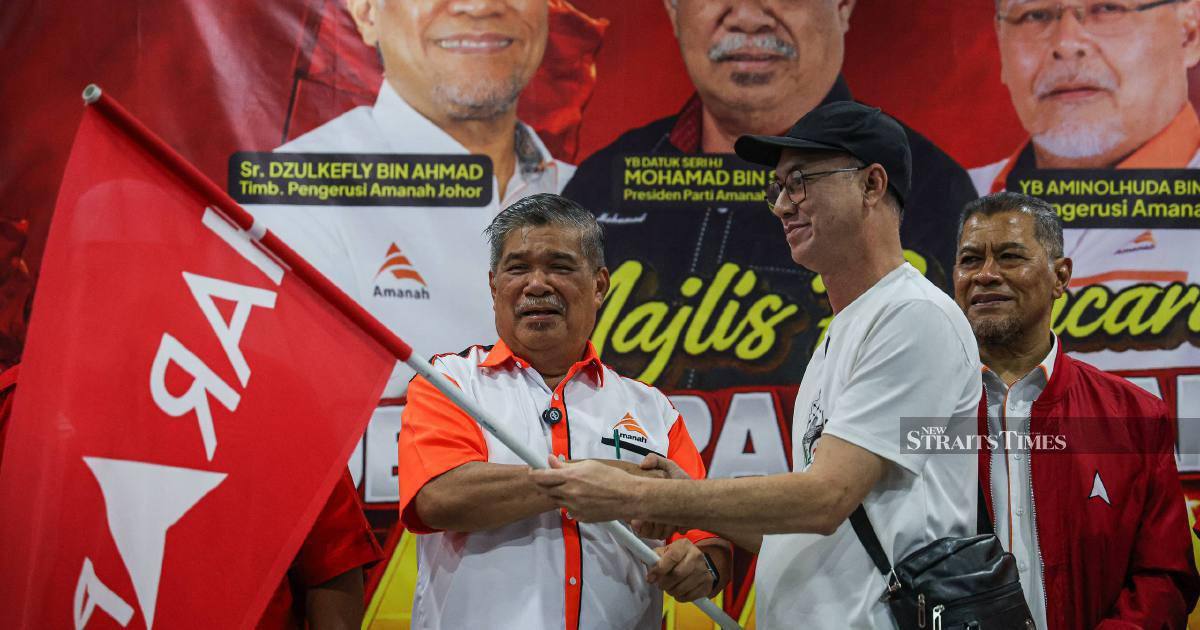
Amanah is charting a generational shift in its Johor election strategy by nominating 13 first-time candidates out of its 19-strong roster for the state polling scheduled for July 11. The move underscores the Pakatan Harapan component party's commitment to broadening its electoral appeal and introducing new political talent to voters in Malaysia's southern industrial heartland.
The decision to field predominantly fresh faces represents a deliberate departure from relying solely on incumbent representatives and long-serving party veterans. This approach reflects broader trends across Malaysian opposition coalitions, where parties are balancing the retention of experienced lawmakers with the integration of emerging political voices capable of connecting with younger and first-time voters increasingly pivotal in state-level contests.
Johor's electoral landscape has traditionally been competitive terrain for Amanah, requiring strategic candidate placement across constituencies where the party maintains grassroots presence and organisational depth. By introducing newcomers, Amanah aims to demonstrate renewed vitality while leveraging whatever incumbency advantages or ground support its existing representatives have built during previous electoral cycles. The calculation reflects confidence that name recognition alone no longer guarantees electoral success in contemporary Malaysian politics.
The timing of Johor's state election carries significance beyond the state's borders. As Malaysia's second-largest state by population and a critical economic zone anchored by manufacturing, petrochemicals, and port operations, Johor's political composition influences national coalition dynamics. Results here often signal broader shifts in voter sentiment that ripple through subsequent national-level contests. Amanah's candidate strategy therefore warrants scrutiny not merely as a local organisational decision but as an indicator of how opposition parties are recalibrating their positioning ahead of what many observers expect could be Malaysia's next general election.
The inclusion of 13 novice candidates requires robust internal party machinery to support their campaigns. Amanah must provide these newcomers with adequate resourcing, campaign training, and access to party infrastructure to compensate for their lack of electoral track records. Voters typically exhibit greater preference for candidates with demonstrated governmental experience or community leadership credentials. The party faces the challenge of translating whatever enthusiasm and idealism new candidates bring into tangible campaign momentum while simultaneously protecting these individuals from experienced opposition candidates who will exploit their inexperience.
Geographically, Amanah's presence in Johor concentrates primarily in certain constituencies where Pakatan coalition efforts have historically yielded results. The decision to field 19 candidates reflects strategic targeting rather than blanket contestation across all state seats. This selective approach allows the party to concentrate limited financial and human resources where electoral prospects appear most promising while maintaining symbolic presence across the state through partnership arrangements with PKR and other coalition allies.
The broader Pakatan coalition's performance in Johor will substantially determine whether opposition forces can mount credible challenges to Barisan Nasional's traditional dominance in the state. Since Johor remains a Barisan stronghold despite recent electoral volatility in Peninsular Malaysia, Amanah's contribution to coalition efforts becomes magnified. The party's ability to convert its candidate strategy into actual seat gains will partly determine Pakatan's overall viability as a national alternative government and influence resources allocated to future campaigns.
Amanah's emphasis on new candidates also addresses internal party governance considerations. Introducing fresh talent prevents organisational calcification, creates pathways for younger members to access contested political positions, and potentially resolves seniority disputes that sometimes paralyse opposition parties. By essentially starting numerous candidacies fresh in Johor, Amanah demonstrates willingness to implement generational turnover that some Malaysian parties have resisted, instead allowing senior figures to occupy winnable constituencies indefinitely regardless of performance.
The electoral calendar remains consequential for all Malaysian political stakeholders. The Johor state election on July 11 serves as a significant mid-term assessment of coalition strength and voter preferences roughly one year after Malaysia's 2022 general election fundamentally reshuffled the political landscape. Results will provide Pakatan coalition leadership with empirical data about whether their legislative agenda and governance approach have translated into sustained electoral support or whether voter enthusiasm evident in the previous general election has dissipated.
Amanah's specific contribution through its candidate slate will merit careful analysis by political observers tracking opposition coalition trajectory. The party's willingness to embrace substantial candidate rotation suggests confidence that Johor voters will respond positively to fresh political options, or alternatively, acknowledgement that retaining underperforming incumbent candidates would constitute wasted electoral opportunity. Either interpretation carries implications for how Malaysian opposition politics evolve during this critical phase of democratic competition.