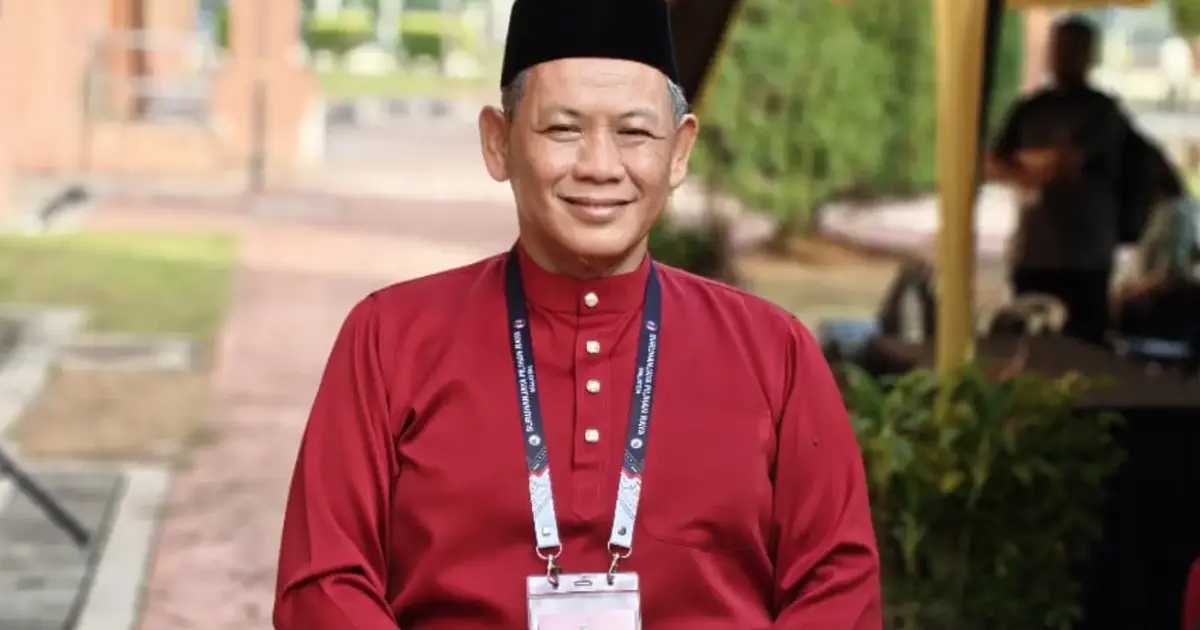
The Linggi parliamentary constituency, long regarded as one of Umno's safest seats in Negeri Sembilan, has become the focal point of an intriguing three-cornered battle that threatens to fracture the Malay-Muslim voting bloc in one of the state's most important districts. Negeri Sembilan Menteri Besar Aminuddin Largi has entered the contest, challenging Barisan Nasional's Faizal Ramli, who secured the predominantly Malay seat in the 2023 general election, while a Bersatu-backed candidate adds further complexity to an already crowded field.
The emergence of Aminuddin as a candidate signals the intensifying power struggle within Malaysia's Malay-based political establishment, where traditional hierarchies and coalition alignments have become increasingly fluid. His decision to contest Linggi represents a significant strategic move, as it pits him directly against the incumbent Faizal Ramli, who rode the Barisan tide during the last electoral cycle when the coalition achieved its strongest parliamentary showing in years. The involvement of a third candidate from Bersatu, the party led by former prime minister Mahathir Mohamad, introduces another unpredictable element that could dramatically alter the seat's political complexion.
Linggi's demographic composition makes it particularly significant in Malaysia's political calculus. As a Malay-majority constituency, it has historically served as a reliable vote bank for Umno and its Barisan coalition partners. The seat's traditional conservatism and strong Islamic identity mean that candidates must carefully calibrate their messaging around religious values, Malay rights, and economic development. Any fracturing of this vote along ethnic or religious lines could have broader implications for how the peninsula's Malay electorate organises itself politically in coming years.
Faizal Ramli's 2023 victory came during a period when Barisan was reasserting its dominance after years of electoral uncertainty. His win reflected public sentiment at that time, but the intervening period has witnessed significant shifts in Malaysia's political landscape. The Umno-led coalition has faced mounting pressure from internal rivalries, policy disagreements, and persistent questions about accountability and governance. Aminuddin's challenge to Faizal must therefore be understood within this broader context of coalition instability and the jockeying for influence among Malay-Muslim parties.
Aminuddin's position as Negeri Sembilan's chief minister gives him considerable advantages in a state-level campaign, including access to administrative machinery and public visibility. However, it also subjects him to greater scrutiny regarding his government's performance on bread-and-butter issues like infrastructure development, education, healthcare, and employment. Linggi voters will likely weigh not only his personal credentials but also his track record in managing state affairs, where economic challenges and social expectations remain high.
The Bersatu candidate's participation introduces ideological and strategic complications that could reshape the electoral outcome in unexpected ways. Bersatu, despite its association with Mahathir's legacy and various episodes of internal turbulence, maintains a reservoir of support among certain segments of the Malay-Muslim electorate, particularly those sympathetic to anti-establishment sentiments or disenchanted with Umno's direction. A strong Bersatu showing could split opposition votes or attract protest voting from discontented constituencies within the broader Malay population.
From a Malaysian perspective, the Linggi contest exemplifies the broader fragmentation affecting Malay-Muslim political representation at the national level. Rather than a straightforward two-party competition between a ruling coalition and a united opposition, voters increasingly encounter multiple options that blur traditional boundaries. This fragmentation creates both opportunities and risks. It offers voters greater choice and may force candidates to articulate more specific policy platforms rather than relying on broad ethnic or religious appeals. Conversely, it can result in divided mandates where no single faction achieves clear legitimacy, complicating governance and policy implementation.
For the Barisan-led government, losing Linggi would represent a symbolic setback in what has long been considered secure territory. Such a loss could embolden challengers in other Umno strongholds and suggest that the coalition's voter base is more volatile than conventional wisdom suggests. Conversely, a comfortable victory would reinforce perceptions of Barisan stability and reaffirm Faizal's position as a credible parliamentary voice for his constituency and state. The scale of victory or defeat will therefore carry significance far beyond Linggi itself.
Aminuddin's campaign strategy will likely emphasize his development agenda, his management of state finances, and his accessibility to ordinary constituents. He may also seek to position himself as a fresh alternative to what he could characterise as entrenched Barisan interests, while still maintaining his credentials within mainstream Malay-Muslim political circles. Balancing these appeals without appearing contradictory will require considerable political skill and messaging discipline.
The Bersatu candidate's strategy remains less clearly defined but will probably focus on mobilising anti-establishment voters and appealing to those who feel neglected by both Umno and its challengers. This candidate may attempt to position Bersatu as a corrective force offering Malay-Muslim leadership without the baggage of either long-incumbent Barisan privilege or perceived opposition disloyalty. Whether such messaging gains traction depends partly on the candidate's local credibility and organisational capacity.
For Southeast Asian observers, the Linggi contest illustrates how Malaysian electoral politics continues to evolve along lines of factional competition within ethnic blocs rather than across them. Unlike in some neighbouring democracies where competition operates primarily along left-right ideological axes, Malaysia's contests remain largely structured around competing claims to represent Malay-Muslim interests and occasionally broader communal coalitions. Linggi's three-way race therefore reflects enduring patterns in Malaysian political culture even as its specific configuration suggests new competitive dynamics.
The broader implications extend to Malaysia's governance stability and the legitimacy of electoral outcomes. If three-way contests proliferate and no faction achieves decisive majorities, coalition-building at the parliamentary level becomes even more complex and potentially more unstable. This could either encourage more pragmatic cross-factional cooperation or lead to chronic gridlock depending on how political actors respond to fragmented mandates. The Linggi race will provide important signals about these emerging patterns.

