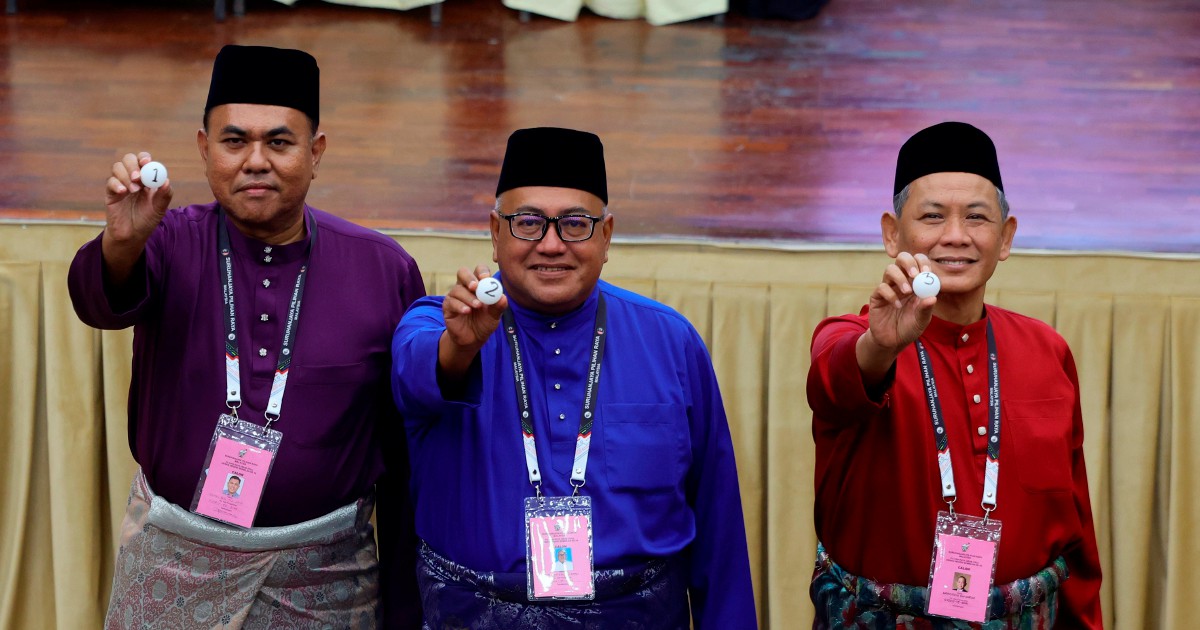
Caretaker Menteri Besar Datuk Seri Aminuddin Harun has acknowledged that his bid to retain the Linggi seat during the forthcoming Negri Sembilan state election faces steeper odds than anticipated, characterising the contest as a toss-up with his electoral fortunes hanging precariously at 50-50. Speaking at an event in Port Dickson, Aminuddin's candid assessment signals the mounting pressure facing his Barisan Nasional campaign in a constituency that has long been considered a reliable stronghold for the coalition.
The candour displayed by the caretaker leader reflects broader headwinds confronting BN in Negri Sembilan, a state where political dynamics have become markedly less predictable following shifts in voter sentiment witnessed across Malaysia in recent electoral cycles. Aminuddin's willingness to publicly articulate the precarious nature of his position, rather than projecting unwarranted confidence, underscores the genuine competitive environment surrounding the Negri Sembilan contest. His acknowledgment arrives as campaigning intensifies across the state, with multiple political coalitions mobilising their ground machinery ahead of polling day.
Linggi represents a seat of considerable symbolic importance within Negri Sembilan's political landscape. As one of the state's constituencies, its disposition holds potential ramifications for the final composition of the state assembly and the determination of which coalition secures the right to form government. Aminuddin's personal stakes are particularly high, given his position as incumbent Menteri Besar, making the Linggi outcome directly consequential to his political future and the continuity of BN administration in the state.
The admission of vulnerability from the caretaker leader suggests that opposition parties, whether from Pakatan Harapan or other political configurations contesting the Negri Sembilan elections, have successfully closed any competence or credibility gap that might once have favoured the established BN machinery. This narrowing of political distance reflects evolving public perceptions and shifting demographic voting patterns, particularly among younger voters who have demonstrated greater willingness to consider alternatives beyond the traditional ruling coalition.
Historically, Negri Sembilan has maintained a mixed political profile, though BN has traditionally commanded substantial representation within the state assembly. However, the increasing competitiveness evident in Aminuddin's assessment indicates that assumptions about regional political dominance require continuous validation through effective campaigning and genuine responsiveness to constituent concerns. The challenge facing BN extends beyond the personality or track record of individual candidates, encompassing broader questions about the coalition's relevance and capacity to address contemporary voter priorities.
Aminddin's strategic approach in publicly acknowledging the tough contest may represent a calculated attempt to mobilise BN supporters, emphasising the necessity of full participation and warning against complacency. Such messaging often proves effective in motivating coalition members and grassroots operatives to exert maximum effort during the critical weeks preceding an election. Conversely, the statement might reflect internal polling data suggesting that BN's position in key constituencies, including Linggi, remains genuinely fluid.
The Negri Sembilan election occurs within the context of Malaysia's broader political realignment, where voters across different states have demonstrated increased volatility and reduced deference to established hierarchies. Recent by-elections and state contests have revealed that BN cannot rely on historical voting patterns or assume automatic support from particular demographic segments. Aminuddin's assessment aligns with this observable trend, suggesting that even well-established political leaders cannot discount determined opposition campaigns bolstered by motivated parties and engaged voters.
For Malaysian and Southeast Asian observers tracking electoral developments, the Negri Sembilan contest and Aminuddin's characterisation of the Linggi race provide instructive indicators regarding the health of democratic competition within the country. The willingness of a sitting chief minister to publicly acknowledge competitive vulnerability, rather than project absolute certainty, suggests a political environment where electoral outcomes remain genuinely contested and where incumbency provides no automatic guarantee of victory. This contrasts sharply with one-party dominant systems elsewhere in the region where electoral competition remains largely symbolic.
The broader implications of the Negri Sembilan election extend to questions about BN's capacity to stabilise its position following electoral losses in recent years and amid evolving public attitudes towards corruption, governance quality, and socioeconomic performance. Aminuddin's cautious stance regarding Linggi implies recognition that his coalition must earn rather than assume voter endorsement. Whether BN successfully translates this recognition into improved ground performance and voter retention will substantially shape not only the state's political future but also provide valuable signals concerning the broader trajectory of Malaysian politics heading toward potential future general elections.

