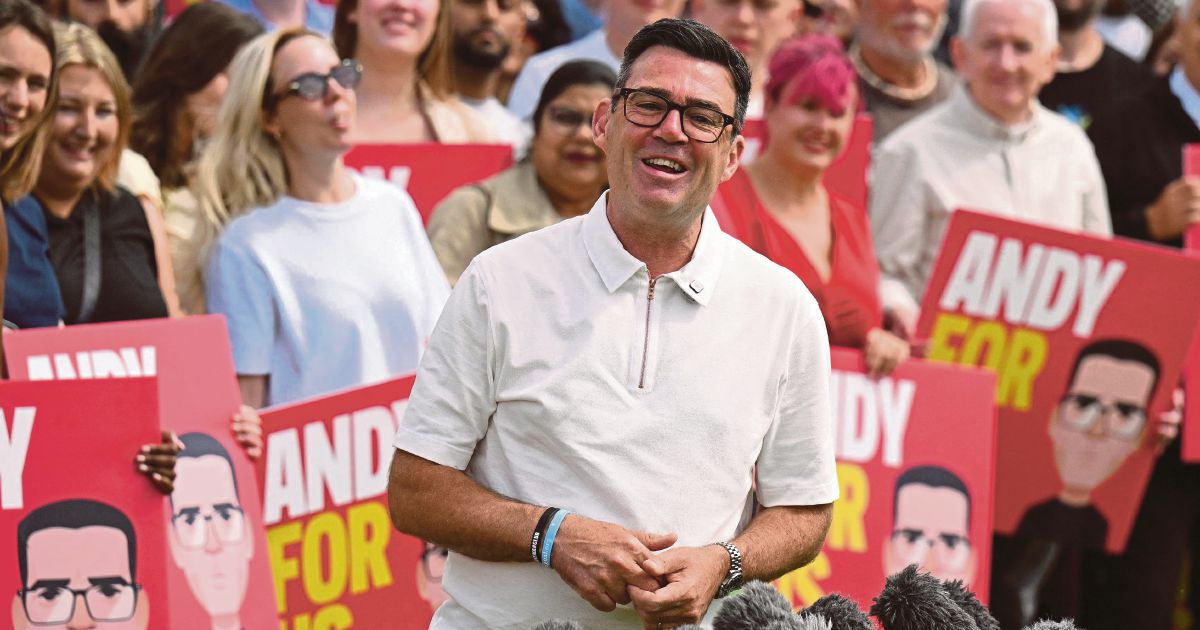
Andy Burnham, long celebrated as a champion of northern England's interests, has stepped into Downing Street as Britain's seventh prime minister in ten years, ushering in an administration focused on systemic reform rather than incremental adjustment. Taking the oath on Monday, Burnham articulated a vision to "rewire" the nation's institutional apparatus, signalling that his government will prioritise the bread-and-butter concerns that have preoccupied millions of British families for years.
The appointment marks a watershed moment in British politics, placing at the helm someone who built his reputation not in Westminster's corridors but in Manchester's devolved government apparatus. Burnham, who has served as Mayor of Greater Manchester since 2017, represents a departure from the revolving-door premierships that have defined the past decade, during which Britain cycled through leadership crises, internal party fractures, and mounting public dissatisfaction. His ascension reflects a perceived need for stability and an administrator capable of translating local experience into national policy.
The notion of "rewiring" Britain encapsulates Burnham's stated intention to fundamentally restructure how government functions and responds to citizen priorities. Rather than merely tinkering with existing systems, his language suggests a comprehensive overhaul of governance structures that have accumulated inefficiencies and have become disconnected from public expectations. This framing positions his premiership against the backdrop of institutional fatigue, where traditional approaches have yielded diminishing returns.
Cost-of-living concerns dominate Burnham's policy agenda, reflecting the acute financial pressures that have squeezed households across the United Kingdom since 2021. Energy price volatility, food inflation, and stagnating wages have created a environment where millions struggle with basic expenses. As Manchester's mayor, Burnham observed firsthand how inflationary pressures cascaded through local communities, particularly impacting working and middle-class households in the North. His elevation to the premiership suggests that addressing these tangible economic anxieties will supersede more abstract ideological disputes.
Public service reform constitutes the second pillar of Burnham's mandate. England's National Health Service, creaking under staffing shortages and mounting patient backlogs, epitomises the degradation of core services that prompted public frustration. Education provision, social care infrastructure, and local authority capacity have similarly deteriorated amid budget constraints and demographic pressures. Burnham's devolved experience managing cross-sector coordination in Greater Manchester positions him as someone conversant with the operational complexities of modernising public infrastructure at scale.
The repeated turnover of prime ministers has itself become a governance liability, eroding institutional credibility and hampering long-term policy continuity. The preceding decade witnessed Theresa May, Boris Johnson, Liz Truss, Rishi Sunak, and others grappling with fragmented majorities, backbench rebellions, and shifting political coalitions. Each transition consumed political capital and distracted from substantive governance. Burnham inherits an electorate fatigued by constant leadership upheaval and simultaneously cautious about yet another unproven administration.
For Malaysian and Southeast Asian observers, Burnham's premiership illuminates broader patterns affecting advanced democracies confronting economic inequality and institutional legitimacy crises. The premature departures of his predecessors reflect challenges—fiscal constraints, globalisation's uneven impact, and fractured political coalitions—that resonate across developed economies. Britain's experience with repeated leadership disruption offers cautionary lessons about the fragility of political consensus when economic distributions become perceived as unjust.
Burnham's northern credentials warrant particular scrutiny given historical neglect of regional inequality within British governance. His decade-long tenure in Manchester positioned him as an advocate for "levelling up"—channelling investment and devolved authority toward regions that felt sidelined by London-centric policymaking. Whether his national platform will translate these regional equity concerns into coherent national policy remains an open question, particularly given the competing fiscal and ideological pressures inherent to premiership.
The international dimension cannot be overlooked. Britain's diminished global influence since the Brexit vote necessitates careful statecraft and relationship management with European neighbours and distant partners. Burnham's domestic reform agenda must coexist with attention to foreign policy, security partnerships, and trade relationships. His background emphasises domestic governance rather than international affairs, potentially requiring adjustment as he navigates Britain's repositioning on the world stage.
Burnham's pledge to "rewire" Britain reflects an implicit acknowledgement that superficial remedies have exhausted their credibility with an increasingly sceptical public. Deep institutional reform carries political risks, as vested interests invariably resist restructuring that threatens established hierarchies and resource allocations. Yet the alternative—muddling through with minor adjustments—appears politically untenable given accumulated grievances and public demand for tangible change.
The coming months will reveal whether Burnham can translate reform rhetoric into functioning governance that meaningfully improves household finances and service quality. His administration enters office carrying the accumulated expectations of a public exhausted by instability and desperate for demonstrable progress on issues that shape daily life. Success requires not merely rhetorical commitment but sustained execution against formidable institutional resistance.

