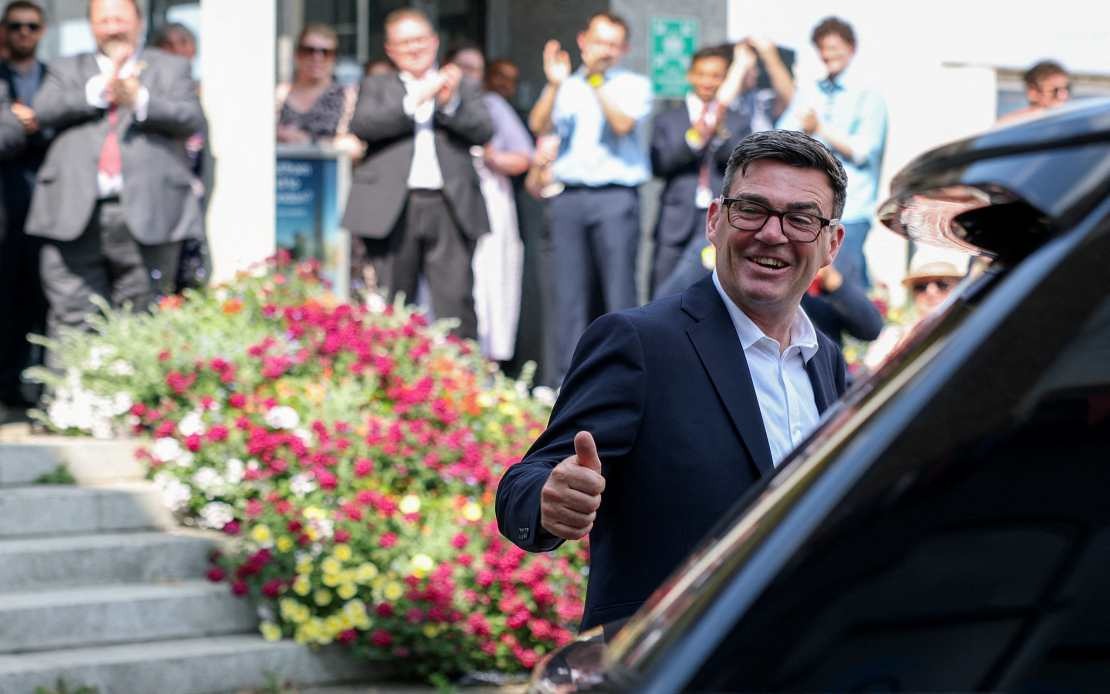
Andy Burnham assumes the role of Prime Minister on Monday following a rapid ascent through Labour's ranks, bringing with him a mandate to stabilise British politics after a turbulent decade marked by seven prime ministerial changes. In his inaugural speech after formally meeting King Charles III, the new premier is expected to emphasise the themes of "reflection and resolution," acknowledging the profound challenges confronting the nation whilst demonstrating commitment to resolving them through decisive action.
The shift to Burnham represents a significant transition from his predecessor Keir Starmer, occurring just over a month after Burnham returned to Parliament. Notably, his path to the leadership involved no competitive contest, reflecting a degree of consensus within Labour that his extensive experience as mayor of Greater Manchester positioned him well for the top job. His allies have signalled that Burnham intends to frame his leadership as a departure from the instability that has characterised Westminster, with particular emphasis on the exhaustion caused by constant changes in occupancy of 10 Downing Street.
During his tenure as Greater Manchester's mayor, Burnham built a reputation for championing regional devolution and pushing back against centralised London-based policymaking. This commitment remains central to his vision, with devolving power away from the capital positioned as a cornerstone of his premiership. For Malaysian observers and policymakers, Burnham's federalist approach offers an instructive case study in how capital-dominated nations can redistribute administrative authority to regional bodies, potentially enhancing local responsiveness and governance effectiveness.
Among his immediate policy shifts, Burnham has committed to abandoning Starmer's digital identity programme to redirect resources toward addressing the cost of living crisis. This decision reflects a recalibration of priorities toward tangible household relief rather than technological infrastructure initiatives. The energy sector features prominently in his early agenda, with speculation that his government may expand North Sea oil and gas operations despite Labour's 2024 election manifesto commitment against issuing new drilling licences. Environmental organisations have voiced concern that this reversal would undermine climate commitments whilst failing to meaningfully reduce energy prices for consumers.
The question of Thames Water's future poses an immediate administrative challenge. The water company's £20 billion debt burden has created systemic vulnerability, with potential intervention ranging from temporary nationalisation to structured rescue arrangements involving private creditors. Burnham's previous statements endorsing greater public ownership of essential services suggest receptiveness to expanding state involvement, though the precise mechanism remains uncertain. His administration's handling of this situation will signal broader intentions regarding the balance between market mechanisms and public provision in critical infrastructure.
Burnham's commitment to delivering "breathing room" on cost of living reflects electoral pressure to demonstrate immediate, tangible improvements in household finances. His advisors emphasise that political stability alone—whilst necessary—proves insufficient without concrete improvements in citizens' material circumstances. This messaging acknowledges the electorate's fatigue with leadership changes that produce policy whiplash but minimal improvement in living standards, a concern that resonates across advanced economies including Malaysia as nations navigate economic pressures.
The composition of his Cabinet will provide early indicators regarding the direction and priorities of his government. Particular attention centres on the chancellorship, with Energy Secretary Ed Miliband and Home Secretary Shabana Mahmood identified as leading contenders. This appointment carries significance beyond economic stewardship, signalling the new premier's approach to energy policy, industrial strategy, and fiscal management during a period of constrained public resources. The choice between these candidates may reveal whether Burnham intends to prioritise green energy transition or pragmatic expansion of conventional energy sources.
Burnham inherits an administration that, despite Labour's 2024 election victory, faces substantial scepticism regarding its capacity to deliver meaningful change. His predecessor Starmer's premiership, though brief, contributed to erosion of public confidence through perceived policy inconsistency and limited visible progress on core commitments. Burnham must navigate this credibility deficit whilst managing immediate crises including energy affordability, water system governance, and economic sluggishness. The convergence of these challenges within his first weeks presents both substantial risk and opportunity to establish his administration's credibility.
For Southeast Asian observers, Burnham's elevation offers perspective on how established democracies manage leadership transitions and policy recalibration. The speed of his succession, occurring without formal contest, contrasts with more protracted and contested leadership transitions in many Asian polities. His emphasis on devolving power from capital-based governance structures aligns with broader trends toward federalism and subsidiarity observed across developed democracies, suggesting potential models for regional governance arrangements applicable beyond the British context.
The broader context of British politics reveals a nation searching for direction following a period characterised by deep divisions over European integration, identity, and economic policy. Burnham's positioning as a unifying figure capable of transcending regional and ideological divisions reflects an electorate fatigued by polarisation. His promise of stability, whilst resonating with voters exhausted by constant institutional churn, requires translation into policy outcomes that demonstrably improve material conditions. The success or failure of his early initiatives will determine whether his administration represents genuine renewal or merely another installment in Britain's cycle of leadership turnover.

