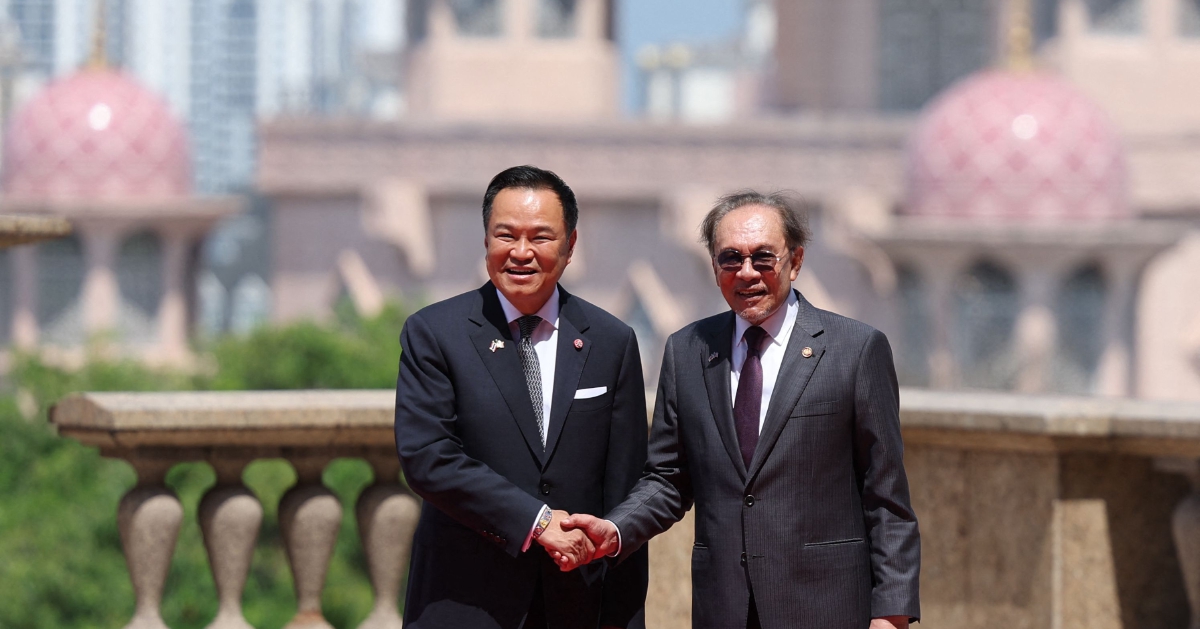
Prime Minister Datuk Seri Anwar Ibrahim and Thailand's counterpart Anutin Charnvirakul convened at the Perdana Putra Complex in Putrajaya today for a high-level bilateral meeting aimed at reviewing the trajectory of relations between the two neighbouring nations and identifying new pathways for deeper cooperation.
The meeting represents a significant moment for Malaysia-Thailand engagement at the leadership level, underscoring the importance both governments place on their strategic partnership. As the two largest economies in mainland Southeast Asia with extensive shared borders and deeply intertwined historical and cultural ties, Malaysia and Thailand have long recognised that strengthened cooperation serves the mutual interests of their citizens and broader regional stability. This latest diplomatic engagement signals the commitment of both administrations to move beyond routine bilateral interactions toward more substantive and results-oriented collaboration.
Bilateral relations between Kuala Lumpur and Bangkok encompass a broad spectrum of concerns ranging from economic integration and trade facilitation to security cooperation and people-to-people exchange. Both nations are members of the Association of Southeast Asian Nations and regularly coordinate on regional matters through multilateral forums. However, the depth and breadth of Malaysia-Thailand ties—spanning historical grievances, cross-border communities, and shared economic interests—necessitate regular high-level dialogue to address emerging challenges and capitalise on fresh opportunities. Today's meeting provided a platform for the two leaders to take stock of recent progress while establishing priorities for the months ahead.
At the operational level, Malaysia and Thailand maintain extensive cooperation frameworks covering multiple sectors. Trade between the two countries remains significant, with bilateral commerce supporting livelihoods across both economies. The two nations also work collaboratively on cross-border development initiatives, particularly in regions where populations straddle international boundaries. Such practical cooperation requires constant attention and high-level oversight to ensure agreements translate into tangible benefits for citizens on both sides of the frontier.
The meeting's focus on reviewing bilateral relations suggests both governments recognised the need for a comprehensive assessment of where the partnership currently stands. Such reviews typically examine whether existing agreements are delivering anticipated outcomes, identify bottlenecks impeding cooperation, and assess whether new mechanisms might better facilitate coordination on emerging issues. For Malaysia, strengthening ties with Thailand holds particular importance given Bangkok's influence across Southeast Asia and its role in regional supply chains and logistics networks that are critical for Malaysian businesses.
Cooperation between Malaysia and Thailand extends into security and public order matters. Cross-border crime, human trafficking, and drug trafficking remain persistent challenges requiring sustained coordination between law enforcement agencies. The two nations have invested considerable effort in building intelligence-sharing mechanisms and joint operational capabilities to combat these transnational threats. At the leadership level, regular meetings like today's help ensure that security cooperation remains prioritised and adequately resourced, even as other pressing governmental concerns compete for attention and funding.
Cultural and educational exchanges form another pillar of the relationship. Substantial Thai communities live in Malaysia, while many Malaysians maintain connections to Thailand through tourism, business, and historical ties. Universities and cultural institutions on both sides actively collaborate, fostering people-to-people understanding that provides a stable foundation for state-level relations. These human connections often transcend political tensions and contribute to resilience in bilateral ties even during periods of diplomatic strain.
For Malaysia, advancing cooperation with Thailand also carries implications for the broader Southeast Asian region. A stronger Malaysia-Thailand partnership contributes to stability within ASEAN and strengthens the bloc's collective capacity to address transnational challenges. The meeting therefore carries significance beyond bilateral interest, extending to Malaysia's role as an influential ASEAN member and participant in regional security arrangements. Developments in Malaysia-Thailand relations often have ripple effects across the wider region, influencing confidence levels and cooperation patterns among multiple parties.
The Putrajaya location of today's meeting carries symbolic weight, being the seat of Malaysian governmental power. This choice underscores the seriousness with which the Malaysian government approaches the engagement, signalling that discussions occur at the highest levels of decision-making authority rather than being delegated to lower-ranking officials. Similarly, Anutin Charnvirakul's personal attendance reflects Thailand's commitment to elevating the relationship.
Moving forward, observers will likely monitor whether today's discussions translate into concrete cooperative initiatives and whether both governments demonstrate renewed momentum in implementing existing agreements. The success of such bilateral meetings ultimately depends not on the warmth of initial exchanges but on subsequent follow-through by the vast bureaucratic machinery supporting both governments. Joint committees, working groups, and administrative channels must translate leadership directives into operational reality for bilateral engagement to produce sustainable results.

