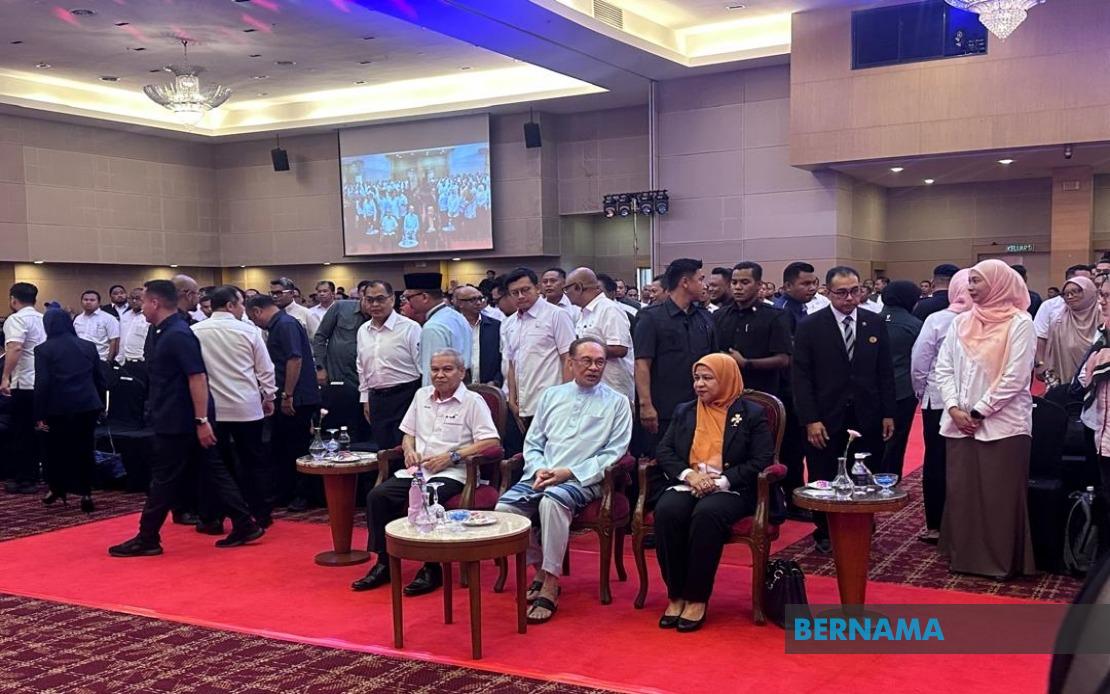
Prime Minister Datuk Seri Anwar Ibrahim has signalled that he will refrain from issuing any formal announcement regarding the Federal Land Development Authority (FELDA) until the investigating Special Task Force delivers its full report. Speaking at a management engagement session in Bangi on August 21, the premier indicated that the probe was already underway and that findings would be presented within the coming months, though he did not specify an exact timeline for the disclosure.
The decision to wait for comprehensive documentation reflects a measured approach to an organisation that has long been central to Malaysia's agricultural and rural development strategy. FELDA, established decades ago to facilitate smallholder farming schemes across the country, has periodically faced scrutiny over governance and operational efficiency. By withholding comment until the task force concludes its work, Anwar appears intent on basing any policy response on concrete evidence rather than preliminary observations or speculation.
During remarks made at Tenera Hotel following a Friendly Session with FELDA's senior management and operational staff, Anwar elaborated on the scope of the investigation. He emphasised that while the task force would naturally examine historical issues within the organisation, the primary focus would centre on current management structures and future strategic direction. This framing suggests the administration is less interested in assigning blame for past problems than in identifying pathways for institutional improvement moving forward.
The presence of FELDA chairman Tan Sri Ahmad Badri Mohd Zahir and director-general Datuk Dr Suzana Idayu Wati Osman at the session underscores the collaborative tenor of the inquiry. Rather than positioning the investigation as adversarial, the engagement conveys a sense of partnership between government leadership and FELDA's top tier in addressing systemic concerns. This approach may help retain institutional stability during what could otherwise be a disruptive period of scrutiny.
Anwar's commitment to transparency mirrors his administration's handling of another high-profile institutional review—the Royal Commission of Inquiry into the Tabung Haji Board. The premier explicitly invited the public to engage with the FELDA report in the same manner as Malaysians have done with the Tabung Haji findings, suggesting an intention to publish comprehensive documentation that citizens can independently examine and analyse. This openness to public scrutiny reflects a broader governance philosophy that emphasises accountability and informed public discourse.
The timing of the FELDA investigation carries particular significance for Malaysia's rural constituencies, where FELDA schemes have historically shaped settlement patterns and economic opportunity for generations of farmer-settlers and their descendants. Any findings regarding mismanagement or inefficiency carry direct implications for smallholder incomes, land utilisation, and agricultural productivity across the country. Rural voters, a traditionally crucial electoral constituency, will likely scrutinise the report carefully for evidence that their interests have been properly protected.
From a regional perspective, FELDA's performance reflects broader patterns across Southeast Asia regarding state-backed agricultural authorities and land settlement schemes. Many nations in the region have grappled with similar challenges in managing large-scale farming programmes: balancing commercial viability with social objectives, maintaining transparent governance across dispersed operations, and adapting to shifting market conditions. Malaysia's handling of the FELDA review may thus offer instructive lessons for neighbouring countries wrestling with comparable institutional legacies.
The investigation itself addresses multiple dimensions of FELDA's operations. Anwar's remarks indicate that the task force is examining managerial practices and governance frameworks, not merely tallying historical grievances. This suggests the inquiry will likely produce actionable recommendations for restructuring, improved oversight mechanisms, and operational reforms. Such forward-looking analysis could prove more valuable to FELDA's long-term viability than a purely forensic examination of past conduct.
The months-long timeline for completing the investigation reflects the complexity inherent in thoroughly evaluating an organisation as large and geographically dispersed as FELDA. The authority operates numerous schemes across different states, manages substantial land holdings, oversees financial arrangements with settlers, and interfaces with multiple government agencies. A credible investigation must account for this institutional complexity while maintaining rigorous evidentiary standards.
Anwar's insistence on completing the investigation before public announcement also serves a political function. It allows the government to present a unified narrative backed by documented findings rather than responding to fragmentary reports or leaked information. In an era of rapid information dissemination and social media scrutiny, controlling the timing and framing of institutional reviews has become increasingly important for maintaining public confidence in government institutions.
The FELDA situation illustrates the broader challenge facing Malaysia's administration in addressing legacy issues inherited from previous governments while maintaining institutional functionality. FELDA continues to serve essential functions in agricultural development and rural settlement, yet it requires modernisation and governance improvements. The balance between accountability for past lapses and continuity in delivering public services remains delicate. By waiting for the complete investigation, Anwar positions himself to address both imperatives simultaneously—examining historical problems while charting a constructive course forward.

