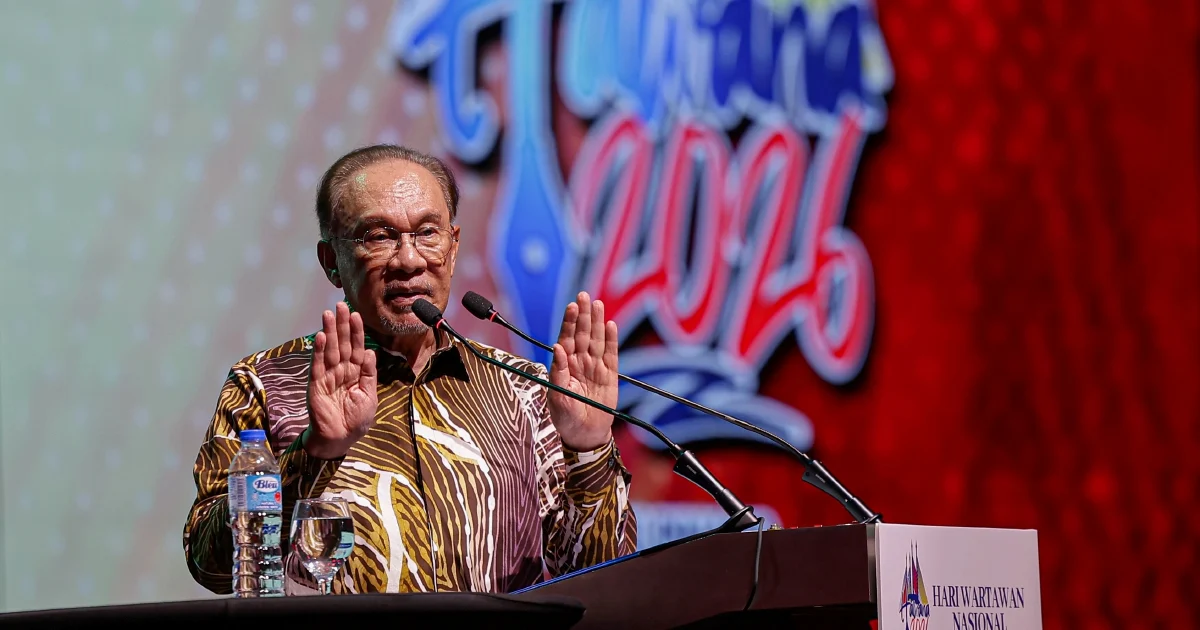
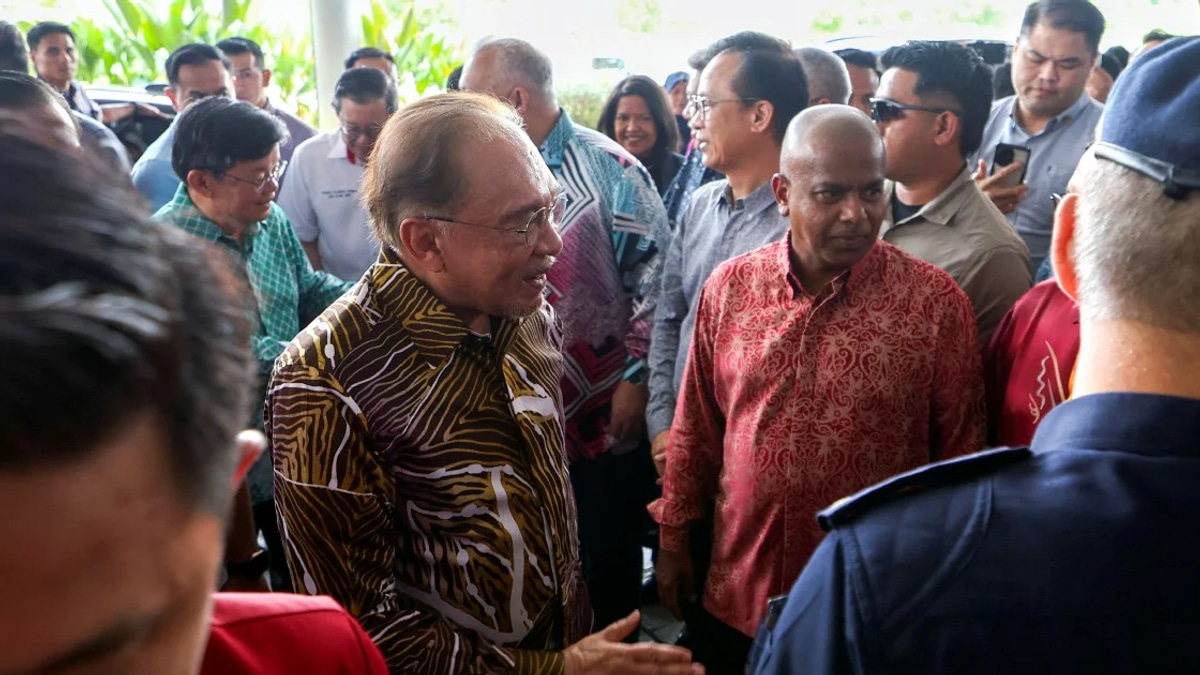
Prime Minister Datuk Seri Anwar Ibrahim has publicly endorsed the appointment of former Federal Court judge Tan Sri Nallini Pathmanathan to lead the Malaysian Media Council, signalling the government's commitment to restoring institutional credibility within the nation's media regulatory framework. Speaking at an event in Butterworth, Anwar articulated his conviction that Nallini's elevation to the council's chairmanship represents a meaningful step toward rebuilding public confidence in an institution that has faced scrutiny in recent years regarding its independence and effectiveness.
The appointment itself carries significant symbolic weight in Malaysia's ongoing governance dialogue. Nallini's professional trajectory—spanning her tenure as a Federal Court judge, one of the nation's highest judicial offices—positions her as a figure with established legal credentials and institutional knowledge. This background is particularly relevant given persistent questions about whether media regulatory bodies maintain sufficient distance from political influence, a concern that resonates across Southeast Asia where press freedom remains contested terrain. By tapping a former senior judge, the government appears conscious of perceptions that media regulation requires individuals with demonstrable expertise and a track record of principled decision-making.
The Malaysian Media Council, established as a self-regulatory body for the print and digital media sectors, functions in a complex environment where balancing journalistic freedom against social responsibility remains perpetually contentious. The council has historically navigated criticism from multiple directions: journalists and media organisations occasionally view its interventions as restrictive, while other stakeholders argue it lacks sufficient authority to enforce standards effectively. Anwar's remarks suggest the administration recognises that institutional legitimacy depends partly on who occupies leadership positions and whether those individuals command cross-sectional respect.
Nallini's ascension also occurs against the backdrop of broader regional conversations about media governance and digital transformation. As Malaysia's media landscape continues fragmenting across traditional outlets and online platforms, the challenge of maintaining professional standards while respecting editorial independence becomes increasingly complex. Her appointment signals an attempt to address this challenge through apposite leadership rather than legislative reform—a measured approach that may appeal to stakeholders concerned about strengthening regulations through heavy-handed mechanisms.
From a Malaysian political perspective, the appointment reflects administration priorities regarding institutional reform and governance legitimacy. Rather than wholesale restructuring of media oversight mechanisms, the government has opted to reshape perceptions through leadership selection. This strategy carries implicit acknowledgment that public trust erodes partly through loss of confidence in individuals stewarding institutions, making personnel decisions consequential for broader institutional health. Nallini's judicial background potentially inoculates the council against accusations that it serves narrow political interests, though sustained credibility will ultimately depend on operational decisions she makes once assuming office.
The context of Anwar's endorsement also merits attention. The Prime Minister's willingness to publicly champion the appointment suggests the administration views media council reform as politically significant—noteworthy given Malaysia's history of contentious government-press relations. Whether framed as confidence-building or strategic repositioning, the move indicates recognition that media governance remains integral to overall governance perception. An independent, professionally-led media council arguably strengthens rather than constrains democratic function, particularly if it can demonstrate evenhanded application of standards across the industry spectrum.
For Malaysia's broader media ecosystem, Nallini's appointment potentially addresses longstanding concerns about regulatory capture and perceived bias. Digital media expansion has complicated regulatory scope—the council must address both traditional publications and online content creators while maintaining clear, defensible standards. Nallini's legal training suggests familiarity with constitutional principles governing expression rights and regulatory authority, capabilities essential for navigating contemporary media governance challenges. Whether she can translate judicial experience into effective media industry leadership remains to be seen, but her qualifications appear strategically matched to institutional requirements.
Regionally, Malaysia's approach to media council leadership carries implications for peer economies considering similar institutional arrangements. The appointment of a respected former judge to chair a self-regulatory body reflects a particular governance model—emphasising credibility and judicial temperament over administrative expertise. Other Southeast Asian nations managing analogous tensions between press freedom and professional standards may observe whether this approach successfully rebuilds public trust or whether structural reforms prove necessary.
Anwar's public confidence in the appointment also communicates broader messages about institutional expectations. By framing Nallini's elevation as confidence-enhancing, the Prime Minister suggests that institutional legitimacy depends upon demonstrable qualification and presumably demonstrated impartiality. This framing potentially establishes standards that extend beyond the media council itself, implicitly acknowledging that public trust across governmental and regulatory institutions requires deliberate attention to personnel quality and perceived independence. Whether the administration applies such standards consistently across other institutional appointments remains an open question informing assessments of governance coherence.
The appointment's success will ultimately depend less on symbolic gestures than on concrete operational decisions. Nallini will confront substantive challenges including digital content regulation, balancing industry self-regulation with public interest, and maintaining independence while engaging with political actors. Her judicial background suggests awareness of principled decision-making frameworks, but media council challenges frequently involve policy judgments rather than pure legal interpretation. Early decisions regarding the council's regulatory approach will signal whether the appointment genuinely represents institutional renewal or primarily constitutes cosmetic change aimed at managing perceptions.
%22%2F%3E%3C%2Fpattern%3E%3C%2Fdefs%3E%3Crect%20width%3D%22100%25%22%20height%3D%22100%25%22%20fill%3D%22url(%23ph1c6k9g)%22%2F%3E%3Crect%20width%3D%22100%25%22%20height%3D%22100%25%22%20fill%3D%22url(%23ph1c6k9p)%22%2F%3E%3Ctext%20x%3D%2250%25%22%20y%3D%2250%25%22%20text-anchor%3D%22middle%22%20dominant-baseline%3D%22central%22%20fill%3D%22rgba(255%2C255%2C255%2C0.95)%22%20font-family%3D%22Georgia%2C%20'Times%20New%20Roman'%2C%20serif%22%20font-weight%3D%22700%22%20font-size%3D%22170%22%20letter-spacing%3D%22-0.02em%22%3EMalaysia%3C%2Ftext%3E%3C%2Fsvg%3E)
%22%2F%3E%3C%2Fpattern%3E%3C%2Fdefs%3E%3Crect%20width%3D%22100%25%22%20height%3D%22100%25%22%20fill%3D%22url(%23ph41swg)%22%2F%3E%3Crect%20width%3D%22100%25%22%20height%3D%22100%25%22%20fill%3D%22url(%23ph41swp)%22%2F%3E%3Ctext%20x%3D%2250%25%22%20y%3D%2250%25%22%20text-anchor%3D%22middle%22%20dominant-baseline%3D%22central%22%20fill%3D%22rgba(255%2C255%2C255%2C0.95)%22%20font-family%3D%22Georgia%2C%20'Times%20New%20Roman'%2C%20serif%22%20font-weight%3D%22700%22%20font-size%3D%22320%22%20letter-spacing%3D%22-0.02em%22%3EPM%3C%2Ftext%3E%3C%2Fsvg%3E)