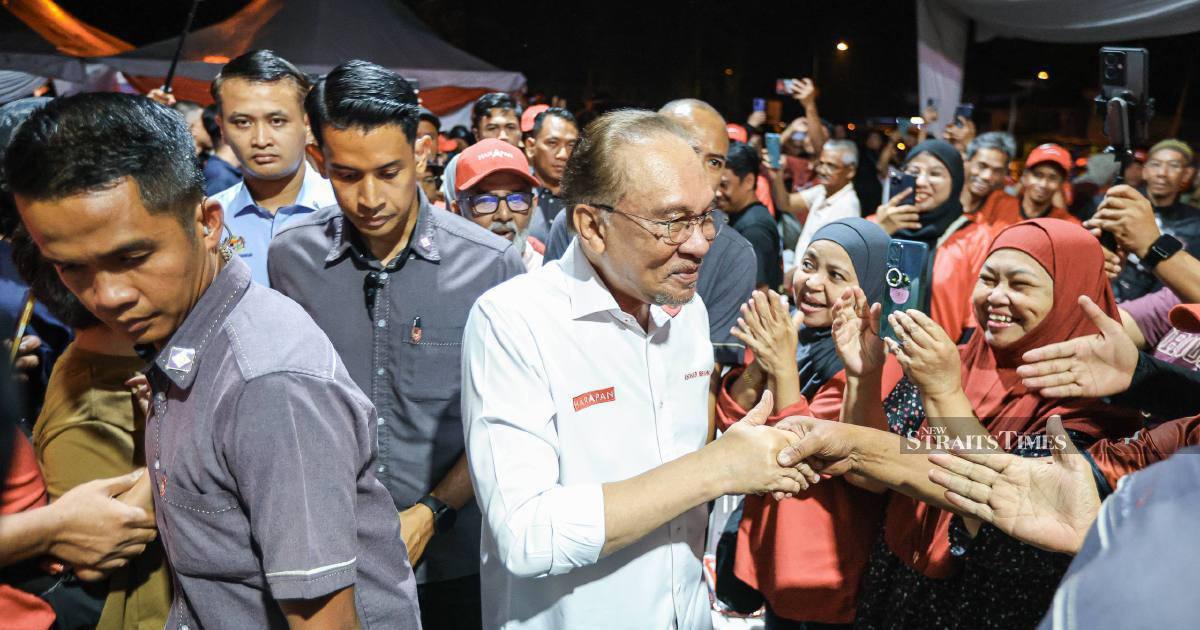
Pakatan Harapan chairman Datuk Seri Anwar Ibrahim has issued a direct appeal to the Johor electorate dispersed across the country and beyond to travel home and participate in the upcoming state election, emphasising the civic duty that lies before them. The Prime Minister's call reflects growing concerns within the coalition about voter turnout among those who have migrated away from their home state, a demographic that has steadily expanded over the past two decades as economic opportunities have drawn Johoreans toward the federal capital and beyond.
The appeal carries particular weight given Johor's electoral significance within Malaysia's political landscape. As the nation's second-most populous state and a consistent stronghold of electoral competition, the outcome of the Johor election will serve as a crucial indicator of voter sentiment heading into any potential general election cycle. The timing of Anwar's message suggests confidence within the Pakatan Harapan machinery, yet also a realistic acknowledgment that victory margins in Johor contests historically remain narrow and highly dependent on turnout dynamics across all voter segments.
Johor's experience with voter migration reflects broader patterns unfolding across Malaysia's developed states. The state has long served as a labour market destination for Malaysians seeking employment in manufacturing, port operations, and services sectors, but in recent years an accelerating wave of skilled workers have relocated to Kuala Lumpur and the Klang Valley, drawn by corporate headquarters, professional services, and higher-paying positions in finance and technology. This outflow has created what political analysts term a "turnout deficit," where expatriate voters from any state face logistical and cost barriers to returning for elections, naturally suppressing participation among this otherwise engaged demographic.
The reference to voters in Singapore carries additional diplomatic nuance. Historically, Johoreans working across the causeway have maintained strong ties to their home state, commuting regularly for family and personal obligations. However, the rise of permanent settlement in Singapore, driven by employment contracts and lifestyle preferences, has gradually transformed this population from temporary sojourners into long-term residents, making the journey home for elections increasingly burdensome and less automatic. This particular constituency represents both an electoral opportunity and a challenge for any coalition seeking to consolidate support.
Anwar's message also reflects broader Pakatan Harapan messaging priorities in the run-up to the election. By emphasising responsibility and civic duty, the coalition attempts to frame voting as an obligation rooted in social contract principles rather than partisan benefit, potentially resonating with voters fatigued by polarised political rhetoric. The framing acknowledges that many displaced voters may harbour ambivalent feelings toward their home state's politics while nonetheless recognising their stake in its governance and policy direction.
Practically, the appeal poses challenges for both voters and the electoral machinery. Those working in Singapore or Kuala Lumpur must secure time off from employment, arrange transportation, and navigate accommodation logistics, all occurring with just days' notice. Working mothers, those in precarious employment, and younger voters beginning careers face disproportionate friction in meeting this expectation. The Malaysian political system does not currently permit overseas voting through embassies or postal arrangements for state elections, unlike some global democracies, placing the burden entirely on voters to return physically.
For Pakatan Harapan specifically, mobilising this dispersed voter base matters considerably given the coalition's organisational challenges in certain Johor strongholds. The party's reach among younger, more mobile voters—precisely those most likely to have relocated—represents both potential strength and organisational vulnerability. A campaign effort to actively facilitate voter returns, perhaps through coordinated transport arrangements or information campaigns, could meaningfully shift turnout calculations, particularly in marginal constituencies that historically determine overall outcomes.
The election itself represents the third state-level contest in Johor within the current parliamentary cycle, reflecting political volatility following the 2023 general election. Each contest has revealed shifting voter preferences and emerging fault lines within both the ruling coalition and opposition blocs. Johor's outcome may therefore signal whether the current political equilibrium, established through the Madani government formation, retains genuine voter confidence or faces mounting pressure from alternative political configurations.
Regionally, Malaysia's approach to voting accessibility contrasts with comparable democracies in Southeast Asia. While Singapore and Thailand have explored limited postal voting mechanisms, Malaysia maintains the principle that voting constitutes a presence-based civic act. This design choice reflects constitutional traditions but increasingly creates practical obstacles for mobile populations typical of modern developed economies. As Johor continues attracting workers from across Malaysia and the region, state electoral authorities face mounting questions about whether current frameworks adequately serve contemporary demographic realities.
Beyond the immediate election cycle, Anwar's appeal highlights demographic challenges that both major coalitions must confront strategically. The concentration of mobile, higher-educated voters in Kuala Lumpur and cross-border locations represents a population segment often responsive to policy messaging around governance quality, institutional integrity, and economic management—precisely the terrain where Pakatan Harapan has sought to build competitive advantage. However, translating this demographic advantage into actual votes requires surmounting the persistent barrier of electoral participation among those physically distant from home.

