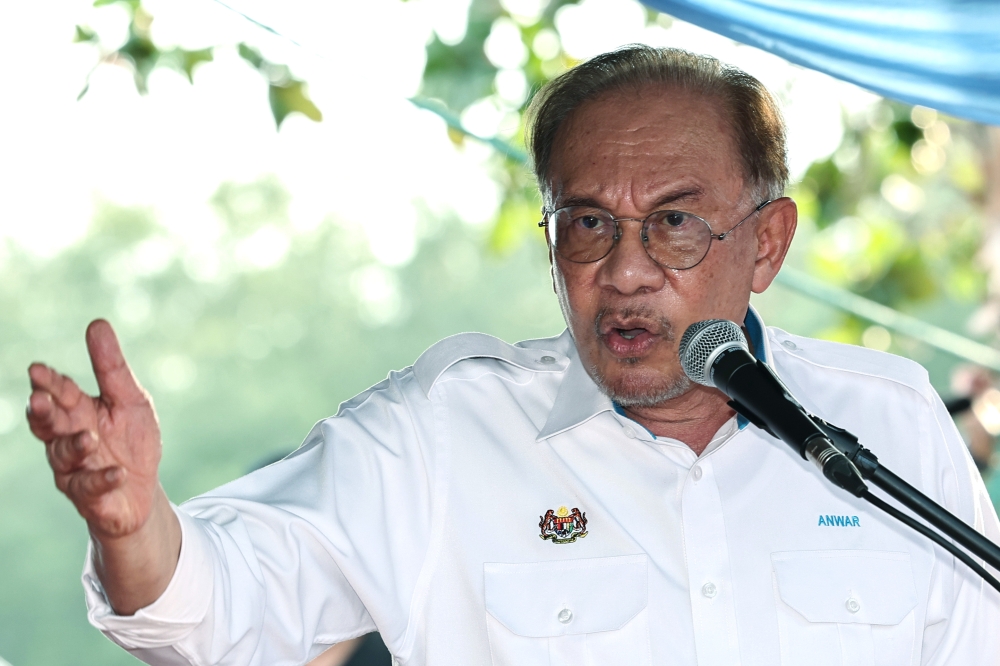
Prime Minister Datuk Seri Anwar Ibrahim mounted a robust defence of his government's economic stewardship on July 14, directly rebutting claims from opposition lawmakers that his administration has reneged on campaign pledges regarding the cost of living. Speaking in Parliament, Anwar asserted that his track record demonstrates a genuine commitment to delivering tangible improvements in household finances and economic stability for ordinary Malaysians, framing the comparison between Malaysian and Saudi Arabian fuel prices as a concrete illustration of policy effectiveness.
The confrontation reflects deeper tensions within Malaysia's political landscape, where the opposition continues to exploit public concerns about rising expenses as a vulnerability for the current administration. Despite Malaysia's reputation as a regional economic powerhouse with substantial oil reserves, household expenditures have become an increasingly contentious political battleground. Anwar's decision to invoke the Saudi Arabia benchmark appears calculated to highlight the structural advantages Malaysia maintains, even as global energy markets have exerted upward pressure on domestic pricing.
Contextualising fuel prices within the broader regional framework reveals important nuances often lost in domestic political discourse. Malaysia's historical subsidy regime and regulatory framework have traditionally kept petrol affordable relative to neighbouring economies and other major oil producers. The specific comparison with Saudi Arabia, itself a global oil powerhouse, serves as a particularly potent rhetorical device—if Malaysia can undercut even that kingdom's pump prices, the government's reasoning suggests, then concerns about affordability ring hollow. This framing assumes Malaysians understand the structural advantages their nation enjoys as an energy exporter with established refining capacity and distribution networks.
Yet the prime minister's defence must navigate complex economic realities that transcend simple international price comparisons. While petrol affordability matters enormously to households, it represents only one component of a broader cost-of-living calculus that encompasses food, electricity, transport, education, and healthcare. Opposition critics likely recognise that isolating a single commodity, even one as economically significant as fuel, risks oversimplifying the lived experience of Malaysian families grappling with multiple competing financial pressures. Anwar's emphasis on petrol prices, therefore, represents a strategic choice to highlight areas where the government believes it has succeeded while potentially deflecting from sectors where performance remains contested.
The invocation of specific international comparisons also signals how Malaysian policymakers increasingly frame domestic achievements within regionalised and globalised contexts. Rather than measure success primarily through historical Malaysian benchmarks—cheaper than last year, or cheaper than a decade ago—the government positions itself competitively against peers. This approach reflects genuine gains in certain metrics while simultaneously acknowledging that Malaysian consumers now evaluate their circumstances through an awareness of opportunities and prices available across the region via digital connectivity and cross-border commerce.
Fuel subsidies and pricing mechanisms represent a particularly fraught policy domain given their political salience and fiscal implications. Throughout Southeast Asia, governments have struggled to balance the electoral appeal of affordable petrol against the budgetary costs of maintaining artificial price suppression. Malaysia's ability to absorb these costs derives partly from petroleum revenues, though those resources remain finite and cyclical. The opposition's criticism implicitly questions whether current policies represent sustainable economic management or merely defer difficult adjustments to future administrations, rendering Anwar's insistence on delivery of promises a statement about both past commitment and future viability.
The broader context of Malaysia's economic challenges extends well beyond fuel pricing into questions of fiscal discipline, debt management, and inclusive growth. The government inherited a complicated fiscal position and has pursued a multi-faceted approach encompassing revenue optimisation, spending discipline, and targeted investments. Whether Anwar's administration has adequately balanced these imperatives remains contested terrain, with opposition figures highlighting specific population segments they contend have been overlooked or burdened disproportionately. The prime minister's parliamentary intervention suggests confidence that selected policy achievements can withstand scrutiny and resonate with voters evaluating his government's overall performance.
Opposition assertions that the government has broken economic promises likely resonate with segments of the electorate experiencing genuine financial strain regardless of comparative international fuel prices. Lower-income households particularly depend heavily on public transport, making petrol price comparisons less immediately relevant to their material circumstances. Additionally, perception of broken promises often reflects broader disappointment about governance effectiveness rather than disagreement with specific metrics. Anwar's need to defend economic record suggests the political terrain remains challenging even where certain measurable outcomes favour the administration.
The parliamentary exchange also illuminates how Malaysian political discourse engages international benchmarking as a legitimacy strategy. By demonstrating that Malaysian prices remain competitive globally, the government positions itself as economically competent and justifies existing policy frameworks. However, this rhetorical strategy carries inherent limitations—international comparisons may satisfy sophisticated economic observers but may not sway voters primarily concerned with whether their household budget stretches sufficiently to meet monthly obligations. The tension between these competing narratives will likely define much of the political economy discussion leading toward Malaysia's next general election.
Moving forward, Anwar's government faces the challenge of translating specific policy successes into broader perceptions of economic competence and trustworthiness. Whether comparative fuel pricing proves sufficient to counter opposition narratives depends substantially on the trajectory of other cost-of-living pressures, the government's capacity to demonstrate tangible improvements in education, healthcare, and social mobility, and ultimately voters' assessment of whether current economic conditions reflect sustainable improvement or temporary advantages dependent on volatile global conditions. The parliamentary debate thus represents merely one skirmish in a prolonged political struggle over competing visions of economic management and whose policies genuinely serve Malaysian interests.

