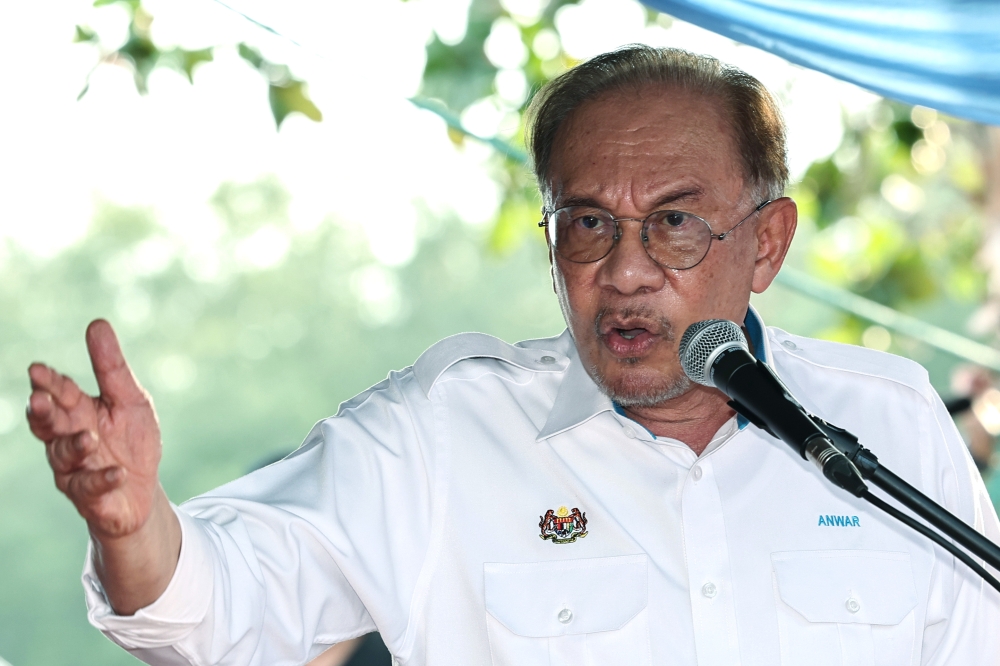
Prime Minister Datuk Seri Anwar Ibrahim mounted a vigorous defence of his government's approach to fuel pricing on July 14, pushing back against persistent opposition criticism that he had reneged on his pre-election commitments to ordinary Malaysians. Speaking in parliament, Anwar asserted that far from failing to deliver on his undertakings, his administration had actively maintained competitive petrol rates that outperform those in major oil-producing nations across the Arabian Gulf.
The prime minister's remarks represent an escalation in a broader political dispute surrounding the cost of living, which has emerged as one of the most resonant criticisms levelled at the government by its parliamentary opponents. Anwar's decision to invoke comparisons with Saudi Arabia and Qatar suggests a strategic pivot towards reframing the debate around fuel prices within a regional rather than domestic context—a rhetorical manoeuvre that encourages voters to assess Malaysia's performance against wealthier petroleum-exporting states rather than against the expectations set during the coalition's campaigning phase.
This exchange highlights the persistent tension between the government's fiscal management of fuel subsidies and public expectations shaped by campaign messaging. During the lead-up to recent elections, Anwar's coalition had articulated commitments to address the rising cost of living that many Malaysians, particularly those in lower and middle-income brackets, had experienced during the preceding administration. However, the practical implementation of fuel pricing policy involves complex considerations around import costs, currency fluctuations, and the sustainability of subsidy programmes—realities that have constrained the government's ability to deliver the dramatic relief some voters anticipated.
The comparison Anwar drew with Saudi Arabia and Qatar carries particular significance in the Malaysian context. Both nations possess vastly larger proven oil reserves and generate substantial sovereign wealth that allows their governments to absorb fuel price volatility without the budgetary strain Malaysia faces. Saudi Arabia, the world's largest oil exporter, has long maintained prices well below international market rates through state intervention. Qatar, similarly, benefits from enormous natural gas revenues that fund its subsidy programmes. Malaysia, by contrast, despite being a net petroleum exporter, lacks the fiscal cushion these nations enjoy, rendering direct price comparisons somewhat problematic from an economic standpoint.
Yet Anwar's assertion contains a kernel of validity that warrants examination. Recent international data does indicate that petrol prices at Malaysian pumps have remained competitive within the Asian region, and in several instances have undercut prices in some Gulf Cooperation Council member states, particularly during periods when global crude prices have spiked. The prime minister appears to be leveraging this factual foundation to neutralise opposition narratives suggesting governmental failure on the economic front, particularly on a portfolio that directly affects household finances and attracts considerable voter attention.
The opposition's framing of fuel price management as a test of government credibility reflects how certain policy areas acquire symbolic significance extending beyond their immediate economic parameters. For many Malaysians, the price charged at petrol pumps serves as a readily observable metric of governmental competence and commitment to citizens' welfare. Consequently, opposition parties have seized upon any instances where domestic fuel costs have risen—even when such increases reflect global market dynamics beyond any government's immediate control—as evidence of broken promises or mismanagement.
Anwar's parliamentary intervention also implicitly addresses the challenge of communicating complex economic trade-offs to an electorate accustomed to straightforward campaign messaging. Maintaining fuel price competitiveness while preserving fiscal sustainability requires difficult balancing acts between immediate relief and long-term budgetary health. Subsidies, while politically popular, create long-term strains on government finances that constrain resources available for investments in education, healthcare, and infrastructure—spending areas where opposition parties would equally criticise any shortcomings.
The regional comparison strategy Anwar employed reflects a broader pattern in Malaysian politics whereby governments attempt to reframe local grievances within comparative frameworks that privilege Malaysia's relative performance. This approach carries rhetorical utility but risks appearing dismissive of genuine cost-of-living pressures many Malaysians experience, particularly those whose incomes have not kept pace with inflation across various sectors. The opposition will likely argue that Malaysians deserve fuel prices competitive with comparable Southeast Asian economies rather than with wealthy Gulf states whose fiscal circumstances differ fundamentally.
Looking ahead, this exchange suggests that fuel pricing will remain a contested political terrain throughout Anwar's term, with opposition parties continuing to invoke campaign-era expectations while the government navigates the practical constraints of economic management. The prime minister's invocation of regional comparisons indicates an attempt to shift the parameters of debate, yet questions about the sustainability of current pricing policies and their alignment with pre-election commitments are unlikely to dissipate from parliamentary discourse or public discussion.

