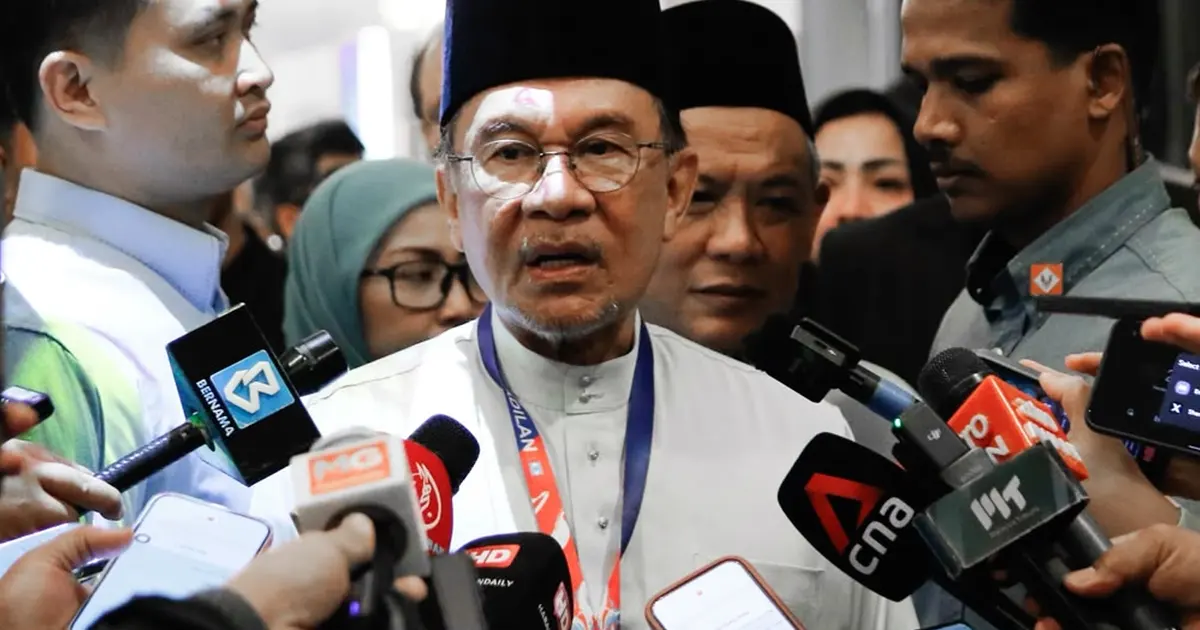
Prime Minister Anwar Ibrahim moved swiftly to contain political fallout from recent critical remarks, asserting that he maintains no trust deficit with Deputy Prime Minister Zahid Hamidi despite comments made by former Umno Youth chief Khairy Jamaluddin in a podcast discussion. Anwar's intervention underscores the delicate equilibrium required to manage a coalition government where partner parties retain considerable agency and where public criticism from prominent figures can quickly destabilise the political narrative.
KJ, as he is commonly known in Malaysian political circles, had aired concerns about tensions within the leadership structure, remarks that gained traction in political circles and media coverage. Rather than engaging in a direct rebuttal of the former youth leader's specific allegations, Anwar characterised the matter as arising from fundamentally different interpretive lenses through which KJ and the government viewed recent developments. This framing allows the prime minister to acknowledge the comments without validating their substance, a calibrated approach typical of coalition management where dismissing a prominent party figure outright risks inflaming intra-party resentments.
The timing of Anwar's response reflects the heightened sensitivity surrounding ministerial relationships in Malaysia's current political structure. The coalition government, which came to power on promises of reform and institutional strengthening, continues to navigate considerable internal pressures from its constituent parties. Each party brings its own institutional interests, factional dynamics, and leadership ambitions to the table, creating an environment where apparent discord at senior levels can quickly undermine public confidence in governance stability.
Zahid's position as Deputy Prime Minister represents a significant accommodation to Umno within the ruling coalition. The appointment itself was a consequential decision that demonstrated Anwar's willingness to integrate the long-dominant Umno into government structures despite their historical political rivalry. Any suggestion of deteriorating relations between these two figures therefore carries outsized implications for coalition cohesion, affecting everything from legislative continuity to the smooth functioning of cabinet-level coordination on major policy initiatives.
The podcast format through which KJ voiced his concerns illustrates the contemporary challenge facing Malaysian political communications. Informal digital media platforms allow senior figures to articulate opinions without the constraints of official channels, creating space for perspectives that might otherwise remain within private party discussions. When such comments gain public currency, sitting governments face pressure to respond, yet responses themselves risk amplifying concerns that might otherwise dissipate. Anwar's measured approach attempts to minimise this amplification effect while still addressing the narrative directly enough to prevent it from calcifying into accepted political wisdom.
For Malaysian observers and political analysts, the incident highlights ongoing questions about consensus-building within coalition governments. While Malaysia has operated under various coalition arrangements over recent decades, the current administration represents a particularly complex alignment of parties with distinct ideological traditions, voter bases, and internal power structures. The relationship between Anwar and Zahid, therefore, carries symbolic weight extending beyond their personal dynamic to encompass broader questions about whether such ideologically diverse coalitions can function effectively over the medium to longer term.
The episode also reflects deeper tensions within Umno itself. KJ's comments, emerging from the party's youth faction, suggest ongoing internal disagreements about the party's optimal positioning and leadership direction. By attributing KJ's remarks to personal interpretation rather than reflecting broader party sentiment, Anwar attempts to prevent the former youth chief's comments from becoming a focal point for intra-Umno mobilisation that might destabilise coalition arrangements. This approach treats the matter as an individual perspective rather than as symptomatic of systemic coalition malfunction.
Regionally, Malaysian coalition politics carries implications for Southeast Asian democratic practice more broadly. Malaysia's experience managing multi-party governments offers both instructive possibilities and cautionary lessons for other nations grappling with coalition arrangements. The current government's stability or instability consequently attracts attention from observers across the region contemplating their own political trajectories and coalition possibilities.
Moving forward, the incident underscores the continued importance of sustained engagement between coalition partners to prevent perception gaps from widening into actual fractures. While Anwar's denial of trust issues may successfully contain immediate political damage, the underlying dynamics that prompted KJ's comments likely persist within the coalition structure. Managing these tensions effectively over time represents one of the principal governance challenges facing the current administration, particularly as it seeks to advance substantive policy agendas while simultaneously maintaining the delicate internal balance required for coalition survival.

