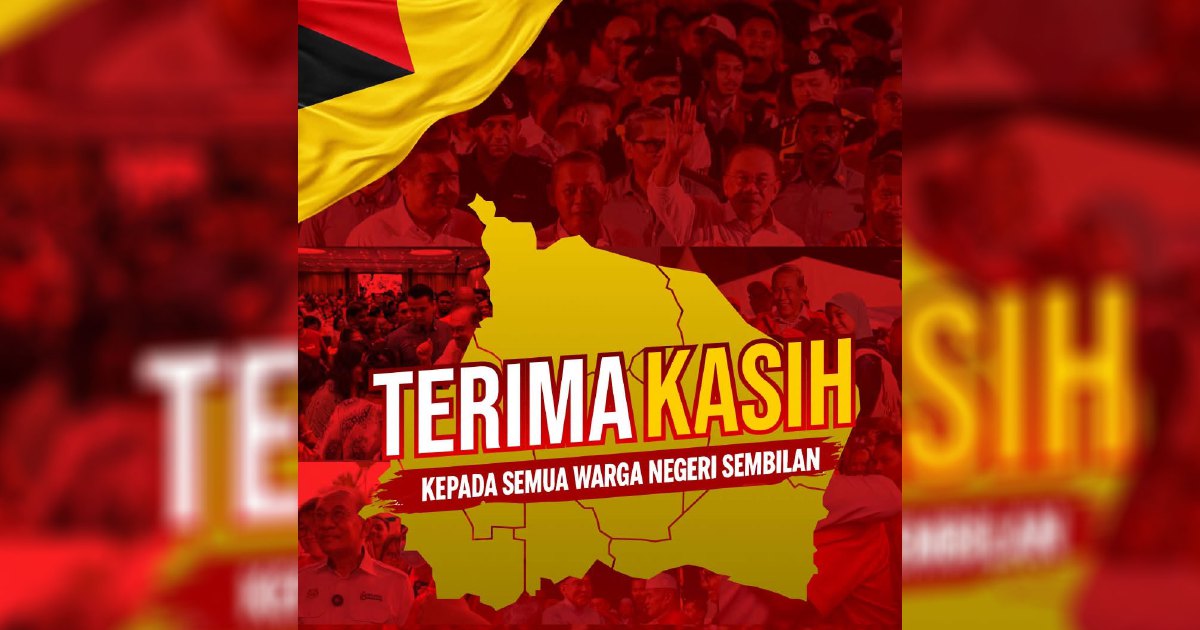
Prime Minister Datuk Seri Anwar Ibrahim has extended his congratulations to Barisan Nasional (BN) following the coalition's victory in the Negri Sembilan state election, underscoring the federal government's commitment to supporting the newly elected administration in the state.
The Prime Minister's gesture reflects the broader cooperative framework that has developed between the federal government and BN in recent months, particularly following the formation of the unity government after the 2023 general election. This alignment between the federal centre and state-level administrations has become increasingly important in Malaysia's evolving political landscape, where coalition-building and consensus among major political blocs have taken on greater significance.
Anwar's public commendation serves multiple purposes within Malaysia's complex political ecosystem. Beyond the ceremonial acknowledgement of BN's electoral performance, it signals to both the business community and the public that there is political stability and coherence between federal and state governments. This coordination is particularly relevant for investors and development stakeholders who require certainty regarding infrastructure projects and policy implementation across different jurisdictions.
The promise of federal support carries tangible implications for Negri Sembilan's governance agenda. The state has historically faced challenges in revenue generation and infrastructure development compared to more economically advanced states such as Selangor and Penang. Federal backing can translate into increased budget allocations, preferential access to development funds, and facilitation of joint initiatives that require coordination between state and national authorities.
BN's performance in Negri Sembilan also reflects broader patterns in Malaysia's current political realignment. The coalition, which lost federal power in 2018 but returned to government through the unity arrangement, continues to retain strongholds in several state administrations. Understanding BN's electoral dynamics across different states provides insight into the regional variations in voter preferences and the varying appeal of different political messages in urban versus rural constituencies.
For Malaysian readers across Southeast Asia and diaspora communities, this development illustrates how Malaysia's federal system operates with checks and balances between different levels of government. Unlike unitary systems, Malaysia's constitutional framework requires cooperation and resource-sharing between federal and state authorities, making political harmony between them essential for effective governance and economic progress.
The federal government's commitment to support extends beyond symbolic gestures. Practically, it encompasses collaboration on key policy areas including education, health, infrastructure development, and economic diversification initiatives that increasingly require coordinated action between state administrations and federal agencies. Negri Sembilan, situated strategically between the Klang Valley and southern Perak, plays an important role in Malaysia's broader regional economic integration plans.
Anwar's statement also carries diplomatic weight within the larger coalition dynamics that sustain the federal government. The unity government comprises multiple political parties with distinct bases and agendas, necessitating constant negotiation and demonstration of mutual benefit. Supporting BN-led state governments strengthens the bonds within this coalition and demonstrates that all constituent parties stand to gain from the arrangement.
The timing of such congratulations typically occurs shortly after state election results are announced, establishing the framework for the incoming state government's first months in office. Early coordination between federal and state authorities helps prevent bottlenecks in decision-making and ensures that development pipelines continue flowing smoothly, which is crucial for maintaining investor confidence and public satisfaction.
For Negri Sembilan specifically, federal support could facilitate the state's participation in larger economic initiatives such as the Northern Corridor Implementation Authority and regional development schemes that connect multiple states. The state's relatively smaller population and land area compared to larger states necessitate efficiency in resource utilisation and strategic partnerships to maximise economic potential.
Looking ahead, the sustainability of this cooperative arrangement depends on several factors including the stability of the federal coalition, the economic performance of Negri Sembilan under BN leadership, and the ability of both federal and state governments to deliver tangible improvements in public services and infrastructure. Political analysts will be watching how effectively this federal support translates into concrete development outcomes for Negri Sembilan residents.
The broader significance of Anwar's statement extends to how Malaysia manages coalition governance at multiple levels simultaneously. The experience gained from coordinating between the federal unity government and various state administrations of different political colours provides valuable lessons for Malaysia's democratic maturity and institutional resilience.

