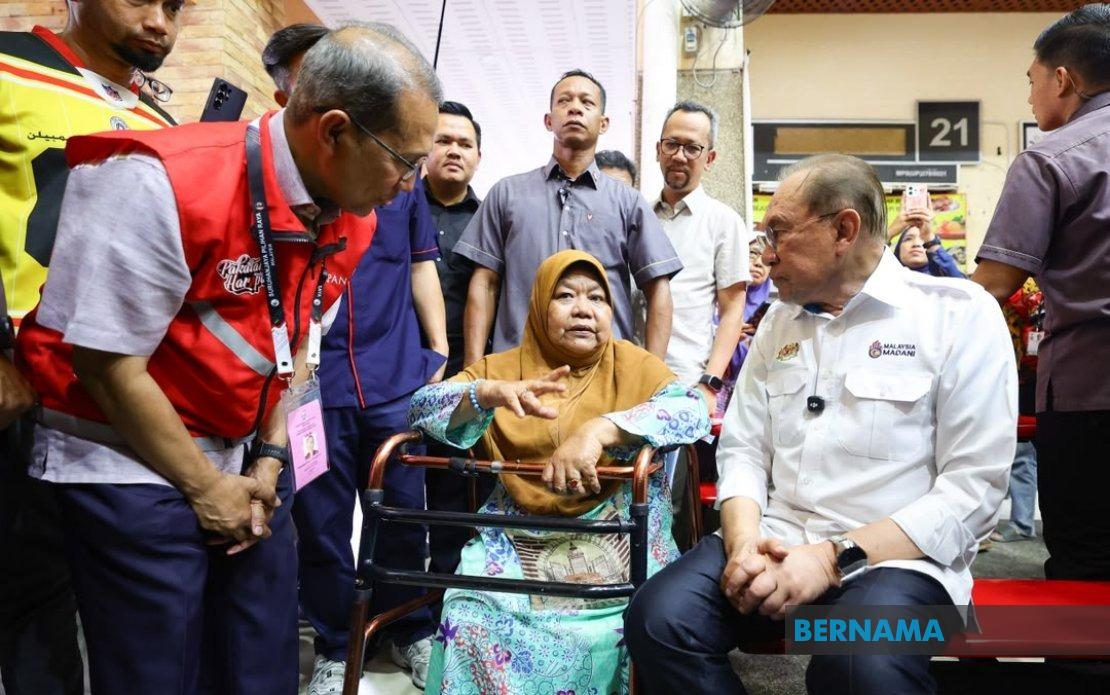
Prime Minister Datuk Seri Anwar Ibrahim has highlighted the Pakatan Harapan administration's track record in Negeri Sembilan as proof that the coalition can deliver meaningful development whilst maintaining transparent governance and ensuring resources benefit ordinary citizens. Speaking at a community engagement event in Ampangan, Anwar pointed to ongoing river improvement initiatives as tangible examples of how the state government operates with the public interest at the forefront, contrasting this approach with what he characterised as resource mismanagement that may have characterised previous administrations.
The reciprocal financing model being deployed for river projects in Negeri Sembilan demonstrates innovation in how state governments can fund infrastructure maintenance without creating unsustainable fiscal burdens. Under this arrangement, sand extracted during river widening and deepening operations is sold or reused, with proceeds channelled directly into further maintenance work and upgrading of riverbank infrastructure in the affected communities. This circular approach eliminates waste whilst generating funds for ongoing improvements, addressing a persistent challenge in Malaysian local governance where maintenance budgets often fall short of actual needs.
The Ampangan project specifically serves a dual purpose that resonates with residents facing regular flood risks. Beyond the practical benefit of reducing inundation hazards, the project demonstrates how infrastructure work can generate local economic activity and environmental stewardship simultaneously. Anwar's emphasis on transparency in managing these extracted resources addresses a longstanding public concern about whether development projects ultimately serve connected elites or broader community interests. By making the resource management process visible and tying it directly to visible improvements in residents' immediate surroundings, the approach builds institutional trust.
Anwar's reference to his own involvement in a hotel development negotiation in Port Dickson provides context for understanding how the PH leadership conceptualises development with social considerations embedded. In that instance, the project reportedly included provisions for the local fishing community's welfare, incorporating educational opportunities and housing improvements alongside commercial development. This illustrative example suggests a deliberate philosophical approach to governance that attempts to integrate economic activity with broader social development rather than treating them as separate domains that might conflict.
The timing of these remarks carries significance given that Negeri Sembilan is preparing for its 16th state election, scheduled for August 1, with early voting set for July 28. By showcasing concrete examples of PH-led governance delivering tangible benefits, Anwar is constructing a narrative that extends beyond campaign rhetoric into demonstrated outcomes. For voters assessing the coalition's credibility, particularly in a state where alternative political arrangements remain viable, such examples carry weight in deciding whether to renew the mandate.
PH is contesting all 36 state seats with a coalition distribution reflecting its component parties' respective strengths: PKR fielding 16 candidates, DAP 11, and Amanah nine. This distribution suggests confidence in the coalition's appeal across the state's diverse demographic and geographic constituencies. Negeri Sembilan, while less populated than Selangor or Kuala Lumpur, represents an important bellwether for coalition cohesion and performance in the broader Peninsula.
Anwar's broader argument about integrity-based governance as the foundation for development carries implications extending well beyond Negeri Sembilan. As Malaysia navigates post-pandemic economic challenges and infrastructure gaps accumulated over years of underinvestment, the question of whether development serves public or private interests becomes increasingly salient. The emphasis on choosing trustworthy leaders across all communities—explicitly noting good Malays, Indians, and Chinese—reflects an attempt to frame elections in terms of character and competence rather than purely communal or factional lines. This approach appeals to voters who view corruption and resource capture as threats transcending ethnic boundaries.
The river projects under discussion also address a practical problem affecting multiple Malaysian states: aging flood management infrastructure and inadequate maintenance budgets. When Negeri Sembilan's model proves successful and replicable, it could influence governance approaches elsewhere. The innovation of financing maintenance through project-derived resources rather than general revenue offers possibilities for other states facing similar constraints, particularly those without oil wealth like Terengganu or Pahang.
For Malaysian business and development communities, the emphasis on transparent resource management and community consultation in development projects reflects evolving expectations about corporate social responsibility and stakeholder engagement. As environmental concerns and social licence to operate become increasingly important globally, the alignment between project design and community benefit is not merely a governance nicety but increasingly a business imperative.
Anwar's campaign engagement in Negeri Sembilan also signals PH's determination to consolidate state-level control at a time when federal governance remains complex. With coalition partners sometimes displaying divergent interests, demonstrating effective governance at the state level builds legitimacy and provides insurance against potential future federal-level instability. Successful state administration becomes both a political asset and practical preparation for sustaining governance partnerships across different levels.
The community engagement format itself—an afternoon chat with residents rather than a formal rally—reflects a deliberate communications strategy emphasising accessibility and dialogue over spectacle. This approach aligns with the integrity and transparency message being conveyed, suggesting that good governance includes how leaders engage with citizens, not merely what policies they implement. For residents in Ampangan and across Negeri Sembilan evaluating their voting choice, the combination of visible infrastructure improvements and a style of engagement suggesting willingness to listen carries cumulative persuasive power.

