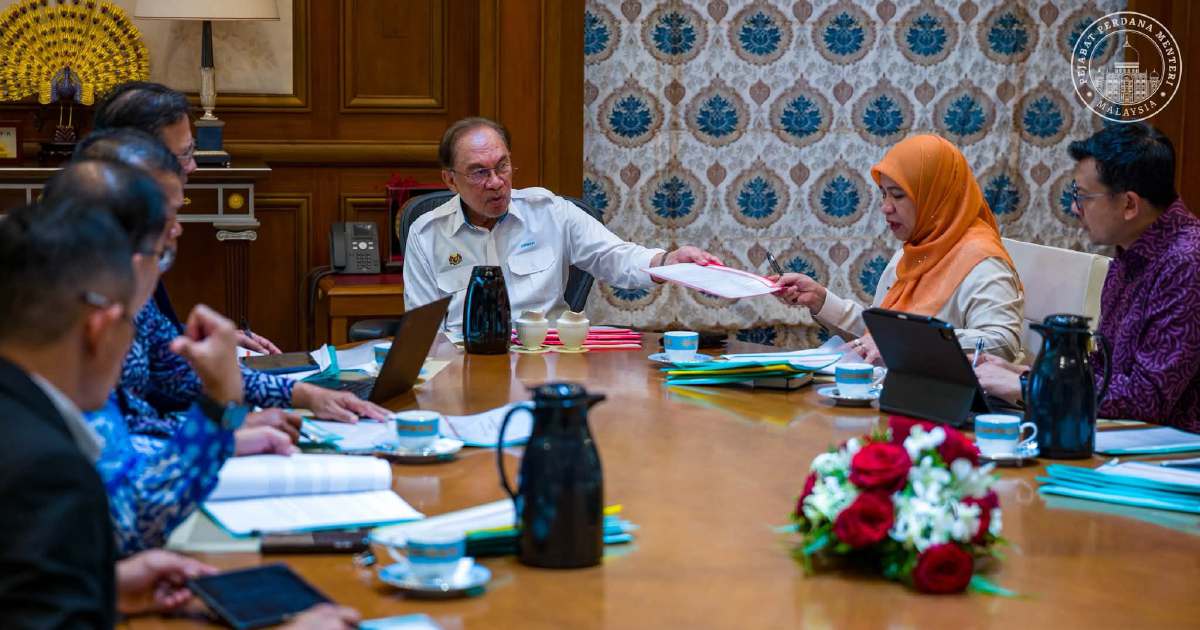
Prime Minister Datuk Seri Anwar Ibrahim has pressed for a comprehensive and expedited resolution to persistent problems affecting Federal Land Development Authority (Felda) settlers, with particular emphasis on resolving land ownership disputes and tackling the acute shortage of housing for second-generation residents.
The issue strikes at the heart of rural livelihoods in Malaysia, where Felda has historically served as a cornerstone institution for smallholder agricultural development. Since the 1950s, the authority has resettled hundreds of thousands of families on development schemes across Peninsular Malaysia and beyond, promising land ownership and economic stability. However, decades of implementation have left many settlers wrestling with unclear tenure arrangements and limited housing capacity for their children, creating a mounting social and economic burden in rural communities.
Felda settlers constitute a politically significant and economically vulnerable constituency. Many operate on modest incomes dependent on commodity prices beyond their control, particularly rubber and palm oil. The absence of secure land titles undermines their ability to access credit, make long-term agricultural investments, or build equity for future generations. Second-generation residents face even grimmer prospects, with limited land availability and prohibitive costs for new housing preventing them from establishing independent livelihoods within their home communities.
The Prime Minister's intervention reflects growing recognition within government that the settler population requires targeted policy attention. These communities have historically served as a demographic anchor for rural Malaysia, yet current arrangements leave many in precarious circumstances. Without clear resolution pathways, younger generations face the choice between accepting subsistence farming or migration to urban areas, potentially hollowing out rural social structures further.
The housing challenge carries particular urgency. Original Felda schemes allocated individual plots to settlers, but population growth and inheritance patterns have created scenarios where families split holdings across multiple members. Second-generation residents often lack space or resources to build homes, forcing them to seek employment outside their settlement areas or remain dependent on aging parents. This demographic squeeze threatens intergenerational continuity of the settlement model itself.
Land ownership ambiguity compounds these difficulties. Many settlers operate on long-term leasehold arrangements rather than outright ownership, limiting their sense of security and their capacity to leverage assets for capital needs. Some schemes have experienced decades-long disputes over title clarification, leaving residents in legal limbo. Anwar's emphasis on fairness suggests acknowledgment that previous arrangements may have disadvantaged settlers relative to what was originally promised.
The government's commitment to swift action indicates recognition that incremental approaches have failed to resolve these issues. A comprehensive solution likely requires coordinated interventions across multiple agencies—Felda itself, the Land Office, the Ministry of Rural Development, and potentially the Ministry of Finance for funding. This institutional complexity has historically slowed progress, suggesting that Prime Ministerial direction may be necessary to cut through bureaucratic obstacles.
For Malaysian readers invested in rural development and social cohesion, this announcement signals potential policy change in a sector that has received inconsistent government attention in recent years. The settler population, while economically modest in aggregate national terms, remains politically consequential and represents a foundational component of Malaysia's post-independence social contract. Their circumstances reflect broader challenges in ensuring equitable development across regions.
Regional implications exist as well. Several Southeast Asian nations have pursued similar land settlement schemes with varying degrees of success, and Malaysia's approach to resolving settler grievances may inform broader development policy across the region. Countries facing similar smallholder crises have discovered that unresolved land tenure creates long-term impediments to agricultural productivity and rural stability.
The timing of the Prime Minister's remarks also merits attention. Renewed focus on Felda issues comes as the government pursues broader rural economic transformation initiatives. Resolving land and housing constraints could unlock productivity gains and modernisation opportunities within the settler population, potentially creating synergies with other development programmes.
Implementation will prove critical. History shows that government commitments to settler welfare, while well-intentioned, often encounter obstacles in execution—budget constraints, institutional rivalries, or divergent interpretations of fairness between different settler categories. The Prime Minister's personal involvement suggests seriousness, but translating this into concrete outcomes requires clear timelines, adequate resource allocation, and mechanisms for monitoring progress.
Stakeholders will be watching closely for substantive moves beyond rhetoric. Felda settlers have endured repeated promises of improvement over decades, creating justified scepticism about bold announcements. Visible progress—whether in clearing land titles, approving housing schemes, or establishing dispute resolution mechanisms—will determine whether this intervention represents genuine policy change or merely political theatre.

