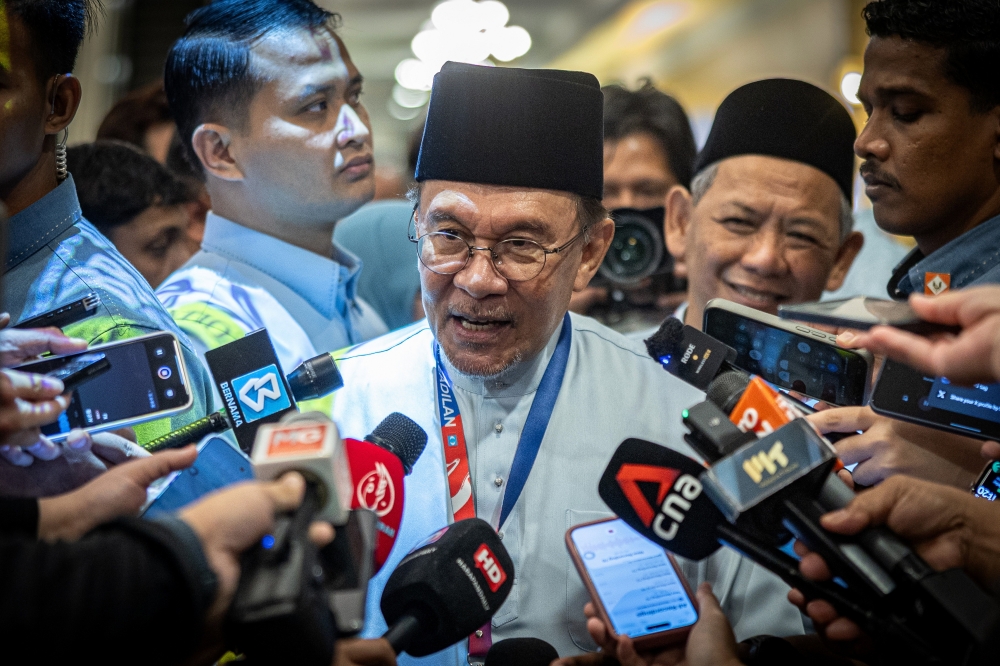
Prime Minister Datuk Seri Anwar Ibrahim moved swiftly to quash growing speculation about fractures within Malaysia's ruling coalition, declaring that he operates according to democratic principles and abhors confrontational tactics. Speaking at an event in Melaka on August 15, Anwar categorically rejected insinuations that discord exists between himself and Deputy Prime Minister Zahid Hamidi, characterizing such narratives as mere conjecture designed to sow discord among government ranks.
The prime minister's intervention came in direct response to remarks by former Cabinet minister Khairy Jamaluddin, who had suggested that internal tensions had surfaced between the nation's top two political leaders. Anwar's rebuttal underscores the delicate balance required to maintain cohesion within a multi-party coalition that brings together diverse political interests and competing ideological positions. For Malaysia's political observers, such denials carry significant weight given the government's narrow parliamentary majority and its reliance on maintaining solidarity among constituent parties to survive legislative votes.
Anwar's philosophy of pursuing consensus through peaceful dialogue rather than confrontation reflects a deliberate strategy to differentiate his administration from predecessors marked by faction-ridden governance. By publicly affirming his working relationship with Zahid and rejecting inflammatory claims about leadership struggles, Anwar seeks to project an image of institutional stability at a time when Malaysians grapple with economic pressures and social concerns. This messaging appears calculated to reassure both the business community and ordinary citizens that government operations remain steady despite inevitable disagreements that arise in any multi-party arrangement.
The deputy prime minister role itself carries historical significance in Malaysia's political architecture, often viewed as either a stepping stone to the top or a repository for managing restless coalition partners. Zahid's position under Anwar therefore merits scrutiny from analysts and commentators seeking to understand power dynamics at the apex of government. Anwar's public endorsement of their collaborative relationship serves multiple purposes: it neutralizes critics within and outside his coalition, discourages speculation that might embolden dissenting voices, and establishes clear ground rules about acceptable political discourse around the leadership hierarchy.
The timing of Anwar's statement warrants consideration within broader Malaysian political currents. Coalition governments in this region frequently encounter challenges as partner parties negotiate their influence and resource allocation. Khairy's comments, whether viewed as genuine concern or political maneuvering, reflect the reality that government cohesion remains perpetually contested terrain in Malaysian politics. By responding with measured reassurance rather than defensive aggression, Anwar demonstrates political maturity—a quality that carries particular importance given historical precedents of leadership conflicts that destabilized administrations and distracted from policy implementation.
For Southeast Asian observers, Malaysia's coalition governance model offers instructive lessons about managing pluralistic political structures. Unlike systems with commanding single-party majorities, Anwar's administration must continually negotiate consensus and demonstrate that partnership mechanisms function effectively. The prime minister's willingness to publicly address questions about internal relationships signals confidence in coalition durability, though such assurances inevitably invite scrutiny about whether underlying tensions truly exist or merely simmer beneath official proclamations.
Anwar's invocation of peaceful approaches carries symbolic weight in Malaysian political discourse, particularly given the country's multicommunal context where inflammatory rhetoric risks triggering broader social divisions. By framing his leadership style around democratic principles and constructive engagement, the prime minister positions himself as a stabilizing force committed to inclusive governance. This narrative proves especially valuable when managing relationships with coalition partners who might otherwise fear marginalization or resource deprivation within a Pakatan Harapan-dominated administration.
The broader implications of such public declarations extend to investor confidence and economic policy implementation. Malaysian enterprises and international investors closely monitor political stability, viewing coalition cohesion as fundamental to policy continuity and regulatory predictability. Anwar's reassurances about harmonious working relationships within the cabinet and between major political leaders contribute to macroeconomic sentiment, influencing decisions about capital deployment and long-term business planning in Southeast Asia's third-largest economy.
Looking forward, the sustainability of Malaysia's current coalition arrangement depends substantially on leadership ability to manage competing interests without permitting ideological or personal differences to metastasize into public rifts. Anwar's demonstrated willingness to address speculation head-on, coupled with his emphasis on democratic and peaceful problem-solving mechanisms, suggests recognition that governance legitimacy requires transparency and confidence-building communication. Whether such diplomatic messaging reflects genuine consensus or tactical positioning will inevitably remain subject to political analysis and scrutiny, yet the effort itself represents a deliberate commitment to coalition stability that distinguishes contemporary Malaysian governance from earlier periods marked by internal turbulence and leadership succession crises.

