The Arab League's top diplomat has made an urgent appeal to United States President Donald Trump to exercise greater control over Israeli policies affecting Palestinians, warning that the Middle East is sliding towards a catastrophic confrontation. Speaking ahead of Trump's scheduled meeting with Israeli Prime Minister Benjamin Netanyahu in Washington, Arab League Secretary-General Nabil Fahmy articulated deep concerns about the trajectory of regional affairs, describing the current trajectory as heading towards "a very dangerous point" with risks of broader escalation across multiple dimensions.
Fahmy attributed the escalating instability to two primary drivers: the unresolved Palestinian question and what he characterised as provocative and destabilising actions related to broader regional disputes. The diplomat's statement reflected growing alarm among Arab nations about the compounding effects of unresolved conflicts and military tensions that show no signs of abating. His comments underscored the Arab League's view that without American intervention and pressure on Israel, the region faces genuine risk of wider conflagration affecting multiple states and populations.
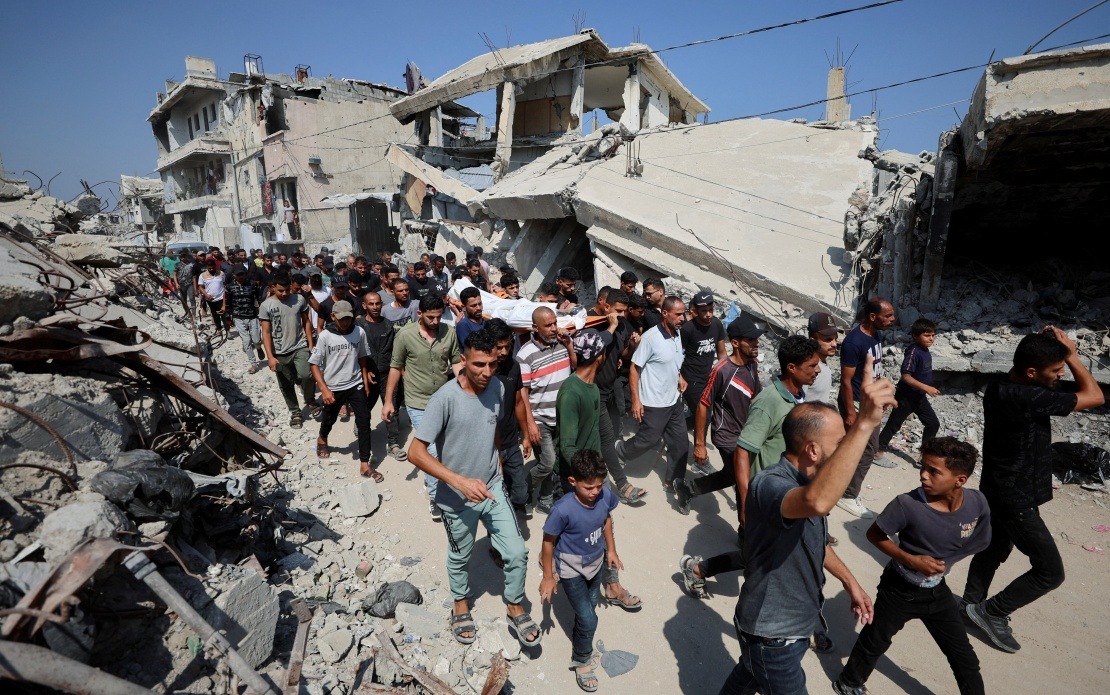
The humanitarian toll from recent military operations underscores the urgency of diplomatic intervention. According to available data, the Israeli military campaign in Gaza since October 2023 has resulted in devastating casualties, with more than 73,000 people killed and an additional 174,000 wounded. Simultaneously, operations in the occupied West Bank have claimed approximately 1,200 Palestinian lives during the same timeframe. These figures reflect the scale of violence that has characterised Israeli-Palestinian interactions over the past months, with civilian populations bearing the heaviest burden of ongoing hostilities.
Regional instability extends beyond the Israeli-Palestinian conflict into broader geopolitical tensions involving major powers. Earlier this year, in February, joint Israeli and American military operations targeted Iranian positions, triggering retaliatory Iranian strikes against facilities in Gulf nations hosting American military assets. This cycle of escalation and counter-escalation has heightened anxieties across the Gulf region, where several countries host significant American military presence and maintain vital commercial shipping routes.
Fahmy emphasised that all regional actors bear responsibility for maintaining peace and stability, though he pointedly stressed that the United States administration carries particular weight in this regard. His framing reflects the Arab League's assessment that American diplomatic and political leverage remains decisive in shaping Israeli government behaviour. Without active American engagement and willingness to constrain its ally, the Arab League appears convinced that Israeli actions will continue unchecked, deepening the crisis.
The Arab League chief specifically referenced Trump's recently announced 20-point peace initiative for Gaza, scheduled for September 2025, suggesting this framework offers a potential pathway forward. The proposal encompasses multiple elements including an immediate ceasefire, exchange of prisoners and detainees, phased Israeli military withdrawal from Gaza, establishment of a transitional Palestinian administrative structure, and comprehensive reconstruction efforts for the war-damaged territory. Fahmy's invocation of this plan appears strategic, positioning it as a viable alternative to continued military confrontation while challenging Trump to genuinely implement the concepts his own administration has proposed.
According to Fahmy's analysis, the Israeli government is pursuing policies fundamentally incompatible with meaningful Palestinian self-determination and peace. He specifically accused Israeli authorities of seeking the effective elimination of Palestinian presence through accelerated settlement construction in occupied territories and implementation of displacement strategies. These actions, he contended, directly undermine any peace framework and represent obstacles that must be removed through American pressure. His emphasis on illegal settlements and displacement reflects longstanding Arab League positions regarding violations of international law and Palestinian rights.
The Arab League chief called for specific American interventions beyond Gaza-focused diplomacy. He demanded that the Trump administration address repeated Israeli actions in East Jerusalem and cease attacks on Palestinians in the occupied West Bank. These demands reflect Arab League concerns that a Gaza-focused approach, while important, would be insufficient unless broader patterns of Israeli actions against Palestinian populations across multiple territories are simultaneously addressed. The comprehensive nature of his demands suggests that Fahmy views piecemeal approaches as inadequate for addressing the systemic issues driving regional instability.
Fahmy also pivoted to the broader American-Iranian dimension of regional tensions, calling for restoration of diplomatic understandings between Washington and Tehran. He advocated for renewed negotiations aimed at conflict resolution, respect for national sovereignty, and restoration of safe passage through critical international waterways including the Persian Gulf and the Bab el-Mandeb Strait in the Red Sea. This formulation suggests the Arab League views the Israeli-Palestinian conflict and American-Iranian tensions as interconnected challenges that cannot be resolved independently. De-escalation on one front requires simultaneous progress on the other to achieve genuine regional stability.
The Arab League's intervention reflects broader anxieties among Arab states that American policy under Trump, particularly regarding Israel, may not adequately account for regional stability concerns. Arab leaders appear concerned that an America-Israel alignment focused primarily on confronting Iran could inadvertently intensify Palestinian-Israeli violence while doing little to address underlying grievances. For Malaysian and Southeast Asian observers, this Middle Eastern diplomacy carries indirect significance, as regional instability can affect global energy markets, international trade flows through critical waterways, and the broader international security environment affecting Asian nations.

