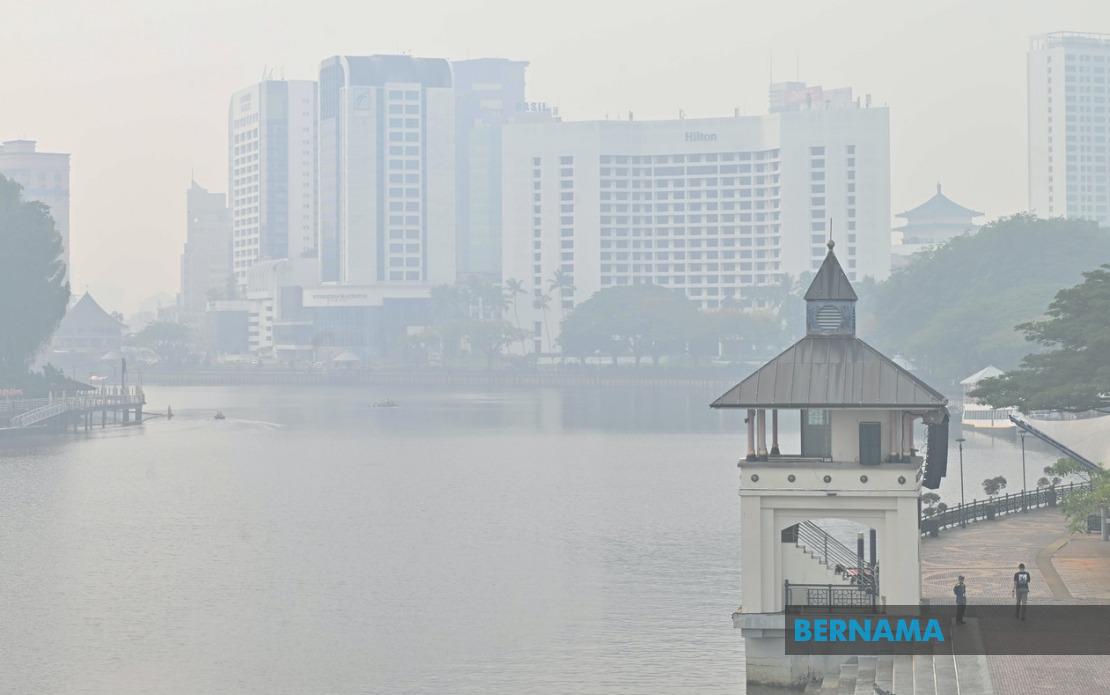
Southeast Asia's persistent battle with transboundary haze requires far more than seasonal responses and diplomatic platitudes, according to prominent social activist Tan Sri Lee Lam Thye, who has called on ASEAN leadership to undertake a comprehensive review of the region's foundational environmental accord. Speaking this week, Lee emphasised that the recurrent haze crises afflicting Malaysia, Singapore, Indonesia and neighbouring nations can no longer be dismissed as inevitable inconveniences, but must be treated as a fundamental governance failure demanding structural reform at the highest political levels.
The ASEAN Agreement on Transboundary Haze Pollution, formally signed in Kuala Lumpur on June 10, 2002, and operationalised the following year, has now been in force for more than two decades. Yet despite two decades of supposed regional consensus, the agreement has failed to arrest the cycle of devastating air quality degradation that periodically engulfs major population centres and disrupts economic activity across the region. This persistent failure suggests that the current framework, while well-intentioned, lacks the mechanisms necessary to translate commitment into concrete results.
Lee's intervention reflects growing frustration with what many view as ASEAN's reactive rather than proactive approach to environmental crises. He contends that member states have consistently responded to haze episodes after they occur, mobilising diplomatic channels and emergency measures once smoke has already blanketed cities and affected millions. This reactive posture, he argues, represents a fundamental abdication of responsibility that contradicts ASEAN's stated principles of regional cooperation and shared prosperity. The activist has positioned the haze challenge not merely as a meteorological or environmental problem, but as a multi-dimensional crisis encompassing governance failures, public health threats, and breaches of regional responsibility.
The immediate backdrop to this intervention involves warnings from the ASEAN Specialised Meteorological Centre regarding strengthening El Niño conditions, which historically correlate with below-normal rainfall across the southern portions of the region. Such conditions create ideal circumstances for rapid fire spread and smoke dispersal, potentially exacerbating the transboundary pollution that has become an almost predictable feature of certain seasons. However, Lee cautions against treating El Niño as the primary culprit or using natural climate variations as an excuse for inaction, emphasising instead that human activities—uncontrolled forest clearing, agricultural burning, and inadequate land management—transform dry weather into a regional catastrophe.
The activist has articulated a detailed blueprint for fundamental reform, beginning with the establishment of clear, quantifiable targets for fire prevention and hotspot reduction across the region. These targets would need measurable benchmarks and defined timelines, moving beyond the vague commitments that have characterised previous agreements. Critically, Lee has proposed introducing stronger accountability mechanisms for both corporate entities and individuals engaged in open burning or illegal land clearing operations. Current frameworks lack adequate provision for investigating cross-border fire incidents, gathering and sharing forensic evidence, and imposing meaningful penalties when fires demonstrably cause transboundary harm.
Central to the proposed overhaul is the establishment of a permanent regional haze response mechanism operating on a continuous basis rather than ad-hoc activation during crisis periods. This permanent structure would integrate real-time satellite monitoring systems capable of detecting hotspots with minimal delay, coupled with protocols for rapid information dissemination among member states. The framework would establish joint firefighting capabilities allowing coordinated suppression efforts across borders, with pre-arranged responsibility assignments ensuring clarity about which entity responds to specific incidents. Such institutionalisation would transform regional haze management from diplomatic improvisation into systematic, rules-based governance.
Lee has additionally advocated for comprehensive prevention systems that operate ahead of the traditional dry season, incorporating joint early-warning mechanisms and coordinated preparation across ASEAN member states. Enhanced cooperation on peatland and forest management represents another critical pillar, recognising that these ecosystems, when disturbed, release disproportionate quantities of smoke and carbon emissions. Transparency in information sharing regarding hotspot locations, identified fire sources, and enforcement actions taken against violators would establish a foundation of accountability, enabling external monitoring and reducing the scope for member states to minimise or obscure problems within their territories.
The regional dimensions of the haze challenge carry particular salience for Malaysia, which has experienced repeated episodes of hazardous air quality affecting millions of residents and causing economic disruption through school closures, transport disruptions, and health system strains. Previous haze events have generated substantial costs beyond immediate air quality impacts, including strain on healthcare systems dealing with respiratory complications and diminished agricultural productivity. Singapore, despite its small land area, has similarly suffered from transboundary smoke originating largely from Indonesian sources, creating diplomatic tensions and public health concerns that periodically dominate regional headlines.
Lee's framing of haze management as a regional responsibility challenge, rather than a bilateral or national issue, reflects the interconnected geography of Southeast Asia. Wind patterns and atmospheric circulation do not respect political boundaries, meaning that fires in one nation become the environmental burden of neighbouring populations with no direct responsibility for the pollution sources. This asymmetry has historically created tensions, with affected nations viewing haze as an externality imposed by neighbours, while source countries resist international scrutiny of domestic land use decisions. The activist's approach attempts to reframe the discussion around collective regional interest rather than national sovereignty concerns.
Lee has explicitly urged Malaysia and other significantly affected countries to prioritise the haze issue at the highest levels of ASEAN deliberation, suggesting that diplomatic persistence and political will from major economies could catalyse broader reform. This positioning reflects recognition that while consensus remains the ASEAN principle, certain member states possess sufficient economic and political weight to elevate priorities and drive agenda-setting. He has also sought to defuse potential resistance by framing stronger enforcement mechanisms not as interference in national affairs but as mutual commitment to protecting the health and well-being of all Southeast Asian citizens.
The practical implementation of such reforms would require overcoming several structural obstacles inherent to ASEAN's consensus-based decision-making and non-interference principle. Establishing enforceable accountability mechanisms necessarily implies some degree of external oversight and investigation authority, potentially conflicting with traditional ASEAN deference to national sovereignty. Additionally, the economic interests involved in palm oil production, logging, and agricultural development in major source regions create domestic political resistance to strict fire prevention requirements in countries dependent on land conversion for economic growth.
Nevertheless, the accumulating costs of recurring haze events—health expenditures, lost productivity, environmental degradation—increasingly suggest that the status quo represents a false economy. The current reactive approach distributes costs across the broader regional population while concentrating benefits among entities engaging in problematic land-use practices. A shift toward prevention and enforcement would reallocate these costs more accurately, potentially improving overall regional welfare even if certain economic interests face constraints. The activist's proposal fundamentally rests on this calculation: that the demonstrable harms from continuing the current trajectory outweigh the transitional costs of genuine reform.

