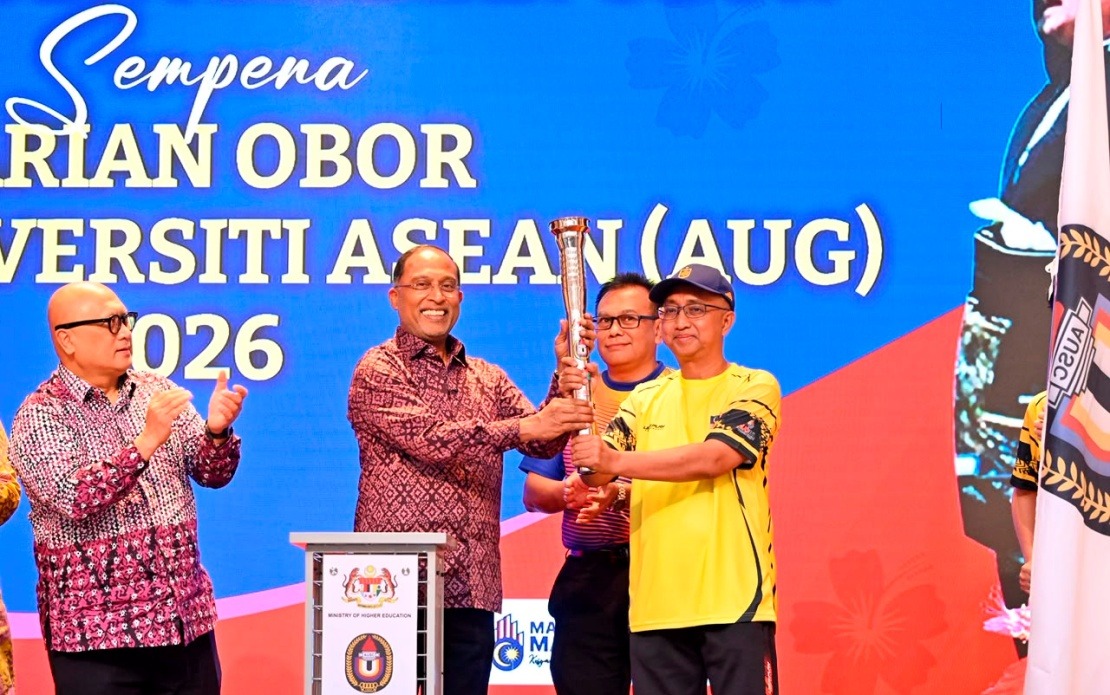
The ceremonial torch run for the ASEAN University Games 2026 commenced at the Ministry of Higher Education headquarters in Putrajaya on August 20, marking a symbolic moment as Malaysia prepares to host what will be the most significant university-level sporting event across the ASEAN region. Higher Education Minister Datuk Seri Dr Zambry Abd Kadir formally presented the torch to Prof Dr Mohammad Ismail, Deputy Vice-Chancellor of Student and Alumni Affairs at Universiti Malaysia Kelantan and chief of the Malaysian contingent, during a ceremony integrated with the ministry's monthly assembly. This handover represented more than a ceremonial gesture; it embodied a call for the nation's student-athletes to embrace both competitive excellence and the responsibility of representing Malaysia on a regional platform.
In his remarks, the minister underscored the dual obligation facing Malaysian participants—to pursue victory while simultaneously upholding the country's reputation throughout the games. The language employed reflected a deeper national imperative: that individual athletic achievement becomes intertwined with collective pride and diplomatic soft power. By framing the torch as not merely a symbol of competition but as a representation of Malaysia itself, Dr Zambry emphasized that success extends beyond medals and records to encompass the impression Malaysia leaves on neighbouring nations during the event.
Four accomplished national athletes accompanied the torch during its initial procession through federal territory venues. Long jumper Andre Anura Anuar and shot putter Nani Sahirah Maryata, both representing Universiti Putra Malaysia, were joined by karate competitor Thevendran Kaliana Sundram from Universiti Pertahanan Nasional Malaysia and taekwondo athlete Lee Hui Yee from Sultan Salahuddin Abdul Aziz Shah Polytechnic. These individuals serve as ambassadors of the games, their presence lending credibility and inspiration to the broader squad preparing for December's competitions.
The torch's physical journey through Malaysian educational institutions carries symbolic weight for a nation investing considerable resources into university sports development. Beginning from the Ministry of Higher Education grounds, the ceremonial flame proceeded to the Ministry of Tourism, Arts and Culture before returning to complete the initial leg. Subsequent stages of the torch relay will incorporate visits to major research universities including Universiti Kebangsaan Malaysia, Universiti Putra Malaysia, Universiti Pertahanan Nasional Malaysia, Universiti Malaya, and Universiti Teknologi MARA, ensuring that elite academic institutions across the peninsula are integrated into the ceremonial buildup.
The scale of AUG 2026 underscores Malaysia's commitment to regional sporting integration and its capacity to coordinate large-scale international events. Scheduled for December 10 through 19, the games will draw approximately 4,669 individuals across multiple categories: 2,849 athletes and officials representing 11 countries, supplemented by 700 referees and competition administrators, plus 920 volunteer personnel. This substantial assemblage of participants and support staff reflects both the ambition of the event and the logistical infrastructure Malaysia has mobilized to execute it successfully.
The geographic distribution of competition venues across Shah Alam, Kuala Lumpur, Serdang, and Bangi demonstrates a deliberate strategy to spread economic activity and sporting venues beyond the capital's immediate vicinity. By utilizing facilities across the Klang Valley and surrounding areas, organizers have ensured that multiple institutions and communities benefit from hosting arrangements while reducing pressure on any single venue. This distributed approach represents pragmatic planning that accounts for Malaysia's contemporary infrastructure capabilities while maintaining accessibility for participating delegations.
Nineteen different sports will compete under the organizing theme of "HOLISTIC.EXCELLENCE," a philosophical framework that extends beyond athletic performance to encompass character development, academic balance, and exemplary conduct. This thematic emphasis distinguishes AUG 2026 from purely competitive tournaments by explicitly linking university sports to broader educational missions. For Malaysian contingent members, the theme establishes expectations that athletic endeavors must align with personal development and maintain the integrity standards expected of university-affiliated competitors.
For Malaysia, hosting AUG 2026 represents an opportunity to strengthen regional diplomatic ties through sporting exchange while demonstrating organizational capability on an ASEAN stage. University games traditionally serve as incubators for national sporting talent, offering young athletes exposure to international competition within a supportive educational framework. Malaysian universities have positioned themselves as serious contenders in regional competitions, and this home advantage may catalyze medal success while building confidence in student-athlete cohorts who will represent the nation in subsequent international forums.
The torch run's ceremonial significance also acknowledges the broader ecosystem supporting university sports in Malaysia. By involving multiple educational institutions in the torch relay, organizers reinforce the collaborative nature of Malaysian university sports and the shared investment across the higher education sector. This inclusive approach builds institutional pride and encourages widespread participation in games operations, from volunteering to spectating, thereby creating a stakeholder base invested in successful event execution.
Looking toward December's competition, the torch run effectively inaugurates what will be a sustained promotional period designed to maintain public attention and athlete focus throughout the buildup. In the months separating this ceremonial launch from actual competition, Malaysian contingent members will intensify training regimens, coordinate logistics across multiple universities, and refine team compositions to optimize performance opportunities. The psychological impact of this formal commencement cannot be underestimated, as it transitions abstract preparations into tangible, visible commitments that both athletes and supporting institutions have made to excellence.
From a regional perspective, AUG 2026 signals Malaysia's deepening investment in university sports infrastructure and its willingness to position itself as a reliable host for ASEAN-level competitions. Successful execution of this event could facilitate future hosting opportunities and strengthen Malaysia's profile as a regional sporting hub. For competing nations, exposure to Malaysian institutions and facilities provides valuable benchmarking data while fostering the interpersonal connections and professional networks that characterize ASEAN cooperation beyond formal political channels.

