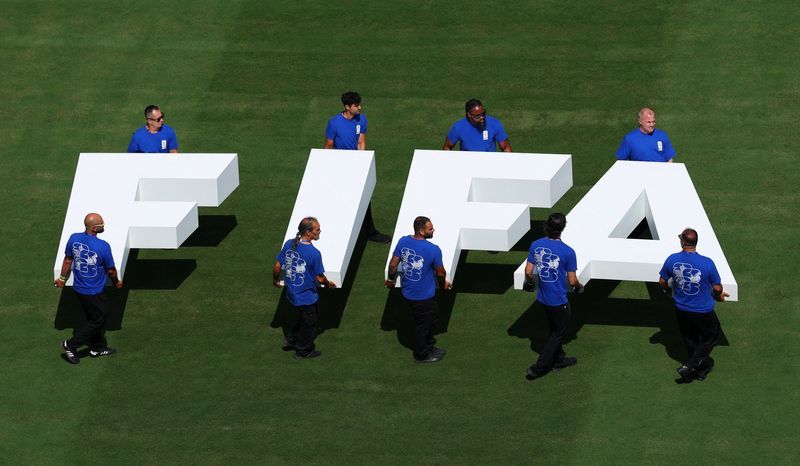
The Professional Footballers Australia (PFA) has become the latest voice to condemn FIFA's sweeping proposal to commercialise the World Cup and other flagship soccer tournaments through private investment, accusing the sport's governing body of prioritising financial gain over the interests of those who make the game valuable. The union's statement on Thursday intensified mounting criticism of the plan, which would establish a $20 billion subsidiary controlled partly by external investors and generate up to $4.2 billion in revenue for FIFA.
At the heart of the dispute lies a fundamental question about who controls and benefits from global soccer's most prestigious competitions. The PFA argues that FIFA's proposal represents a concerning departure from established principles of transparency and democratic decision-making within sport. The union specifically objected to what it characterised as the deliberate exclusion of players and supporters from meaningful consultation, despite these groups being the primary generators of the commercial value that FIFA now seeks to monetise through the privatisation scheme.
The Australian union's position reflects broader international unease about the initiative. FIFPRO, the global players' federation representing footballers across multiple countries, had already warned that the proposal would fundamentally and irreversibly alter the financial incentives and competitive structures that underpin the tournaments where players build their careers and legacies. This concern extends beyond simple financial anxiety; it touches on concerns about how decisions affecting the sport's future are made and whether key stakeholders retain meaningful input.
FIFA President Gianni Infantino unveiled the proposal in a video released on Wednesday, framing it as a non-binding consultation process rather than a predetermined decision. However, the accompanying financial incentives have raised eyebrows among observers. Member associations that formally approve the proposal by September 19 would receive $40 million each, forming part of a $10 billion package scheduled to become available from January 1, 2027. Conversely, associations that reject or fail to support the initiative would see the available funding reduced to $2.7 billion—approximately $10 million per member association. This tiered approach has drawn criticism for creating pressure on financially dependent football associations to endorse a proposal they may not fully understand or support.
The PFA's statement directly addresses this leverage strategy, expressing concern that FIFA is coercing member associations into rapid approval without adequate time to evaluate the profound governance and ownership implications. Football Australia, the nation's governing body, has avoided taking a public stance on the proposal, instead requesting additional details from FIFA to properly assess the strategic, commercial, and governance dimensions. This cautious approach contrasts with the artificial urgency FIFA has created through its deadline and financial carrots-and-sticks approach.
The global response to FIFA's initiative has been fragmented, revealing deep divisions within international soccer's power structure. UEFA, Europe's confederation representing 55 member associations, has flatly rejected the proposal, marking the strongest unified regional opposition. However, this rejection does not extend to all European federations; the Czech Football Association's president, for instance, suggested he perceived potential positive outcomes from FIFA's intentions, indicating that even UEFA's constituent members are not uniformly opposed. This division within UEFA itself underscores the complex pressures FIFA's incentive structure is generating.
Other major regional confederations have adopted more measured stances or remained publicly silent. The African confederation's executive committee plans to convene next week to evaluate the proposal, while CONMEBOL, which governs South American football, and the Oceania confederation—soccer's smallest regional bloc with just eleven full member nations—have not yet issued public statements. This silence may reflect either ongoing internal deliberation or strategic reluctance to engage in a proposal many view as already favouring wealthier confederations and associations.
The investment structure itself warrants scrutiny for readers in Southeast Asia, where football holds enormous cultural and economic significance. FIFA's plan would see external private investors acquire minority stakes in a new subsidiary controlling the World Cup and related tournaments. While minority stakes theoretically limit investor control, the precedent of privatising governance of global sporting events raises questions about how commercial imperatives might eventually influence tournament format, scheduling, venue selection, and other decisions affecting participating nations and their audiences.
For Malaysian and Southeast Asian football communities, this proposal carries particular implications. The region's football associations would fall within FIFA's orbit of pressure to approve or reject the initiative, with immediate financial consequences flowing from their choice. Moreover, as developing football nations, Southeast Asian associations often depend on FIFA distributions and development funding. The strategic use of financial incentives to secure approval of a governance-altering proposal creates an uncomfortable dynamic where economically vulnerable federations effectively lack genuine agency in the decision.
The PFA's emphasis on transparency and accountability reflects a broader anxiety within international sport about the hollowing of institutional governance in favour of commercial imperatives. The union frames the debate not merely as financial disagreement but as a battle for soccer's fundamental character and values. This framing resonates with growing global concerns about whether sporting institutions serve the broader communities they represent or increasingly exist primarily to generate revenue for internal stakeholders and external investors.
FIFA's timeline and approval process further concentrate power in ways that limit meaningful opposition. The federation plans to first conduct a consultation period, then move to a vote among its 211 member federation consultative bodies, followed by approval through the executive council. This multi-stage process provides procedural legitimacy while the financial pressure and artificial deadlines ensure that substantive debate may be compressed or curtailed. Critical voices from players' unions and regional confederations may struggle to mount effective opposition within this compressed timeframe.
The broader significance of this controversy extends beyond soccer's administrative boundaries. The World Cup represents one of global sport's last major events controlled primarily by traditional institutional governance rather than corporate entertainment entities. FIFA's proposed privatisation would mark a significant shift in how the world's premier sporting competitions are managed, potentially establishing a template that other sporting federations might eventually emulate. The pushback from players unions and some confederations reflects recognition that this moment represents a critical juncture in determining whether global sport remains democratically accountable to its participants and communities or increasingly becomes purely extractive commercial machinery.
As member associations evaluate FIFA's proposal over coming months, the voices of players' unions, supporters' groups, and smaller confederations will prove crucial in determining whether the plan proceeds unchanged, faces modification, or encounters sufficient resistance to prompt FIFA to reconsider its approach. The outcome will likely define the governance structure of international soccer for decades to come.

