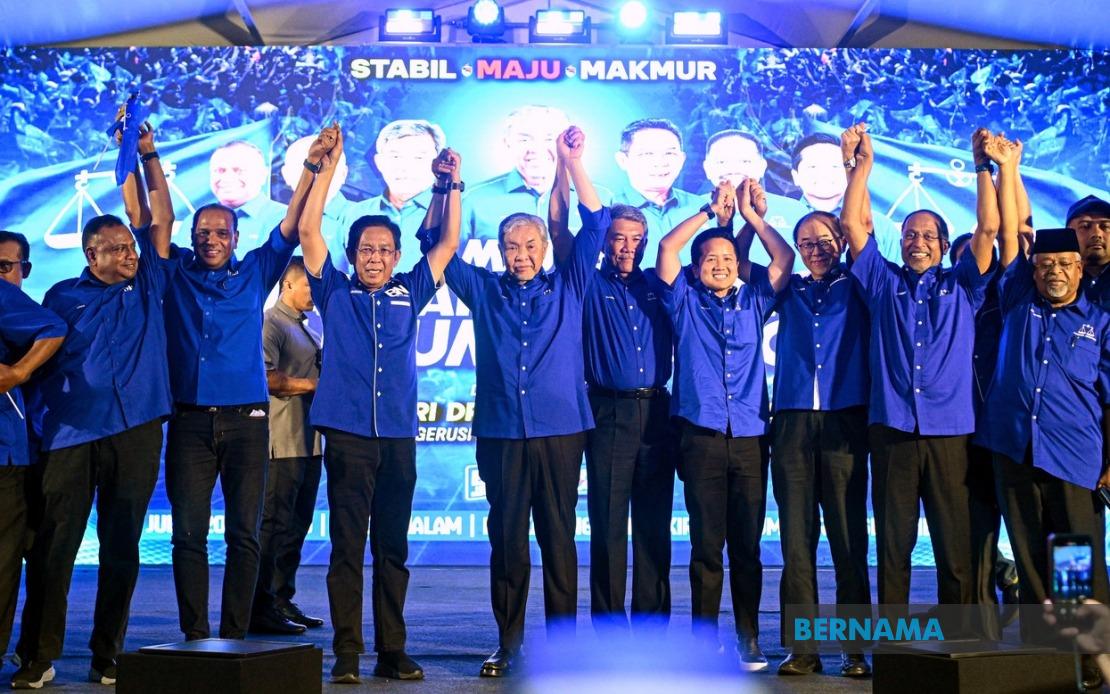
The Barisan Nasional coalition unveiled its candidate roster for the 16th Negeri Sembilan state election on Monday evening, presenting a carefully balanced mix of established political figures and fresh faces in a bid to consolidate its position in the central Malaysian state. The announcement at Tuanku Abdul Rahman Stadium in Paroi reflected the coalition's strategy of rewarding proven performers while signalling openness to new contestants, though the inability to finalise candidates in nearly half the state's 36 seats suggests ongoing internal negotiations within BN's component parties.
Negeri Sembilan BN chairman Datuk Seri Mohamad Hasan, who doubles as the coalition's national deputy chairman, will seek to extend his tenure representing Rantau, a seat he has held continuously since 2004. His two-decade grip on the constituency underscores his political longevity and the confidence placed in him by UMNO leadership. Mohamad Hasan's retention speaks to his significance within the broader BN structure, particularly given his senior position within the party machinery and his ability to maintain electoral viability across two decades of Malaysian politics characterised by volatile swings in voter sentiment and shifting demographic patterns.
Paralleling Mohamad Hasan's candidacy, Datuk Seri Jalaluddin Alias, who chairs the Negeri Sembilan UMNO Liaison Committee and serves as Jelebu's Member of Parliament at the federal level, received the coalition's nod to defend the Pertang state seat. Jalaluddin has represented Pertang consecutively since 2013, accumulating a decade of legislative experience at the state level. His dual role in both federal and state politics positions him as a critical link in BN's organisational hierarchy, potentially facilitating coordination between Putrajaya and Kuala Lumpur's state government apparatus.
The coalition also retained several other incumbent representatives, demonstrating a preference for continuity in constituencies where BN maintains comfortable electoral margins. Datuk Mohd Faizal Ramli will defend Linggi, whilst Datuk Mustapha Nagoor seeks another term in Palong. These retentions suggest that BN's internal selection process favoured experience and demonstrated electoral appeal over generational renewal in these particular contests.
However, the announcement simultaneously exposed significant gaps in BN's preparation timeline, with candidates for eleven state seats remaining unconfirmed at the time of the formal unveiling. The outstanding constituencies—Klawang, Serting, Lobak, Sikamat, Ampangan, Bukit Kepayang, Mambau, Paroi, Lukut, Bagan Pinang, and Gemas—represent nearly one-third of Negeri Sembilan's electoral landscape. This substantial number of unfinalised selections raises questions about the depth of bench strength within BN's component parties and the complexity of internal bargaining processes that allocate nominations across UMNO, MCA, MIC, and other coalition members.
For Malaysian political observers, the timing and composition of Negeri Sembilan's electoral contest carries implications extending beyond the state's boundaries. Negeri Sembilan, whilst modest in parliamentary seats, occupies a strategically important position within Malaysia's political geography and has historically served as a bellwether for broader electoral trends. The coalition's performance here will provide early indicators of voter sentiment ahead of potential federal-level contests and will test whether BN's recent federal government participation under Datuk Seri Anwar Ibrahim's administration has stabilised its electoral appeal following years of decline that culminated in its historic 2018 defeat.
The delayed finalisation of candidates in numerous constituencies also underscores the organisational challenges that continue to plague the BN coalition structure despite its return to federal prominence. Unlike more cohesively organised opposition blocs, BN's multi-ethnic, multi-party composition requires extensive internal negotiations to balance representation across communities and ensure equitable seat distribution. These negotiations frequently extend beyond official announcement deadlines, creating periods of uncertainty that can complicate campaign preparation and resource allocation.
From a substantive governance perspective, Negeri Sembilan voters will evaluate not merely candidate credentials but the broader policy positions that BN intends to advance during the state election campaign. Issues spanning economic development, healthcare accessibility, educational quality, and environmental sustainability in the state will likely feature prominently as voters assess which coalition can most effectively deliver improvements to their living standards.
The coalition's strategic decision-making in candidate selection reveals implicit assessments about which constituencies represent defensive priorities versus offensive opportunities. The retention of long-serving figures like Mohamad Hasan and Jalaluddin Alias in their respective strongholds suggests confidence in these electoral bastions, whilst the incomplete candidate announcements for numerous other seats may indicate either more competitive dynamics in those constituencies or protracted inter-party negotiations within the BN framework.
As Negeri Sembilan prepares for its electoral exercise, the state election will provide valuable data regarding voter preferences in a regime where neither BN nor opposition coalitions can claim unambiguous dominance. The campaign period ahead will determine whether BN's candidates can mobilise sufficient support through their experience and party machinery, or whether opposition forces will capitalise on any organisational deficiencies or messaging weaknesses to secure territorial gains in this politically significant state.

