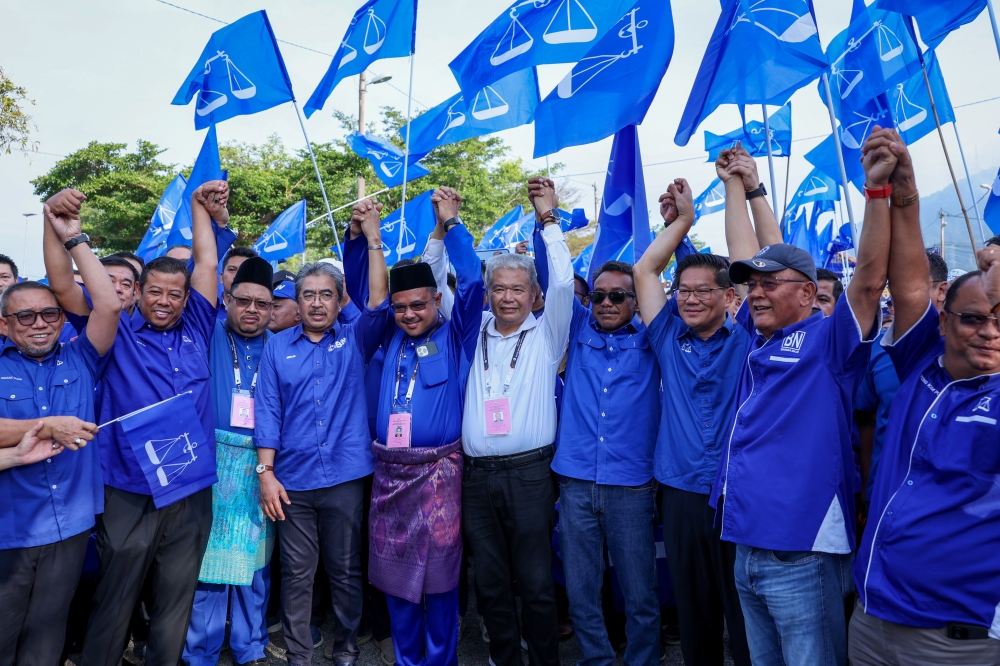
Barisan Nasional leadership has moved to reassure voters in Negeri Sembilan that the upcoming state election campaign will be marked by civility and mutual respect, signalling the coalition's intention to focus on policy substance rather than personal attacks or inflammatory rhetoric. The commitment comes as political parties across Malaysia prepare for what is expected to be a closely contested race in a state where coalition fortunes have undergone considerable fluctuation in recent electoral cycles.
Umno's vice-president made the pledge while visiting Tampin on July 18, underscoring Barisan Nasional's recognition that electoral conduct carries significant weight among voters increasingly fatigued by divisive political discourse. The statement reflects a broader understanding within the coalition that maintaining public confidence and institutional legitimacy requires demonstrable adherence to principles of democratic decorum. This positioning also distinguishes Barisan Nasional from rival blocs that have faced criticism for inflammatory campaign messaging in previous elections.
Negeri Sembilan has emerged as a politically significant battleground in Malaysia's federal system, given its status as a swing state where shifting voter sentiment can determine legislative composition. The state's electoral landscape has proven fluid in recent years, with constituencies displaying varying degrees of loyalty to traditional ruling coalitions. For Barisan Nasional, which depends substantially on consolidating support across diverse demographic and geographic constituencies, a disciplined campaign approach offers strategic advantages beyond mere civility rhetoric.
The pledge to maintain campaign standards carries particular importance given heightened public scrutiny of political behaviour across the region. Malaysian voters, increasingly engaged with digital media and alternative information sources, have demonstrated growing intolerance for candidates and parties perceived as engaging in character assassination or deliberate misinformation. Political observers note that credibility deficits accumulated through uncivil campaigning can persist well beyond election day, affecting governance capacity and institutional effectiveness.
Barisan Nasional's emphasis on civil conduct also addresses internal coalition dynamics. As an alliance comprising multiple parties with distinct organizational cultures and membership bases, maintaining unified campaign standards requires clear leadership communication and accountability mechanisms. The vice-president's statement serves partly as internal guidance, establishing expectations for party representatives and candidates operating under the Barisan Nasional banner throughout the campaign period.
The timing of this commitment reflects strategic considerations within Malaysia's broader political environment. With national-level politics characterized by considerable turbulence and frequent disputes over electoral propriety, state-level elections increasingly function as laboratories for testing campaign approaches and voter messaging strategies. A successfully executed civil campaign in Negeri Sembilan could provide Barisan Nasional with valuable operational experience and enhanced standing for subsequent electoral contests.
Historically, Malaysian election campaigns have periodically descended into acrimonious exchanges, with candidates and party officials engaging in personal attacks that observers argue diminish public discourse quality and undermine faith in democratic institutions. By explicitly committing to elevating campaign standards, Barisan Nasional positioning itself as the responsible, institutionally-minded option—an appeal that resonates particularly among older voters and those prioritizing political stability over radical change.
The coalition's campaign strategy in Negeri Sembilan will likely emphasize accomplishments in governance, infrastructure development, and service delivery rather than attacking opposition figures or making unsubstantiated claims. This approach allows Barisan Nasional to highlight its track record and future vision while avoiding the reputational costs associated with negative campaigning. For voters concerned about rising political polarization in Southeast Asia more broadly, such pledges carry significance beyond single elections.
Opposition parties will face implicit pressure to match these stated standards, creating potential advantages for whichever coalition demonstrates superior adherence to civil discourse principles. Voter perceptions of campaign conduct directly influence electoral outcomes, particularly in competitive constituencies where swing voters lack strong partisan attachments. Barisan Nasional's proactive commitment to civility establishes a benchmark against which campaign behaviour will be measured and evaluated throughout the contest.
The statement also reflects international norms increasingly emphasized in democratic societies concerning campaign ethics and electoral integrity. As Malaysia seeks to strengthen its democratic institutions and regional standing, demonstrated commitment to procedural decorum and respectful political competition supports broader governance objectives. Negeri Sembilan's election thus acquires significance beyond its immediate state-level implications, potentially influencing perceptions of Malaysian democracy within and beyond Southeast Asia.

