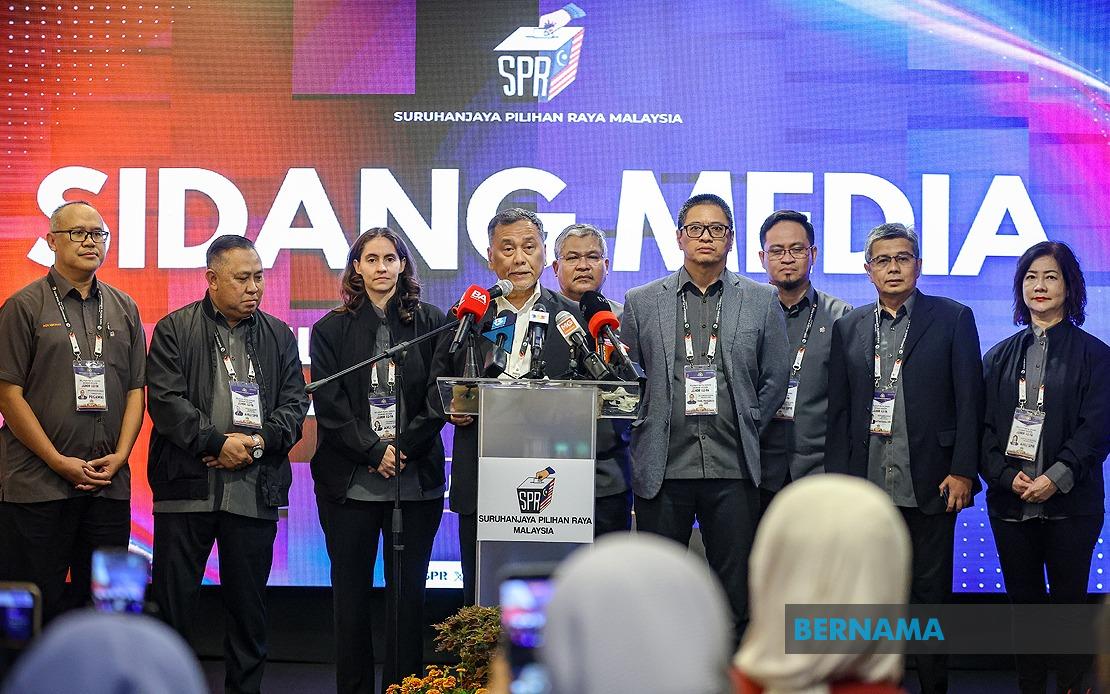
Barisan Nasional has reinforced its political dominance in Johor, capturing 48 of the 56 contested state assembly seats in a decisive victory that signals continued voter confidence in the ruling coalition's governance of Malaysia's southernmost state. The Election Commission announced the final tally in the early hours of July 12, with the coalition expanding its previous four-year mandate substantially. The remaining eight seats went to Pakatan Harapan, which fell well short of challenging BN's control over the state administration.
The results represent a significant surge in support for the Barisan coalition, which improved its performance by eight seats compared to the 2022 Johor state election when it secured 40 seats. This expansion of the electoral base underscores BN's ability to consolidate support across diverse demographic segments within Johor's 56 constituencies. The two-thirds supermajority grants BN considerable legislative flexibility to pass motions and constitutional amendments without requiring cross-bench support, a position of substantial political strength in a state that generates roughly 11 percent of Malaysia's gross domestic product and serves as a crucial economic engine for the nation.
Within the ruling coalition, Umno dominated the winning effort by capturing 36 of BN's 48 seats, reinforcing the Malay-Muslim party's hegemony within the broader alliance structure. The Malaysian Chinese Association secured eight seats, demonstrating its continued relevance among Chinese-majority constituencies in urban and semi-urban areas. The Malaysian Indian Congress completed the coalition's representation by winning all four seats it contested, with K. Raven Kumar, V. Rugendran, P. Pannir Selvam and R. Kumaran each securing their respective constituencies.
On the opposition benches, the Democratic Action Party claimed six seats despite contending from a competitive disadvantage in a state where Umno traditionally maintains strong grassroots organisation. The party Keadilan Rakyat and Amanah each won a single seat, with former Health Minister Datuk Seri Dr Adham Baba reclaiming the Pasir Raja constituency he had previously held for two consecutive terms. Former Education Minister Dr Maszlee Malik secured Puteri Wangsa in a five-way contest, suggesting that opposition gains may be concentrated in urban centres where political diversity remains more pronounced.
The election delivered a devastating blow to Perikatan Nasional, which failed to defend any of the three seats it had captured in the 2022 contest. The coalition's collapse in Johor reflects broader challenges facing the Islamist-led alliance at the state level, particularly following internal organisational difficulties and electoral setbacks in other states. Dr Sahruddin Jamal, who previously served as Johor Menteri Besar before his party's transition to Perikatan, lost the Bukit Kepong seat he had held, symbolising the dramatic reversal in PN's electoral fortunes within the state.
Parti Bersama Malaysia, a newer political formation, recorded the most striking failure by losing its electoral deposits across all 15 constituencies it contested, effectively disqualifying it from recovering campaign expenses and signalling minimal electoral penetration among voters despite sustained campaign efforts. Smaller parties including Parti Sosialis Malaysia, Malaysian United Democratic Alliance, and Parti Orang Asli Malaysia all drew blanks in their respective contests, with six independent candidates similarly failing to secure any representation. The near-total exclusion of alternative political voices underscores the bipolar structure increasingly characterising Malaysian electoral competition.
Johor BN chairman Datuk Onn Hafiz Ghazi, speaking from the Johor UMNO headquarters as results confirmed the coalition's victory, characterised the outcome as a powerful popular mandate for continued governance and engagement with communities across the state. He framed the victory as a demonstration of public trust in BN's capacity to tackle pressing issues affecting quality of life and economic opportunity, language that positions the coalition as the custodian of voter interests and stable administration. Onn Hafiz himself retained his Machap seat with an emphatic majority of 15,375 votes in a direct contest against Pakatan's Nur Hafiz Roslan, securing 20,382 votes and validating his personal electoral appeal within his constituency.
All nine state executive councillors who were renominated by the BN government retained their seats, ensuring administrative continuity and suggesting strong institutional coherence within the ruling coalition. Datuk Samsolbari Jamali created historical precedent by successfully defending the Semarang seat for a sixth consecutive term, testament to his durability as a representative and sustained electoral support in his division. However, two Members of Parliament who contested in the state election experienced defeat at the hands of BN candidates, with Onn Abu Bakar losing in Senggarang and Suhaizan Kayat suffering defeat in Larkin, indicating potential tensions between federal and state-level political dynamics within opposition ranks.
Pakatan Harapan's formal response acknowledged the results as a democratic expression of voter preference while positioning itself as a principled opposition committed to advancing solutions for outstanding social and economic problems. PKR election director Datuk Seri Amirudin Shari signalled the coalition's intention to maintain its oppositional role as a credible alternative perspective, though the magnitude of its defeat—claiming only eight seats—severely constrains its leverage in state assembly debates and legislative proceedings. The opposition's weakness provides minimal practical check on BN's agenda-setting authority in the state parliament.
The Democratic Action Party, which contested 17 seats, surrendered 11 of those constituencies, a loss rate exceeding 64 percent that signals serious vulnerability within its traditional electoral zones. The party lost four previously held seats—Johor Jaya, Tangkak, Jementah and Perling—to rival coalition partners, suggesting that voter preference shifted decisively toward the broader BN machinery at DAP's expense. This outcome may reflect swing voters consolidating support behind the administration in preference to fragmented opposition voices, a pattern consistent with Malaysian electoral behaviour during periods of economic confidence and political stability.
The election involved 172 candidates across eight political entities contesting before approximately 2.7 million registered voters, representing comprehensive participation from Malaysia's established political infrastructure. Polling was conducted across 56 constituencies with representation structures that reflect both urban concentrations in Johor Bahru and Iskandar Puteri as well as rural and suburban districts across the state's extended geography. The scale of participation and the decisiveness of the outcome reinforce Johor's status as a consequential state election within the Malaysian federal system, carrying implications for coalition dynamics at the national level and signalling voter assessments regarding economic management and governance effectiveness.
For Southeast Asian observers, Johor's election outcome reflects continuities in Malaysian political behaviour whereby incumbent administrations typically receive reinforced mandates during periods when economic fundamentals appear relatively stable and security concerns remain manageable. The BN's expanded majority positions Johor as a stable anchor within the broader Malaysian political economy, particularly significant given the state's role as a critical manufacturing hub, petroleum revenue contributor, and transportation nexus linking Malaysia to Singapore and regional markets. The coalition's reinforced position suggests that governing parties remain capable of mobilising voter support effectively despite periodic challenges to legitimacy elsewhere in the Malaysian political landscape.

