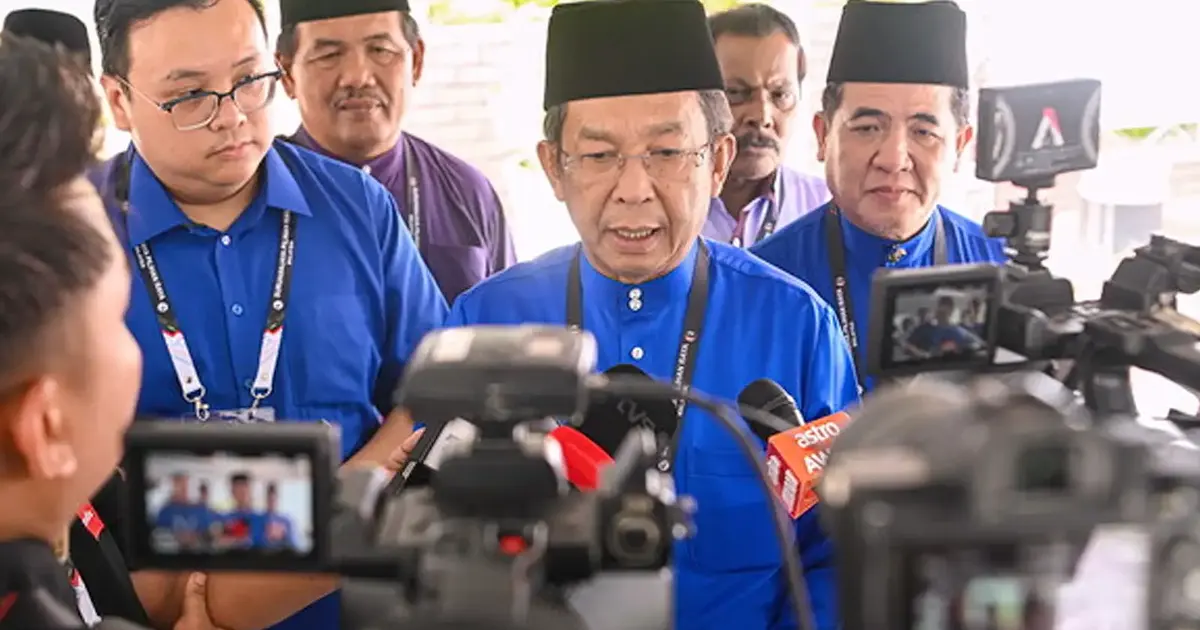
Barisan Nasional's strategy for the coming Negeri Sembilan state election includes keeping its chief minister candidate under wraps until after voters have cast their ballots. State Umno chief Jalaluddin Alias made this position clear, signalling that the long-established federal ruling coalition intends to withhold its leadership decision pending the outcome at the polls.
This tactical approach reflects a broader pattern in Malaysian electoral politics, where coalitions sometimes prefer flexibility during campaigns rather than anchoring themselves to specific personality choices early. By deferring the announcement, Barisan is able to campaign on policy platforms and organisational momentum without inviting voters to focus solely on a single face as the figurehead of the next state government. The approach also insulates the coalition from potential attacks centring on the chosen candidate's personal record or vulnerabilities.
Jalaluddin's statement carries particular weight given his position as the highest-ranking Umno official in Negeri Sembilan. His acknowledgement that several leaders within the coalition possess the qualifications to lead the state administration underscores the apparent strength of talent within Barisan's ranks locally. Rather than positioning one figure as preordained or inevitable, this public framing allows multiple personalities to campaign vigorously on behalf of the coalition without creating internal friction or accusations of favoritism.
Negeri Sembilan, a relatively compact state in Malaysia's west-central region with a population of around 1.1 million, has historically been a Barisan stronghold, though electoral dynamics have shifted in recent election cycles. The state's political landscape encompasses diverse constituencies ranging from urban centres to rural districts dependent on traditional agriculture and small-scale mining heritage. For Barisan, maintaining control of the state government carries significance beyond its immediate administrative value, as it represents continuity in a region where the coalition has traditionally enjoyed strong support.
The decision to delay naming a chief minister candidate until after the election also reflects the unpredictable nature of contemporary Malaysian politics. Coalition partners, voter sentiment, and inter-party negotiations can all shift dramatically between the campaign period and the formation of government. By preserving optionality, Barisan can respond to actual electoral results and the relative performance of different candidates rather than being locked into a choice made before these real-world variables become known.
For potential candidates within Umno and Barisan component parties, this arrangement creates both opportunity and uncertainty. Those with ambitions can campaign aggressively in the belief that strong personal performance might clinch the top position, while the coalition leadership can assess which figures generate the most voter enthusiasm and organisational support in their respective constituencies. This performance-based approach has the advantage of rewarding efficacy and popularity measured against actual electorate responses.
The Negeri Sembilan Umno leadership's willingness to articulate this strategy publicly also sends a message to party members and supporters that Barisan is confident in its ability to win the election. Rather than anxiously presenting a chief minister candidate as a safeguard or confidence-building measure, the coalition presents itself as assured of victory and therefore able to afford the luxury of deciding leadership matters post-election. Such confidence, whether fully justified or partially aspirational, can influence voter psychology and activist morale.
Comparison to other recent Malaysian state elections reveals mixed approaches to this question. Some coalitions have named candidates in advance to provide clarity and allow voters to make choices with full information about potential leadership. Others have followed Barisan's preferred model of maintaining flexibility. The effectiveness of each approach depends heavily on local political conditions, the strength of the coalition, and the perceived quality of candidates in play.
For Malaysian observers and political analysts, Barisan's approach in Negeri Sembilan serves as a case study in how coalitions balance transparency with tactical advantage. The decision reflects calculations about voter behaviour, internal party dynamics, and the relative strength of coalition partners that merit closer examination. Whether this strategy ultimately strengthens or weakens Barisan's position in the state will likely become clearer as the campaign develops and election day approaches.
Jalaluddin's public articulation of this position also signals to potential coalition partners and independents who might contest the election that Barisan is organised and thinking strategically about governance. The implication is that the coalition does not merely hope to win but has genuinely considered how it will govern once voters determine the composition of the state assembly. This forward-thinking posture, combined with the acknowledged availability of multiple qualified candidates, projects an image of institutional strength and considered planning that can influence how different voter constituencies view Barisan's fitness for continued stewardship.

