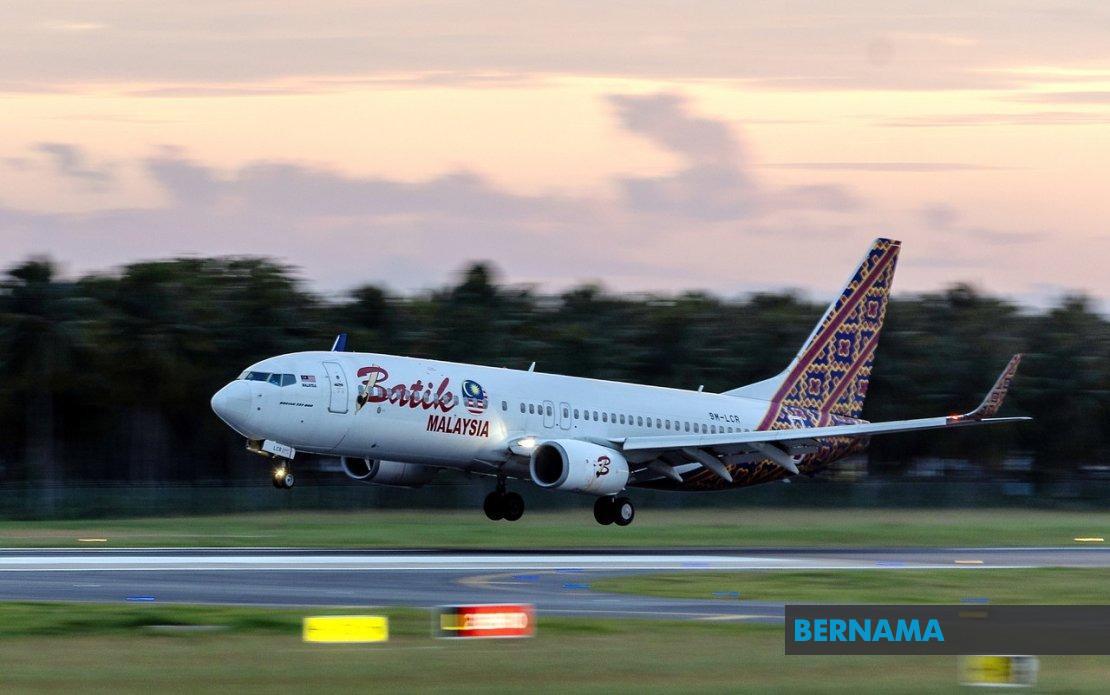
Malaysia's tourism and culture ministry has secured a significant expansion of air connectivity between Bintulu in Sarawak and the capital, with budget carrier Batik Air committing to operate two daily flights from July 20. Tourism, Arts and Culture Minister Datuk Seri Tiong King Sing announced the development following sustained dialogue with the airline over persistent complaints from residents and businesses regarding flight availability and ticket pricing, which have become increasingly volatile in recent months.
The expansion represents a partial victory in negotiations that initially sought three additional daily services. The minister explained that after careful discussions, Batik Air agreed to implement a single additional flight with fixed scheduling, while remaining open to further increases should passenger volumes justify the investment. This phased approach reflects the airline's balancing act between responding to market demand and ensuring operational sustainability on a regional route that, while economically significant, operates at smaller scale than trunk routes connecting major commercial hubs.
Under the new timetable, passengers heading from Kuala Lumpur to Bintulu will have departures at 10:00 am and 2:30 pm, while the return journey offers flights at 1:10 pm and 5:40 pm. These time slots have been specifically selected to provide working professionals and business travellers with practical options that minimise disruption to their schedules. The departure and arrival times also accommodate connections to other regional flights, potentially opening indirect routing options for passengers whose final destinations extend beyond Bintulu itself.
Tiong emphasised that the addition addresses a genuine structural problem facing Sarawak's second-largest town. Bintulu's economy has diversified substantially beyond petroleum exploration into manufacturing, downstream hydrocarbon processing, agriculture, and tourism, each sector generating sustained demand for reliable air transport. Medical tourism represents another growth vector, with residents increasingly travelling to Kuala Lumpur's specialised hospitals. Educational movements similarly reflect Bintulu families seeking higher learning opportunities in Peninsular Malaysia. This multifaceted demand pattern distinguishes Bintulu's aviation needs from purely leisure-focused routes, creating a legitimate case for government advocacy.
The affordability dimension proved critical to securing government backing. Rapid price increases on the route had prompted cross-sector complaints from business associations, educational institutions, and community leaders concerned that high fares were deterring legitimate travel and placing disproportionate burdens on middle and lower-income households. The minister explicitly urged Batik Air to maintain competitive pricing aligned with market conditions, framing fare stability as beneficial to the airline's long-term interests by growing the total addressable market through increased accessibility.
Service reliability emerged as an equally important negotiating point. Recent operational disruptions, including sudden flight cancellations and last-minute schedule alterations, had generated passenger frustration and eroded confidence in air travel as a dependable option. Tiong pressed the airline for predictable, consistent operations that would support businesses and institutions reliant on scheduled flights for planning purposes. This reflects a broader regional concern in Southeast Asia regarding budget carrier service quality, where cost pressures sometimes compromise reliability standards that premium carriers maintain.
The government's involvement in this commercial negotiation highlights the strategic importance of domestic aviation to regional development policy. Bintulu, while economically productive, lacks the political leverage that capital cities or major state capitals possess in airline negotiations. Ministerial intervention therefore serves as a corrective mechanism, ensuring that smaller but economically significant cities receive adequate air transport infrastructure. The success of this negotiation may establish a precedent for similar advocacy on other underserved routes across East Malaysia and beyond.
Looking forward, Tiong indicated that further frequency increases remain contingent on passenger demand performance. If load factors and booking trends demonstrate sustained high utilisation of the new services, Batik Air has signalled willingness to evaluate adding a third daily flight. This graduated expansion approach spreads capital investment and operational risk across time periods while allowing both the airline and the market to adjust progressively. For Bintulu residents and businesses, it signals that advocacy grounded in genuine economic need and supported by government backing can influence airline commercial decisions.
The connectivity improvement carries implications extending beyond Bintulu itself. Sarawak's domestic tourism sector stands to benefit from enhanced accessibility, potentially stimulating visitation to Similajau National Park, local cultural attractions, and regional nature-based tourism. Kuching and other Sarawak destinations may experience secondary benefits as improved Bintulu connections facilitate tour itineraries spanning multiple locations. Malaysian manufacturers in Bintulu with domestic supply chains will likewise face reduced logistical frictions, potentially enhancing their competitive positioning relative to regional competitors in Brunei and Indonesian Borneo.
The initiative also reflects broader Malaysian policy priorities regarding regional equity and inclusive development. Transport infrastructure, particularly air connectivity, represents a foundational enabler for economic participation. By securing improved service to a secondary urban centre, the government demonstrates commitment to ensuring that economic opportunities distribute beyond Kuala Lumpur and a handful of premier destinations. This distributional perspective resonates with federal and state development agendas emphasising balanced growth across Malaysia's diverse geography.
Sustained government-industry cooperation will prove essential to achieving the announced objectives. Beyond frequency expansion, attention to ground handling efficiency, baggage operations, and passenger amenities could further enhance the route's competitiveness. Coordination with tourism bodies and business chambers in Bintulu should ensure that the expanded capacity translates into genuine passenger demand rather than unutilised seats. Success requires all stakeholders recognising shared interests in establishing Bintulu as a reliably connected, attractive destination for business and leisure travellers across Malaysia and the broader Southeast Asian region.

