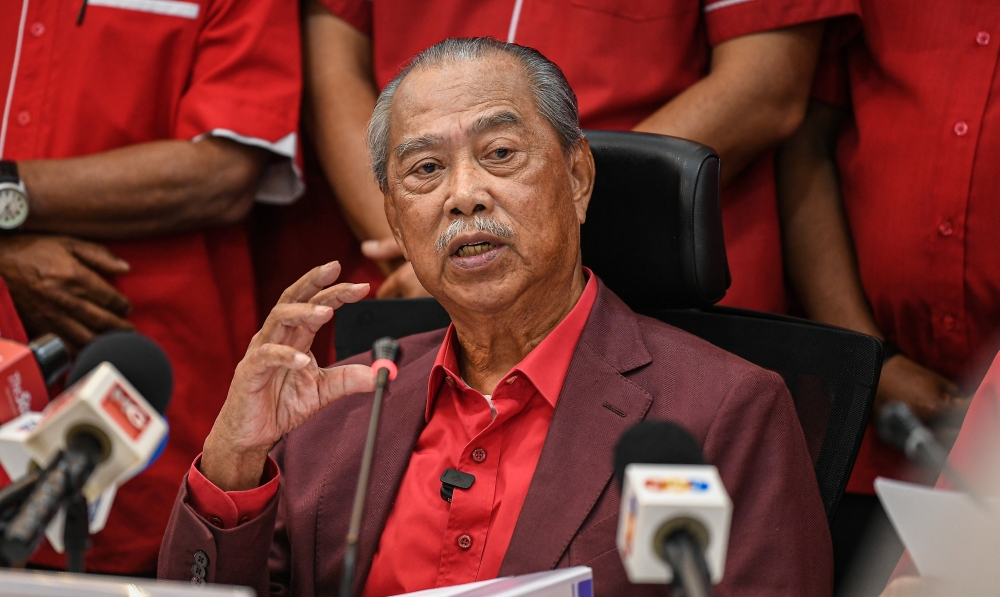
Parti Pribumi Bersatu Malaysia has decided to field candidates under its own party logo in the upcoming Negeri Sembilan state election, marking a departure from the Perikatan Nasional coalition framework. Party president Muhyiddin Yassin announced the decision, underscoring the strategic calculations driving the party's electoral approach as the opposition coalition faces internal pressures.
The move reflects mounting complications within PN, the three-party opposition bloc comprising Bersatu, PAS, and Parti Amanah Negara. Rather than presenting a unified front under the PN symbol across all contests, Bersatu has chosen to emphasise its distinct identity in this particular state battleground. This approach mirrors electoral strategies used in previous contests where coalitions have selectively deployed combined or separate branding depending on regional political dynamics and party interests.
Muhyiddin's announcement comes amid a period of significant strain within the PN alliance. Relations between coalition partners have deteriorated over seat allocation disputes, policy disagreements, and conflicting electoral strategies in various states. The decision to use Bersatu's own logo rather than the PN symbol represents a calculated shift that prioritises the party's individual standing and voter messaging over strict coalition unity.
For Negeri Sembilan specifically, Bersatu's leadership appears to believe that contesting under its own colours will resonate more effectively with the state's electorate. The party may be banking on stronger name recognition and accumulated goodwill in the state, or alternatively, it may reflect broader concerns about PN's collective electoral prospects. The decision also allows Bersatu to craft targeted messaging distinct from its coalition partners, potentially positioning itself as the primary opposition force in the state.
The PN coalition has faced mounting challenges since its formation. Disagreements over candidate selection, resource allocation, and strategic direction have festered beneath the surface, with tensions periodically boiling over into public disputes. PAS and Amanah, the other PN components, have their own concerns about seat distributions and electoral viability, creating a fractious alliance structure that struggles to maintain coherent coordination across multiple electoral fronts.
Bersatu's move carries implications for how opposition politics may evolve across Malaysia's remaining electoral contests. If the party's independent branding strategy yields positive results in Negeri Sembilan, other PN members might follow suit in future elections, potentially accelerating the coalition's de facto fragmentation. Conversely, a poor performance could prompt recalibration and renewed emphasis on coalition unity, though deep-seated trust deficits may prove difficult to overcome.
For voters in Negeri Sembilan, the shift signals a more fractionalised opposition landscape. Rather than choosing between a single PN bloc and the governing coalition, voters will encounter multiple opposition entities competing for their support. This atomisation of anti-government sentiment could either concentrate votes behind the strongest opposition performer or scatter them across competing parties, fundamentally altering the state election's dynamics.
The decision also reflects changing calculations about PN's viability as a long-term political vehicle. Initially positioned as an alternative to both the Pakatan Harapan government and UMNO-dominated structures, the coalition has struggled to establish a compelling unified identity. Individual parties within PN retain stronger historical roots and existing voter bases, making separate campaigning strategically rational even if it undermines coalition cohesion.
Bersatu's independent branding in Negeri Sembilan must also be understood within the context of Malaysian federal politics. The party continues exploring various political alignments and leverage points within the broader opposition landscape. Demonstrating electoral viability as a standalone entity potentially strengthens Bersatu's negotiating position in future federal-level coalition discussions, whether with PN partners or other political actors.
The Negeri Sembilan state election therefore represents more than a routine electoral contest. It serves as a testing ground for opposition party strategies and a barometer of PN's internal cohesion. How Bersatu performs under its own logo will likely influence calculations across the broader opposition movement, potentially shaping coalition structures and campaign strategies in upcoming elections across other Malaysian states.
Meanwhile, the decision raises questions about PN's future trajectory. A coalition that cannot maintain unified branding across all contests risks appearing directionless and fragmented to voters already sceptical of opposition alternatives. Whether PN can reconcile internal divisions and present coherent messaging in future electoral cycles remains uncertain, with Bersatu's independent approach potentially foreshadowing deeper structural problems within the alliance.

