The transfer of regulatory authority over Bintulu Port to Sarawak's state government represents a watershed moment in the implementation of the Malaysia Agreement 1963, according to the Minister in the Prime Minister's Department (Sabah and Sarawak) Datuk Mustapha Sakmud. The development, formalised during a ceremony in Bintulu attended by Prime Minister Datuk Seri Anwar Ibrahim and Sarawak Premier Tan Sri Abang Johari Tun Openg, underscores the federal government's commitment to honouring commitments made to the country's founding partners in Borneo.
For Malaysia's federal structure, the handover carries symbolic and practical significance. Mustapha characterised the move not as a diminishment of federal power but rather as a reinforcement of the Malaysian federation through the recognition of Sabah and Sarawak's foundational role in the nation's formation. This framing is crucial for understanding how Kuala Lumpur seeks to rebalance centre-state relations in a manner that acknowledges historical injustices while maintaining a functional union. The successful transfer demonstrates that MA63 provisions, long a source of tension between Kuala Lumpur and the Borneo states, can be actualised through genuine negotiation.
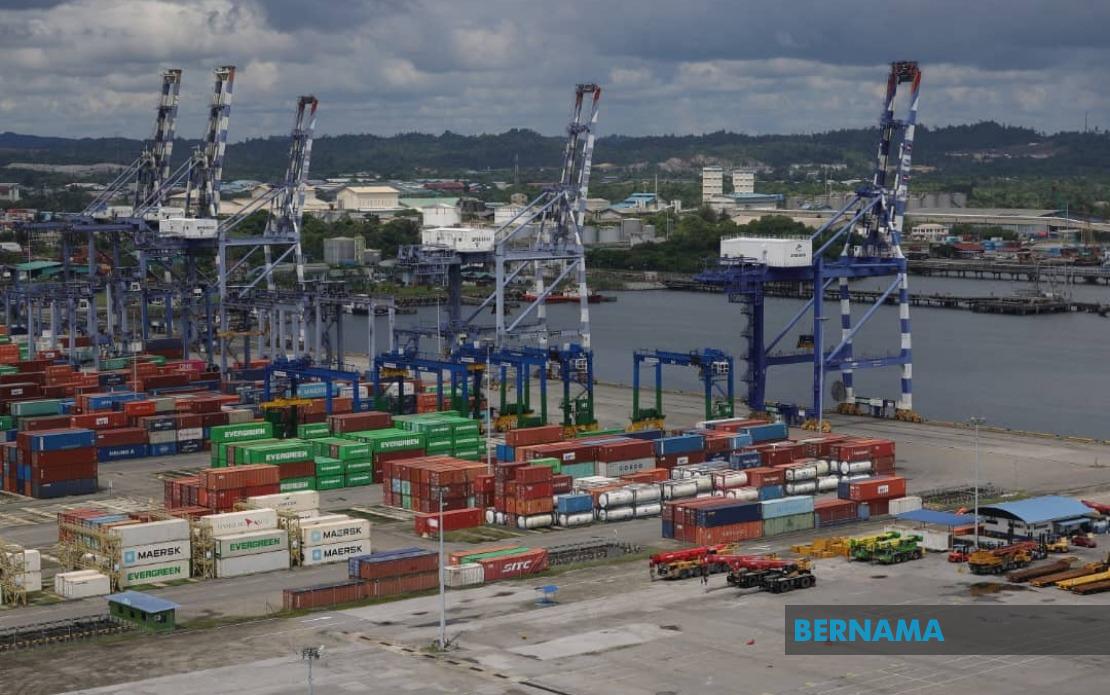
Bintulu Port itself has undergone considerable transformation in recent decades. No longer confined to its role as Malaysia's primary liquefied natural gas export facility, the port is positioned to evolve into a multifaceted economic engine encompassing industrial operations, logistics capabilities, and clean energy infrastructure. This diversification reflects global economic shifts toward sustainability and value-added manufacturing. For Sarawak, taking direct administrative control over the port's regulatory framework provides the state with tools to shape its development trajectory in alignment with broader state economic priorities and environmental commitments.
The convergence of Bintulu's strategic position and Sarawak's renewable energy advantages creates particular opportunities for regional competitiveness. The state's abundant hydroelectric resources, among the world's most cost-effective and environmentally friendly power sources, make the port especially attractive to multinational corporations seeking to reduce their carbon footprint and secure clean energy supplies. Investors in energy-intensive industries—particularly those in semiconductor manufacturing, petrochemicals refining, and data centre operations—are increasingly drawn to jurisdictions offering both abundant renewable power and modern port facilities. Bintulu's potential to meet these criteria positions Sarawak as a credible contender for attracting capital from companies navigating global decarbonisation pressures and supply chain restructuring.
The regional implications extend across Southeast Asia. As ASEAN economies compete for foreign direct investment in the post-pandemic era, differentiation becomes essential. Sarawak's combination of natural resources, regulatory autonomy, and access to shipping infrastructure could elevate it into competition with established regional hubs in Singapore, Thailand, and Indonesia. The port handover therefore represents not merely an internal Malaysian political settlement but a recalibration of how one state positions itself within broader Asian economic networks.
For federal-state relations throughout Malaysia, the precedent carries weight. Both Sabah and Sarawak have historical grievances rooted in perceived marginalisation since their integration into the federation in 1963. These concerns span resource rights, revenue sharing, immigration authority, and legislative autonomy. The Bintulu Port transfer, implemented through constitutional frameworks rather than ad hoc arrangements, suggests a pathway for addressing other contentious MA63 provisions. If successful implementation at Bintulu demonstrates tangible benefits to both Sarawak and the federation, it may catalyse momentum for resolving disputes in other domains—though progress will likely remain incremental given competing interests.
Mustapha's emphasis on the "win-win" outcome reflects official messaging designed to present the handover as mutually beneficial rather than redistributive. The federal government retains broader national economic coordination authority while surrendering day-to-day port operations control. For Sarawak, regulatory authority enables direct capture of efficiency gains and the ability to align port development with state priorities. Whether this balance ultimately serves both parties will become apparent as Sarawak administers the port through coming years, particularly if economic returns exceed expectations or if operational challenges emerge.
The timing of the announcement also merits consideration. Presented during a period of relative political stability in Kuala Lumpur and with Anwar Ibrahim's administration emphasising reconciliation with Borneo states, the transfer reflects window-opening in federal-state negotiations. Whether this represents sustained policy direction or tactical accommodation remains to be determined. Sarawak's ability to capitalise on the port handover will influence how aggressively the state pursues other outstanding MA63 claims and whether other Malaysian states become emboldened to seek analogous devolutions of federal authority.
Looking ahead, Sarawak's stewardship of Bintulu Port will serve as a test case for state capacity and commitment to sustainable development. The rhetoric surrounding green energy and high-value manufacturing will require translation into concrete infrastructure investment, workforce development, and regulatory frameworks that genuinely attract the calibre of investment portrayed in official statements. Success would validate the broader MA63 implementation agenda; underperformance would strengthen arguments that federal centralisation served administrative efficiency.
Ultimately, the Bintulu Port handover represents one chapter in the ongoing negotiation of Malaysia's federal compact. The transfer acknowledges that governance can be more effective and equitable when it accounts for regional specificities and foundational agreements. For Malaysian policymakers and for observers across Southeast Asia, the outcome of Sarawak's management of this responsibility will inform how federal systems elsewhere in the region approach questions of devolution, state autonomy, and equitable distribution of economic opportunity.