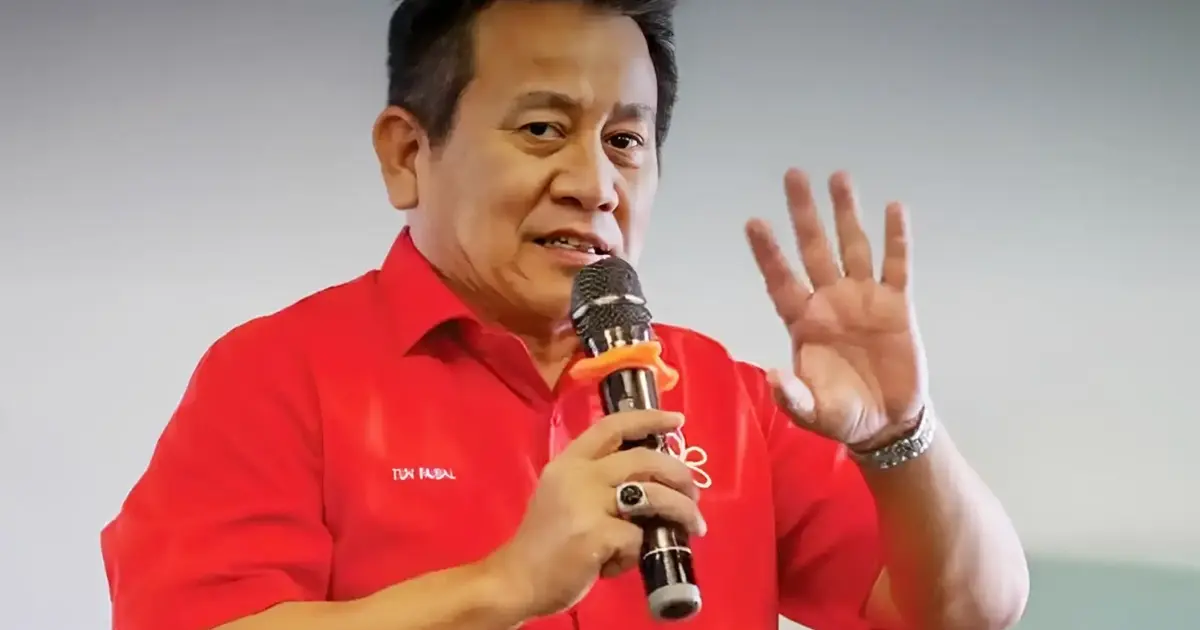
The leadership structure of Perikatan Nasional faces fresh scrutiny as Bersatu president Tun Faisal Ismail Aziz raises fundamental questions about the efficacy of the coalition's decision-making apparatus. His comments centre on the recent emergency convening of the Supreme Council, prompting debate about whether the body wields genuine authority or serves primarily as a ceremonial forum.
At the heart of Tun Faisal's criticism is a procedural tension that has long complicated multi-party coalitions in Malaysian politics: the gap between what a unified leadership body decides and what individual component parties will actually accept. The Bersatu president contends that gathering the Supreme Council members to deliberate becomes largely meaningless if their conclusions cannot stand without subsequent approval from each party's own internal decision-making structures. This observation cuts to the core of how Perikatan Nasional functions as a political alliance.
The timing of these remarks carries particular weight given the coalition's ongoing relevance in Malaysian politics. Since the 2022 elections, Perikatan Nasional has positioned itself as an alternative political force, with its component parties—including Bersatu, PAS, and others—collectively representing significant parliamentary numbers. However, maintaining cohesion among parties with distinct organizational cultures and strategic priorities has proven consistently challenging. Tun Faisal's intervention suggests these structural weaknesses continue to generate friction at the highest levels.
Emergency sessions of the Supreme Council typically convene when issues demand urgent resolution beyond regular meeting schedules. Such convocations signal that leadership perceives an immediate need for swift, unified action. Yet Tun Faisal's position implies that unless the Supreme Council's conclusions are binding—or at least command sufficient authority to circumvent further party consultation—the emergency gathering lacks real decisional weight. He argues that reconstituting the Supreme Council merely to launch discussions that will ultimately return to individual party decision-makers creates an inefficient, multi-layered approval process.
This structural challenge reflects broader complications within coalitional governance in Southeast Asia. Malaysian political alliances have historically struggled with the tension between centralized coordination and party autonomy. Component parties typically retain the right to consult their own supreme councils or political bureaus before committing to major decisions, particularly those affecting their electoral interests or ideological positioning. The result often resembles a coalition within a coalition, where agreements require multiple veto points.
From a Malaysian governance perspective, Tun Faisal's critique deserves attention because it illuminates how effectively—or ineffectively—opposition and alternative coalitions can function. If Perikatan Nasional cannot establish clear decision-making authority at its highest level, questions naturally arise about its capacity to present coherent policy alternatives to voters and govern effectively should electoral circumstances change. The same procedural ambiguities that frustrate current deliberations would likely resurface if the coalition faced actual governing responsibilities.
The Bersatu leader's comments may also reflect underlying strategic calculations within Perikatan Nasional. Different component parties sometimes prioritize different political objectives, creating disagreements that the Supreme Council framework must somehow accommodate. By questioning the utility of meetings that lack binding authority, Tun Faisal may be positioning Bersatu to resist decisions it views as unfavourable, or alternatively, attempting to strengthen the Supreme Council's actual powers relative to individual parties. His remarks invite other coalition partners to clarify their own positions on this governance question.
Regional observers monitoring Malaysian politics will recognize that Perikatan Nasional's internal dynamics significantly affect the broader political landscape. As the ruling coalition and opposition coalitions continue competing for voter favour and parliamentary advantage, the institutional coherence of each alliance matters substantially. A Supreme Council that cannot enforce decisions creates vulnerabilities—opportunities for rival coalitions to exploit divisions or for individual members to freelance on critical votes. Conversely, excessive centralization of power risks alienating party bases or compromising the autonomy that attracts smaller parties to coalitional arrangements.
Looking forward, Perikatan Nasional faces a genuine institutional question that Tun Faisal has now placed squarely on the table. The coalition must either clarify that its Supreme Council does possess binding decision-making authority—which would require individual parties to accept constraints on their autonomy—or acknowledge that the body functions primarily as a coordination mechanism requiring subsequent ratification. The distinction carries consequences for how credible the coalition appears to potential coalition partners, voters, and international observers evaluating Malaysian political stability.
For now, Tun Faisal's intervention serves as a reminder that coalition governance remains a consistently vexing challenge in Malaysian politics. While alliances offer strategic advantages—pooling parliamentary numbers, broadening electoral appeal, and concentrating resources—they invariably create friction between competing interests and institutional levels. How Perikatan Nasional resolves the question he has raised will influence not only its own effectiveness but potentially reshape expectations for future political alliances in Malaysia.